
Ever pulled a batch of cookies from the oven only to find pale, puffy discs that barely spread? Or sliced into a cake expecting a light crumb and got something dense instead? The most common culprit is the choice of leavening. Knowing the difference between baking soda vs baking powder is a basic baking skill that turns guesswork into consistent results. When you understand how each one works and when to use them, your baked goods will behave the way you expect.
This isn’t arcane chemistry — it’s practical knowledge that improves your baking immediately. Below is a clear, user-friendly guide to help you choose and use the right leavener for the job.
Table of Contents
Quick Reference: Which Leavener for Which Recipe
When you need a fast decision, this quick guide helps you choose the right leavener for common baked goods:
| Recipe Type | Use This | Why |
|---|---|---|
| Chocolate chip cookies | Baking soda | Encourages spread and deep browning |
| Snickerdoodles | Baking soda + cream of tartar | Tangy flavor with lift |
| Vanilla cake | Baking powder | Neutral batter needs a complete leavener |
| Devil’s food cake | Both | Acidic cocoa plus extra lift |
| Blueberry muffins | Baking powder | Tender, fluffy texture in neutral batters |
| Banana bread | Both | Bananas provide acid; powder adds rise |
| Buttermilk pancakes | Both | Buttermilk activates soda; powder adds lift |
| Scones | Baking powder | Delicate, flaky layers without off-flavors |
| Brownies | Baking powder (usually) | Tiny amount for controlled rise |
| Gingerbread | Baking soda | Molasses is acidic and activates soda |
Keep this chart handy when you’re midway through a recipe and second-guessing your leavener choice.
What Is Baking Soda?
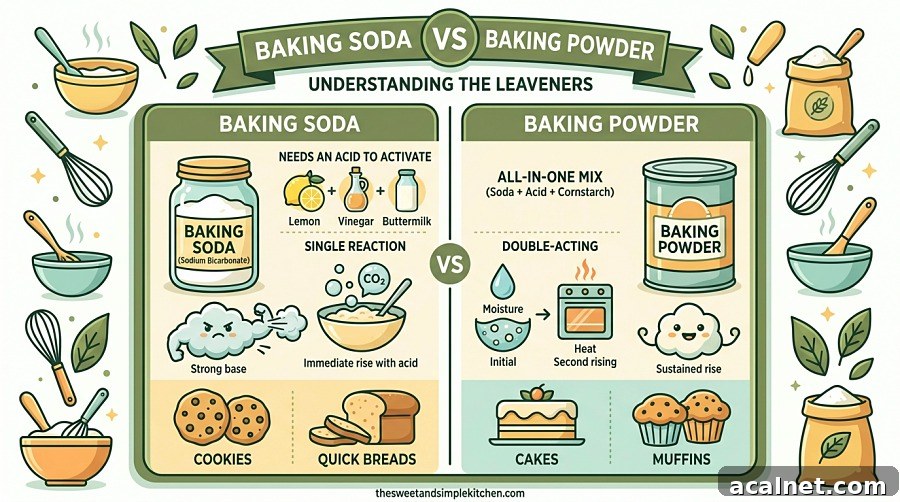
Baking soda is pure sodium bicarbonate, a white powder that acts as a strong chemical leavener. It’s basic (alkaline) and requires an acid and moisture to create carbon dioxide bubbles that lift batter and dough. Common acidic activators include buttermilk, yogurt, lemon juice, brown sugar, molasses, and natural cocoa.
Baking soda is about three to four times more potent than baking powder, so recipes call for small amounts — typically 1/4 to 1/2 teaspoon. Too much produces a metallic or soapy taste; too little leaves baked goods under-risen. Baking soda also boosts browning by accelerating the Maillard reaction, which is why cookies with baking soda develop rich, caramelized edges.
What Is Baking Powder?
Baking powder is a complete leavening system: it contains sodium bicarbonate plus an acid (often cream of tartar) and a drying agent like cornstarch. Most commercial baking powder is double-acting — it reacts once when wet and again when heated — providing flexibility and more reliable rise.
Because baking powder includes its own acid, it works in batters that lack acidic ingredients, such as vanilla cakes, plain muffins, and scones made with regular milk. It’s milder than baking soda, so recipes use larger quantities (typically 1 to 2 teaspoons), and it contributes less to browning, yielding paler, tender baked goods.
The Key Differences Between Baking Soda and Baking Powder
Here’s a concise comparison to highlight the practical differences:
| Feature | Baking Soda | Baking Powder |
|---|---|---|
| Composition | Pure sodium bicarbonate | Sodium bicarbonate + acid + cornstarch |
| Strength | 3–4× stronger | Milder, needs more volume |
| Acid requirement | Requires external acid | Contains its own acid |
| Activation | Single reaction with acid and moisture | Double-acting: wet and heat |
| Browning effect | Promotes golden browning | Minimal browning |
| Typical amount | 1/4–1/2 tsp | 1–2 tsp |
| Taste if overused | Metallic or soapy | Bitter or chemical |
In short: baking soda is a specialist that needs an acid; baking powder is a generalist that works in neutral batters but with gentler results.
When to Use Baking Soda
Use baking soda when the recipe includes acidic ingredients such as:
- Buttermilk
- Yogurt
- Sour cream
- Lemon juice
- Vinegar
- Molasses
- Brown sugar
- Natural cocoa powder
- Honey or maple syrup
- Cream of tartar
Baking soda neutralizes some acid, helps browning, and creates lift. It’s essential in recipes like chocolate chip cookies and gingerbread, where a small amount of acid activates the soda to produce desirable spread, color, and flavor balance.
When to Use Baking Powder
Choose baking powder for batters without acidic ingredients: think vanilla cakes, plain muffins, biscuits, and scones. Baking powder gives a tender, fluffy crumb and a steady rise thanks to its double-acting nature, which is helpful if batter sits briefly before baking.
Because it includes acid, baking powder can add a slight tartness if used in already-acidic recipes, so follow the recipe’s specified leavener or use a combination when appropriate.
Why Some Recipes Call for Both
Some recipes use both leaveners to balance flavors and textures. Baking soda neutralizes acid and improves browning, while baking powder supplies additional lift and the security of double-acting rise. Recipes like banana bread, buttermilk pancakes, and certain cookie formulas benefit from this balance to achieve a specific crumb, rise, and surface color.
Can You Substitute Baking Soda for Baking Powder (and Vice Versa)?
Substitutions are risky and often change flavor or texture.
Substituting Baking Powder for Baking Soda
Because baking powder is much weaker, substituting it for baking soda requires 3–4 times more powder, which can impart bitterness and unwanted acidity. This swap usually yields inferior results and is not recommended except in a pinch.
Substituting Baking Soda for Baking Powder
This can work if you add an acid. A common homemade substitute for 1 teaspoon baking powder is:
- 1/4 teaspoon baking soda
- 1/2 teaspoon cream of tartar
Alternatively, 1/4 teaspoon baking soda plus 1/2 teaspoon lemon juice or vinegar per teaspoon of baking powder will work but may alter flavor. Use substitutes immediately because reactions begin as soon as wet and acid are combined.
The Substitution Rule to Remember
When possible, follow the recipe. Baking soda plus an acid can replace baking powder, but baking powder cannot truly replace baking soda without compromising the result.
Troubleshooting: What Went Wrong?
Here are common problems linked to leavener issues and how to fix them:
My Cookies Spread Too Much
Excess baking soda, warm butter, or overactive leavener can cause cookies to flatten. Check measurements, chill the dough, and test your leavener for freshness.
My Cookies Did Not Spread At All
Puffy cookies that don’t spread often mean the recipe needed baking soda but used baking powder instead, or there wasn’t enough acid to activate the soda. Add a touch of brown sugar or switch the leavener as the recipe calls for.
My Cake Is Dense and Heavy
Expired baking powder or using baking soda without sufficient acid can produce a dense cake. Test your leavener and use what the recipe specifies.
My Muffins Have a Metallic Taste
Too much baking soda or choosing soda where powder was required causes metallic or soapy flavors. Measure carefully and use baking powder for neutral batters.
Everything Rose Then Fell Flat
If your baked goods collapsed after rising, the leavener likely exhausted itself before the product set in the oven. Use fresh double-acting powder and bake promptly after mixing.
How to Test If Your Leaveners Are Still Fresh
Test leaveners before important bakes to avoid disappointment.
Testing Baking Soda
Put 1/4 teaspoon baking soda in a small bowl and add 2 teaspoons white vinegar. Vigorous bubbling means it’s still good; weak or delayed fizz means it’s time to replace it.
Testing Baking Powder
Place 1 teaspoon baking powder in a bowl and pour in 1/3 cup hot tap water. Active fizzing indicates freshness. For double-acting powder, microwave the mixture briefly after the initial fizz — a second reaction confirms it’s functional.
Testing every few months, or before a major bake, only takes a minute and prevents ruined batches.
How to Store Baking Soda and Baking Powder
Store leaveners in airtight containers away from heat, moisture, and strong odors. Transfer baking soda from its cardboard box into a sealed jar, and avoid introducing moisture into baking powder. Label containers with the opening date.
Typical shelf life: unopened baking soda about 2 years (opened ~6 months), baking powder unopened about 9 months (opened 3–6 months). In humid climates, refrigerating or freezing baking powder can help preserve potency. Never dip wet utensils into the container.
Frequently Asked Questions
Do I need more baking soda or baking powder?
Baking soda is stronger, so recipes call for less (usually 1/4 to 1/2 teaspoon). Baking powder is milder and used in larger amounts (starting around 1 teaspoon).
What happens if I use baking powder instead of baking soda?
Results may be pale, under-browned, and under-risen because baking powder is weaker; using enough to match soda’s effect often creates off-flavors.
Can I use baking soda instead of baking powder?
Only if you add an acid. Combine 1/4 teaspoon baking soda with 1/2 teaspoon cream of tartar to replace 1 teaspoon baking powder, and use it immediately.
When should I use baking soda vs baking powder?
Use baking soda with acidic ingredients (buttermilk, yogurt, lemon, brown sugar). Use baking powder for neutral batters (vanilla cakes, muffins). Some recipes need both to balance flavor and lift.
What does baking soda do in a recipe?
Baking soda produces carbon dioxide when it reacts with acid and liquid, causing rise; it also encourages browning and neutralizes excess acidity.
What does baking powder do in baking?
Baking powder supplies both base and acid to create carbon dioxide without extra acidic ingredients; double-acting types react when wet and again with heat.
Can I use both baking soda and baking powder in one recipe?
Yes. Soda handles acidity and browning; powder adds extra lift and reliability. Many classic recipes combine them for texture and flavor control.
Is bicarbonate of soda the same as baking soda?
Yes. Bicarbonate of soda and baking soda both refer to sodium bicarbonate; the term varies by region.
Why did my cookies flatten?
Flat cookies can result from too much baking soda, expired leavener, or overly warm butter. Test leaveners and chill the dough to prevent excess spread.
How long do baking soda and baking powder last?
Unopened baking soda ~2 years; opened ~6 months. Unopened baking powder ~9 months; opened 3–6 months. Store airtight and test before important bakes.
The Sweet & Simple Takeaway
When deciding between baking soda vs baking powder, ask one question: does the recipe include acidic ingredients? If yes, choose baking soda. If no, choose baking powder. If the recipe has some acid but needs extra lift, use both.
Baking soda is pure sodium bicarbonate, stronger and dependent on acid to work, and it encourages browning and spread. Baking powder contains its own acid, delivers a gentler rise, and is ideal for neutral batters. Keep leaveners fresh, store them airtight, and follow the recipe’s guidance when both are called for.
Once you understand these basics, you’ll bake with confidence instead of confusion. Happy baking!