Everyone wants to learn how to smoke a brisket like Aaron Franklin. Below I’ll outline his method and key tips so you can reproduce his approach at home. For a deeper, step-by-step education, Franklin’s MasterClass is an excellent resource.
To smoke a brisket like Aaron Franklin, follow these core steps:
- Trim the fat cap to about 1/4 inch.
- Use a simple 50/50 rub of kosher salt and 16-mesh café grind black pepper.
- Do not use a binder (slather) on brisket.
- Bring the brisket up to room temperature for about an hour before cooking.
- Cook at roughly 250°F (Franklin often works in the 250–275°F range) using an offset smoker or similar indirect-heat setup.
- Cook fat-side-up when your heat comes from the side; consider fat-side-down if heat comes from below.
- Place a water pan in the smoker if you need extra humidity in dry climates.
- Plan on roughly 1 to 1.25 hours per pound; Franklin often allows about 12 hours for a full cook but adjusts by size and conditions.
- Wrap in butcher paper around the 4–8 hour mark (commonly ~6 hours) to move through the stall while preserving bark.
- Some pitmasters, and possibly Franklin in certain settings, use rendered beef tallow on the brisket at the wrapping stage.
- Remove the brisket when it passes a tenderness test (many target around 203°F or use a probe/toothpick test).
- Rest the brisket at least one hour before slicing; longer hold in a cooler can extend that time safely.
Choose a Brisket Like Franklin
Franklin typically smokes a full packer brisket (both the point and the flat). When buying, look for:
- A thick flat muscle for even slices.
- Good marbling—fat adds flavor and helps keep the meat moist during a long, low cook.
How to Trim Brisket Like Franklin
Trimming is critical: too much fat and the meat can stay dry, too little and smoke won’t penetrate properly. Key trimming points:
- Use a sharp boning or curved trimming knife. Good quality blades last and make precision trimming easier.
- Leave about 1/4 inch of fat on the fat cap so it can render and protect the meat. Increase the cap on hot-and-fast cooks.
- Protect the side of the brisket that faces the heat source with a thicker fat cap.
- Remove silver skin, hard membranes, blood vessels and the deckle (thick strip of fat between point and flat) because these won’t render.
- If separating point and flat, be aware the flat is leaner and benefits from being cooked in a pan or with extra protection to avoid drying.
Does Franklin Use Tallow?
Beef tallow—rendered fat—is common in Texas barbecue and is sometimes used to add fat and sheen at the wrapping stage. To make tallow, save fat trimmings and render them slowly until the impurities are removed. Some cooks pour a bit of tallow over the meat when wrapping to add moisture and richness.
Franklin’s Rub
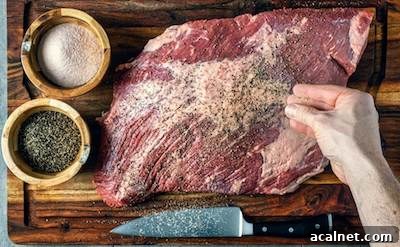
Franklin favors a minimalist Texas-style rub: equal parts kosher salt and coarse black pepper (16-mesh café grind). The goal is to let the beef be the star. Optional additions for other meats include paprika for color or small amounts of granulated onion and garlic powder for extra savory notes.
How to Apply Rub
- Mix the salt and pepper well in a shaker or container so the distribution is even.
- Shake from about 6–8 inches above the meat and work from the flat side, covering sides and seams first.
- Pat the rub into the meat—Franklin keeps the rub light to let the beef’s flavor shine through.
Binder or No Binder?
Franklin generally does not use a binder on brisket. A binder helps heavy rubs adhere and can prevent patchy bark, but it isn’t necessary for the simple salt-and-pepper approach he prefers. If you plan to apply a very heavy or complex rub, a light binder can help.
Bring the Brisket to Room Temperature
Franklin leaves brisket out for about an hour before cooking. Letting a large piece of beef warm slightly helps promote a more even cook. (Note: this practice applies to beef; other proteins require different handling.)
What Smoker Does Franklin Use?
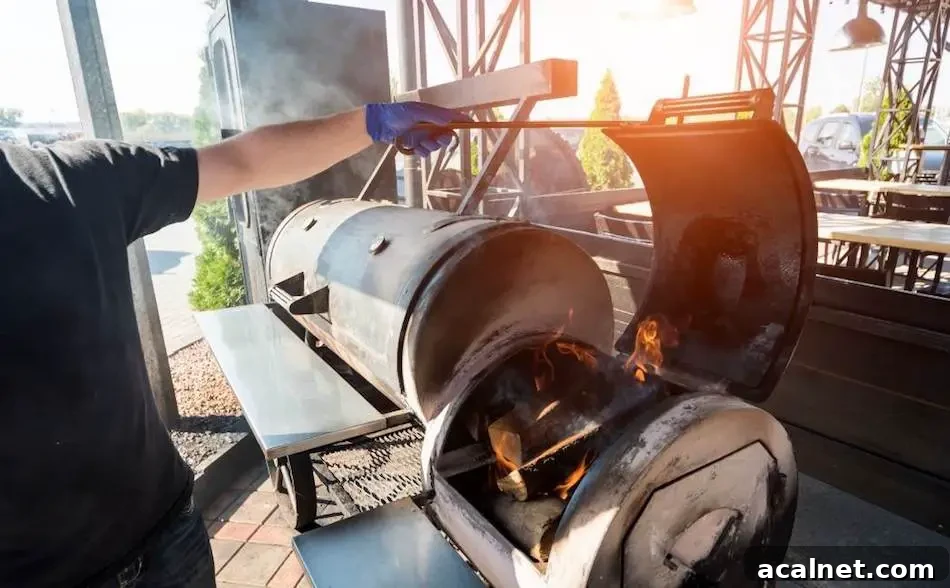
Franklin famously uses an offset smoker (a stick burner) where the firebox is off to one side. Offset smokers produce robust smoke flavor because wood is the primary heat source. Charcoal smokers are another common option—both allow you to add wood for smoke.
Fat Side Up or Down?
Franklin cooks fat-side-up and positions the point toward the firebox so the thickest part receives more heat. If your heat comes from below, fat-side-down may protect the meat better. Choose orientation based on how heat radiates from your smoker.
Water Pan: Yes or No?
Franklin often uses a water pan to add humidity and help prevent drying, especially in hot, dry climates. In humid or very cold conditions a water pan can affect temperature control—decide based on your environment and smoker behavior.
Temperature and Time
Franklin typically works around 250–275°F. A useful rule of thumb is 1–1.25 hours per pound at 250°F, but brisket timing varies with size, wrap, and smoker. Always monitor progress rather than relying solely on time.
Spritzing vs. Mopping
Franklin prefers light spritzing over mopping to keep the meat moist and prevent edges from burning. He uses a spray bottle with water, apple juice, or a touch of hot sauce. Avoid excessive spritzing, which cools the smoker and prolongs the cook.
Planning the Cook
Franklin usually allows about 12 hours for a full brisket cook and plans backward from serving time. If cooking multiple pieces at once, expect longer times due to heat distribution. Overnight cooks are common but require additional planning and hold strategies.
If You’re Lookin’, You’re Not Cookin’
Aaron emphasizes keeping the smoker closed to maintain steady temperature and avoid long recovery times. Use a reliable probe thermometer so you don’t need to open the lid often. Franklin often gauges doneness by feel and experience, but most home cooks benefit from using thermometers.
Wrapping: Paper or Foil?
Franklin prefers butcher paper because it breathes and preserves bark while allowing a faster cook than leaving the brisket unwrapped. Foil traps more moisture and cooks faster but can soften the bark and create a pot-roast effect. Use foil for very lean briskets or when you need a faster finish; use butcher paper when you want to keep a firmer bark.
When to Wrap
Franklin commonly wraps around six hours into the cook when the brisket develops a deep mahogany color and the fat has begun rendering. The exact timing depends on size, bark development, and how the cook is progressing.
Make a Clean Fire
Use clean, dry wood and good airflow to avoid dirty, creosote-heavy smoke. Aim for thin, blue smoke rather than thick, white smoke. Offset and stick-burning smokers require active attention to maintain clean combustion; pellet and set-and-forget cookers are more hands-off.
Franklin’s View on the Stall
The stall—when internal temperature plateaus, typically around 160–170°F—is caused by evaporative cooling. Wrapping helps push through the stall, and increasing smoker temperature modestly after wrapping can speed things along. Avoid excessive temperature jumps; stay mindful of maintaining quality.
How Franklin Wraps
- Remove the brisket with a towel to protect the bark; avoid tongs that can tear it.
- Wrap tightly in butcher paper, folding clean edges and rolling the brisket in the paper two to three times.
- Return the wrapped brisket to the smoker and continue to maintain a stable target temperature (around 250°F).
When to Remove the Brisket
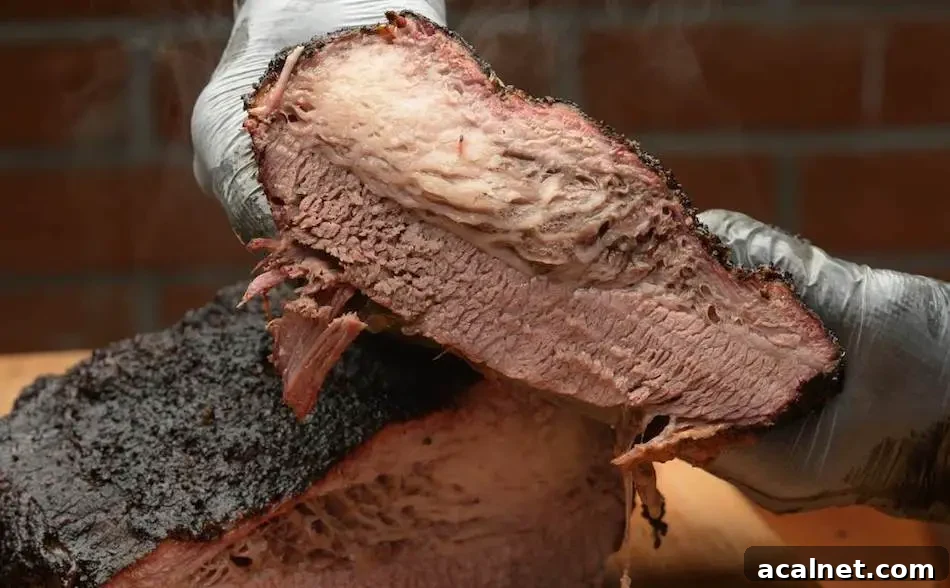
Many cooks target around 203°F for final pull, but Franklin relies heavily on tenderness and feel. Do a probe or toothpick test—the meat should feel like soft butter with almost no resistance. Avoid overcooking.
How Long to Rest
Rest the brisket at least one hour to allow juices to redistribute. For longer holds, leave the wrapped brisket in a dry insulated cooler for several hours; you can keep a probe in the meat while holding if desired.
Slicing and Tools
Franklin uses a long slicing knife (around 12 inches, serrated-style for his technique). Slice the brisket about pencil-thin (roughly 1/4 inch) against the grain. Look for a slight jiggle and a delicate pull-apart texture when testing slices.
Why Brisket Takes So Long
Brisket is a heavily worked chest muscle loaded with connective tissue that must slowly convert to gelatin. Low-and-slow cooking renders that collagen and produces tender, flavorful meat. Cooking too fast or at too high a temperature leaves brisket tough and chewy. Size, temperature, wrapping and resting all influence total cook time.
| Brisket Size | Temperature | Cook Time | Including Rest |
| 12 lbs | 225°F | 18 hours | 19 hours |
| 18 lbs | 250°F | 18 hours | 19 hours |
| 12 lbs unwrapped | 225°F | 19 hours | 20 hours |
| 18 lbs unwrapped | 250°F | 19 hours | 20 hours |
| 16 lbs | 275°F | 10–12 hours | 11–13 hours |
| 16 lbs unwrapped | 275°F | 11–13 hours | 12–14 hours |
Standard Barbecue Rub
A versatile rub adapted from classic barbecue sources. Adjust to taste and to the protein you are cooking.
10 minutes
10 minutes
Ingredients
- – ½ Cup Paprika
- – ½ Cup Salt
- – ½ Cup Sugar
- – ½ Cup Granulated Garlic
- – ¼ Cup Granulated Onion
- – ¼ Cup Chili Powder
- – ¼ Cup Cumin
- – 2 Tablespoons Black Pepper
- – 2 Tablespoons Dry Mustard
- – 1 Tablespoon Cayenne Pepper
Instructions
- Combine all spices in a large mixing bowl.
- Store the rub in shakers or an airtight container for future use.
Recommended Tools
Here are a few useful tools commonly recommended for brisket cooks: a quality meat injector if you plan to inject, unwaxed food-grade butcher paper for wrapping, a reliable dual-probe thermometer (for smoker and meat), and a fast instant-read thermometer for finishing checks. A long, sharp slicing knife makes clean, thin slices.
Thanks for reading. Apply these principles, adapt to your smoker and climate, and focus on consistent temperature, a clean fire, and patience—those are the traits that turn brisket into something special.