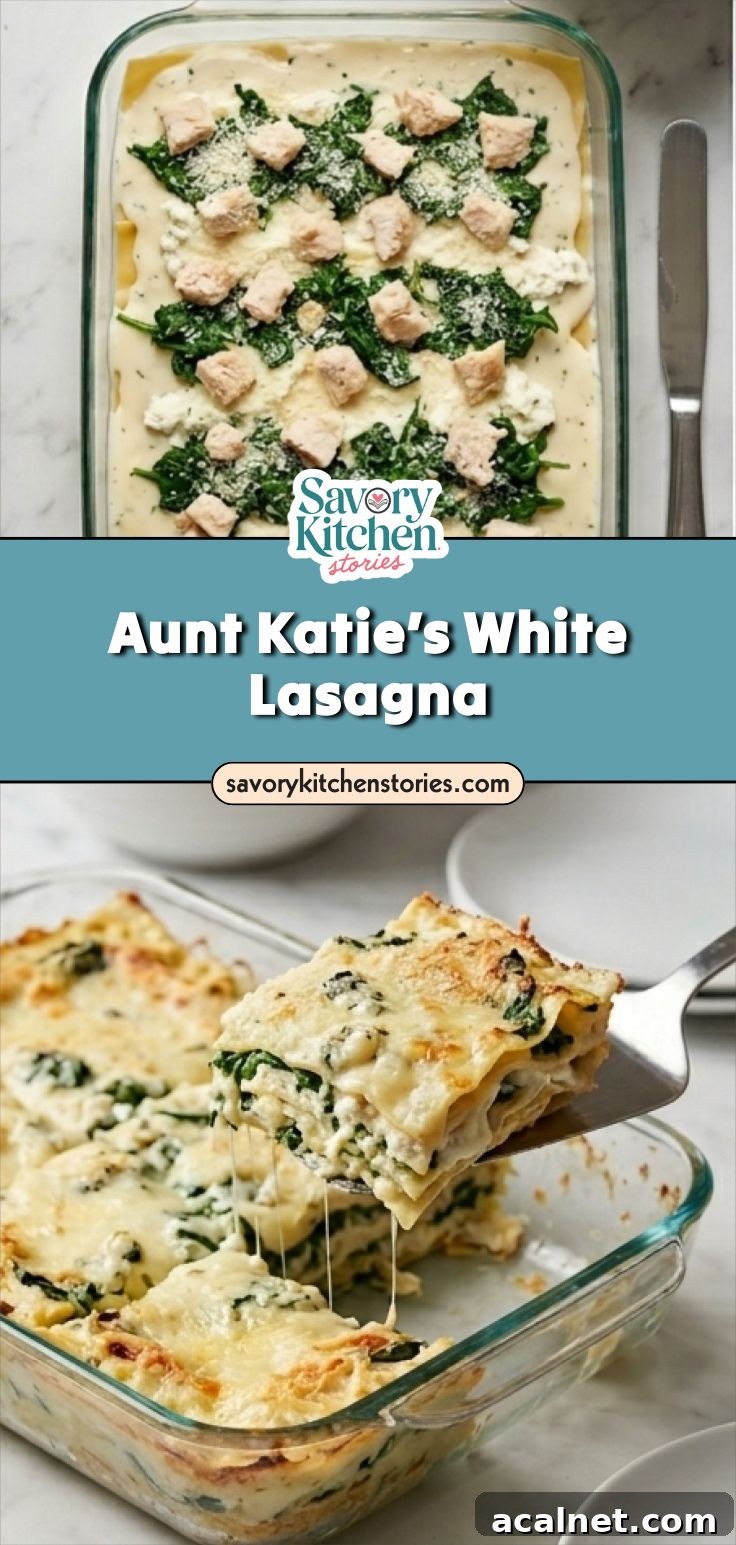
I’m a sucker for comfort food with character, and Aunt Katie’s White Lasagna has been my go-to for cozy weeknight dinners for years. It came to me on a folded, handwritten card tucked in my mother’s recipe box, and every time I pull it from the oven the house fills with the scent of garlic, melted cheese, and warming pasta. This version balances richness and brightness: creamy ricotta and tangy gorgonzola create flavorful pockets, while a béchamel-style sauce keeps the dish silky. It’s the kind of recipe that prompts guests to ask for the instructions before they finish their first bite.
How This Recipe Became My Rainy-Day Favorite
The first time I made Aunt Katie’s White Lasagna, it was pouring outside and I needed something indulgent but simple. When I opened the oven, steam rose and the top had browned to a warm, toasty color. I served a generous square, and the cheese stretched in long ribbons as I lifted it from the pan. The ricotta was tender and the gorgonzola offered little bursts of savory bite, making each mouthful interesting. That evening a friend helped finish half the pan and we lingered at the table for hours; the lasagna made the kitchen feel especially inviting. Since then, whenever the weather turns gray or I crave comfort, this is the dish I make.
The Ingredients That Make the Magic (and How to Choose Them)
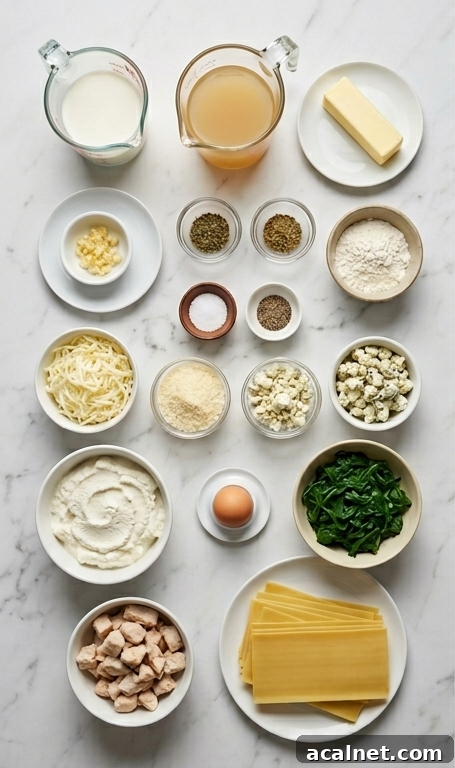
- Butter: The base for the sauce; unsalted gives you control, salted adds a briny note. Substitute olive oil for a lighter finish, keeping in mind the flavor changes.
- Garlic: Fresh minced garlic provides the aromatic backbone. For a milder, sweeter profile, use roasted garlic.
- Dried basil and oregano: Classic Italian herbs that give depth. Swap in fresh herbs at the end for a brighter finish.
- Flour: Thickens the béchamel; all-purpose works well. For gluten-free, use a GF flour blend.
- Milk and chicken broth: Combine for a creamy, flavorful sauce. 2% milk keeps the béchamel rich without being heavy. Use vegetable broth to keep it vegetarian.
- Mozzarella and Parmesan: Mozzarella delivers melt and stretch; freshly grated Parmesan gives the best browning and savory finish.
- Ricotta and Gorgonzola: Ricotta provides creamy body; gorgonzola adds a tangy contrast. Substitute mascarpone or cream cheese plus a milder blue for a gentler flavor.
- Egg: Binds the ricotta filling so slices stay intact.
- Spinach and Chicken: Spinach adds color and earthiness—squeeze it dry. Use roasted vegetables in place of chicken for a vegetarian option.
- Lasagna noodles: Fresh sheets produce silkier layers; no-boil or dried noodles are convenient alternatives but may alter timing.

Essential Tools and Why They Matter
A few simple tools make assembling Aunt Katie’s White Lasagna easier. A 9×13 glass baking dish shows off the layers and promotes even baking; a metal pan will brown a touch faster. A good whisk prevents lumps in the béchamel—use a fork only if necessary. A medium mixing bowl keeps the ricotta filling tidy, and a flat or offset spatula helps lift clean slices. Finally, a fine grater for Parmesan improves melt and crust; pre-grated cheese is convenient but won’t melt as smoothly.
Step-by-Step Preparation Guide
Step 1: Preheat and Prepare the Pan
Preheat the oven to 350°F. Grease a deep 9×13 glass baking dish thoroughly and set it aside. A clean, well-prepared pan helps the layers assemble neatly and bake evenly.
Step 2: Build the White Cheese Sauce (Béchamel-Style)
Melt a stick of butter in a saucepan and lightly sauté minced garlic with dried basil, oregano, and black pepper until fragrant. Whisk in the flour and salt, cooking briefly to remove the raw flour taste. Gradually whisk in the milk and chicken broth, bring to a gentle boil, and stir until the sauce thickens and becomes silky. Remove from heat and stir in shredded mozzarella and 1/2 cup grated Parmesan until the sauce is glossy and smooth.
Step 3: Combine the Ricotta Filling
In a bowl, combine whole-milk ricotta, crumbled gorgonzola, and one egg. Stir until the mixture is evenly creamy with small pockets of blue cheese. The filling should be spreadable but hold shape when dolloped.
Step 4: Layer and Assemble the Unbaked Lasagna
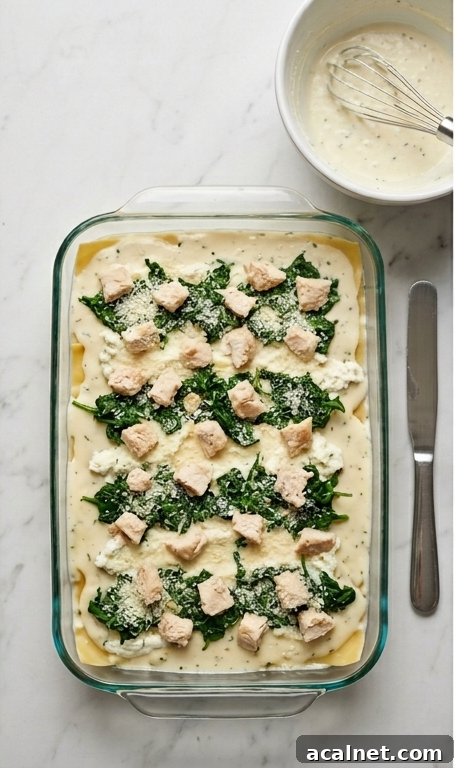
Spread one-quarter of the cooled white sauce across the bottom of the prepared dish. Layer 3–4 lasagna noodles, then spread half the ricotta mixture evenly. Scatter half the cooked chicken (if using), then top with another quarter of the sauce. Repeat with another noodle layer, the remaining ricotta, the drained spinach, and another quarter of sauce. Finish with the final noodle layer, pour the remaining sauce to coat the top, and sprinkle the remaining 1/2 cup Parmesan evenly so it will brown while baking.
Step 5: Bake Until Bubbling and Lightly Browned
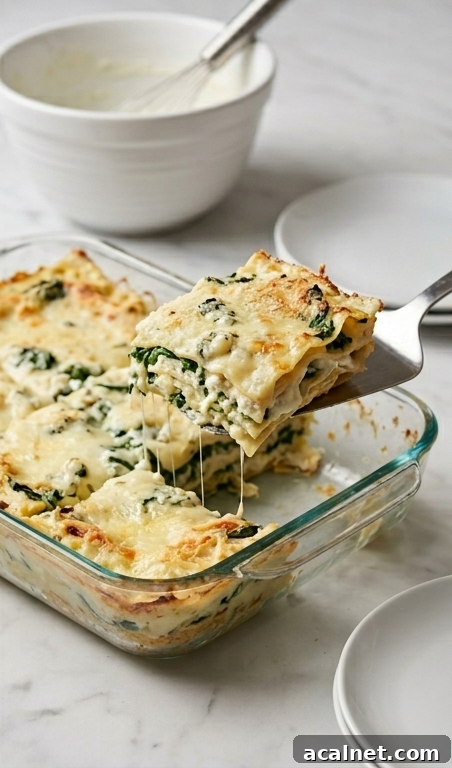
Bake the assembled lasagna uncovered until the top is bubbling and the Parmesan has a warm golden-brown crust, about one hour. The interior should be set with ribbons of melted cheese and tender spinach pockets.
Step 6: Rest, Slice, and Serve
Let the lasagna rest for 20 minutes so the layers settle and slicing yields clean pieces. Use a flat spatula to lift generous squares and serve warm so the cheese remains melty.
Making It Your Own
Small tweaks keep this recipe fresh across seasons. In spring, swap chicken for thin asparagus and add fresh basil at the end. In summer, roast cherry tomatoes and scatter them on top for bright acidity. For a vegetarian version, omit the chicken and add more roasted vegetables or mushrooms for depth. To lighten the dish, use part-skim ricotta and skip the gorgonzola—this yields a milder flavor many kids prefer. In winter, use shredded rotisserie chicken and a pinch of nutmeg in the béchamel for warming depth. These adjustments preserve the core character while letting you tailor the lasagna to your tastes.
How to Serve
Bake the lasagna in a single 9×13 dish and let it rest while you set the table. Serve on warm plates so the cheese stays soft. A crisp green salad with a bright vinaigrette or a lemony side helps cut through the richness. For gatherings, halve the recipe for an 8×8 dish or double it into two pans. Keep a second pan warm in a low oven for a buffet and slice just before serving to keep portions looking fresh. A simple herb salad or pickled vegetables also complements the dish nicely.
Storage and Reheating Tips
Leftovers keep well. Cool completely, cover tightly, and refrigerate for up to 4 days. For longer storage, freeze wrapped portions for up to 3 months and thaw overnight in the refrigerator before reheating. Reheat slices in a 350°F oven, covered with foil, for 15–20 minutes, or microwave covered in short bursts to avoid drying. From frozen, bake covered at 375°F for 30–45 minutes, removing the foil during the last 10 minutes to crisp the top.
Common Mistakes and How to Avoid Them
Drain spinach thoroughly—excess moisture will make the lasagna watery. Press thawed spinach in a towel or squeeze it in a strainer until mostly dry. Take your time with the béchamel: whisk continuously and add the milk slowly to prevent lumps. Avoid overbaking, which dries the layers; aim for bubbling edges and a golden top. Rest the lasagna for the recommended 20 minutes to ensure clean, stable slices.
Final Thoughts
Aunt Katie’s White Lasagna rewards patience and small adjustments. It’s creamy, adaptable, and suitable for weeknight dinners or relaxed gatherings. Try it as written, then experiment with seasonal swaps—you may find it becomes a staple in your kitchen too.
Frequently Asked Questions.
- Can I make Aunt Katie’s White Lasagna ahead of time?: Yes—assemble it the day before, cover tightly, and refrigerate. Bake when ready.
- Can I use frozen spinach straight from the bag?: Thaw and drain thoroughly; excess water will make the lasagna soggy.
- What can I use instead of gorgonzola?: Use a milder blue cheese or omit it and add more Parmesan.
- Do I have to use fresh noodles?: No. Fresh noodles create silkier layers, but no-boil or dried noodles work; adjust liquid and cooking time as needed.
- How long should the lasagna rest before slicing?: Let it rest about 20 minutes so the layers settle and slices hold together.