
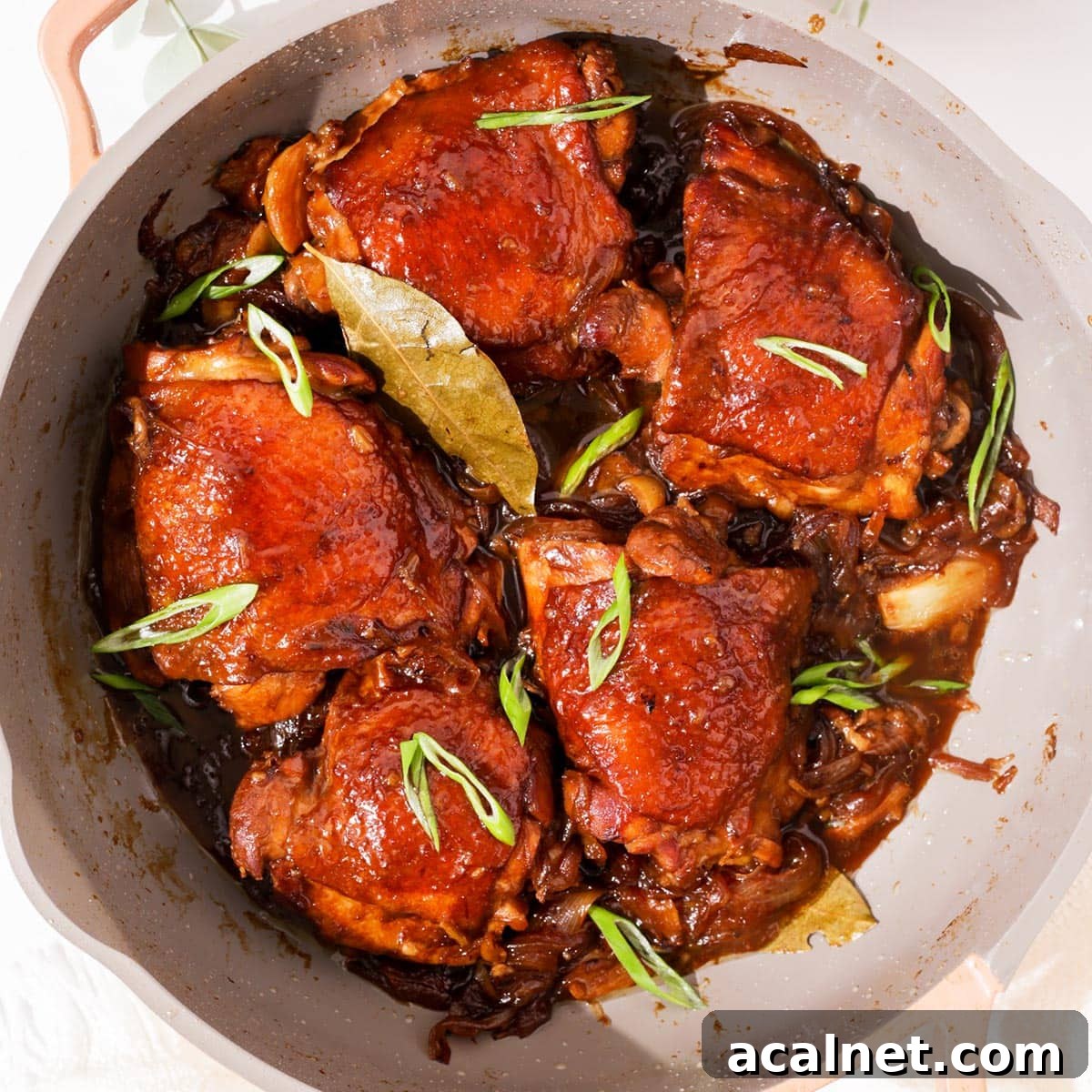
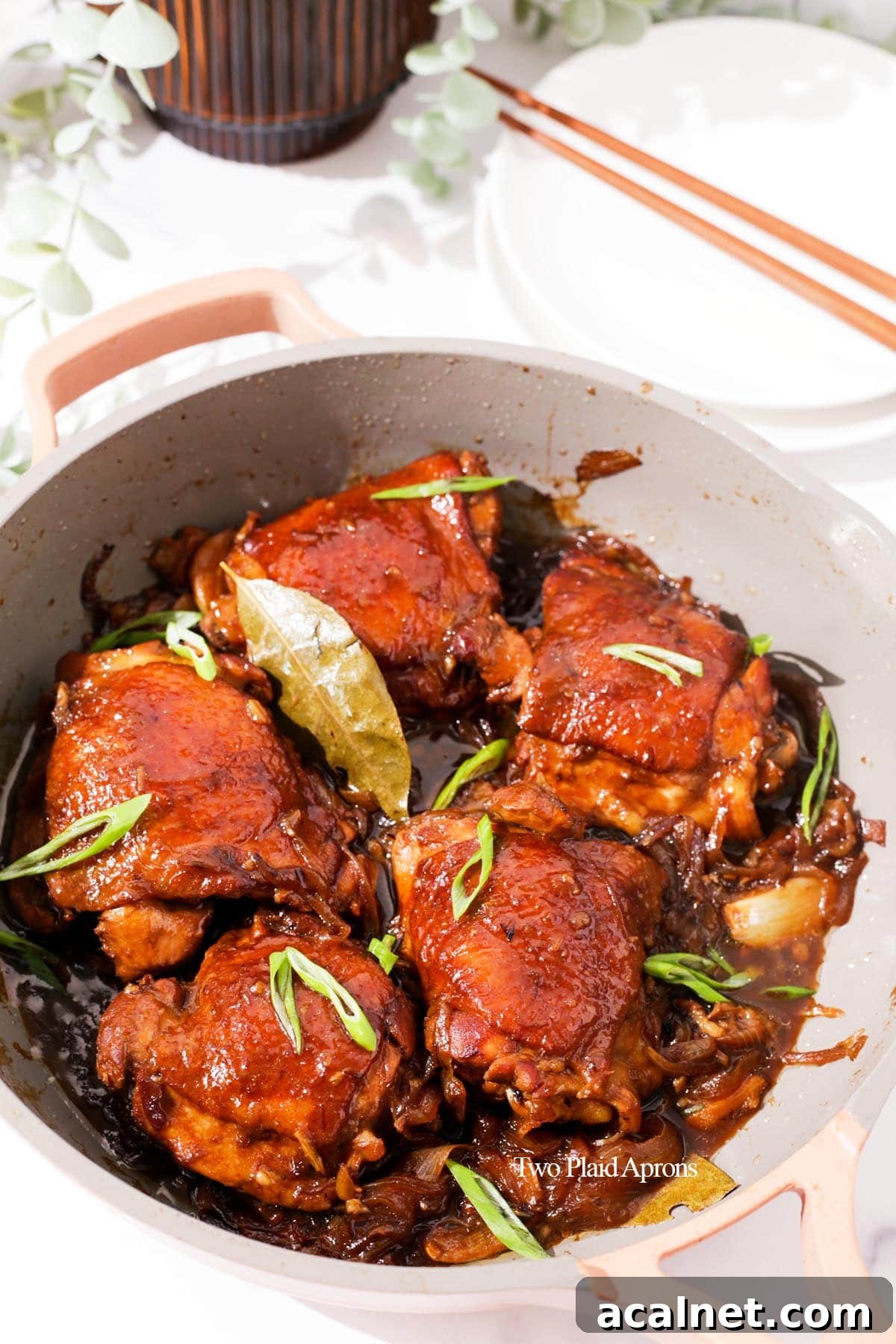
Chicken adobo, or adobong manok, is a beloved Filipino braised chicken dish. The chicken is slowly cooked in vinegar, soy sauce, garlic, bay leaves, and peppercorns until it becomes tender, juicy, and deeply flavorful. The sauce balances savory, tangy, and slightly peppery notes that keep your appetite going.
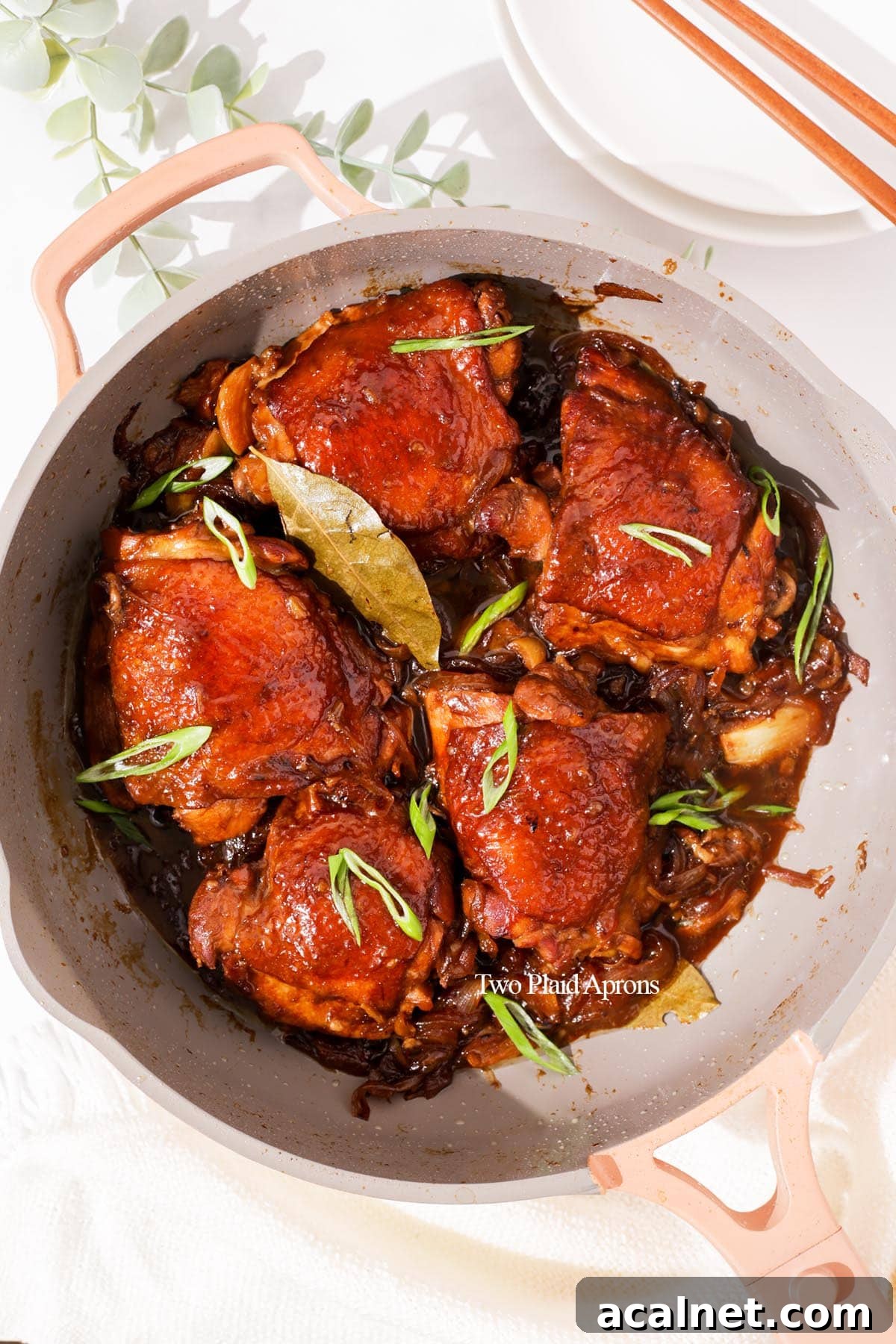
After weeks of testing and tasting versions at home and from Filipino restaurants, we developed a straightforward chicken adobo recipe that focuses on authentic flavors and simple technique. No marinade is required, though marinating overnight will shorten cooking time and deepen flavor. Whether you marinate or not, the result is a comforting, craveable dish.
What is chicken adobo?
Chicken adobo, or adobong manok, is a classic Filipino braise in which chicken is flavored and preserved through an acidic and salty braising liquid, traditionally vinegar and soy sauce, with aromatics like garlic, bay leaves, and whole peppercorns. The term “adobo” comes from the Spanish word adobar, meaning to marinate or season, and the method has long helped preserve food before refrigeration was common.
This cooking style concentrates flavor and creates a sauce that can be spooned over rice. Variations exist across households and regions, so feel free to adjust the balance of vinegar, soy sauce, and sugar to suit your taste.
What to eat with chicken adobo?
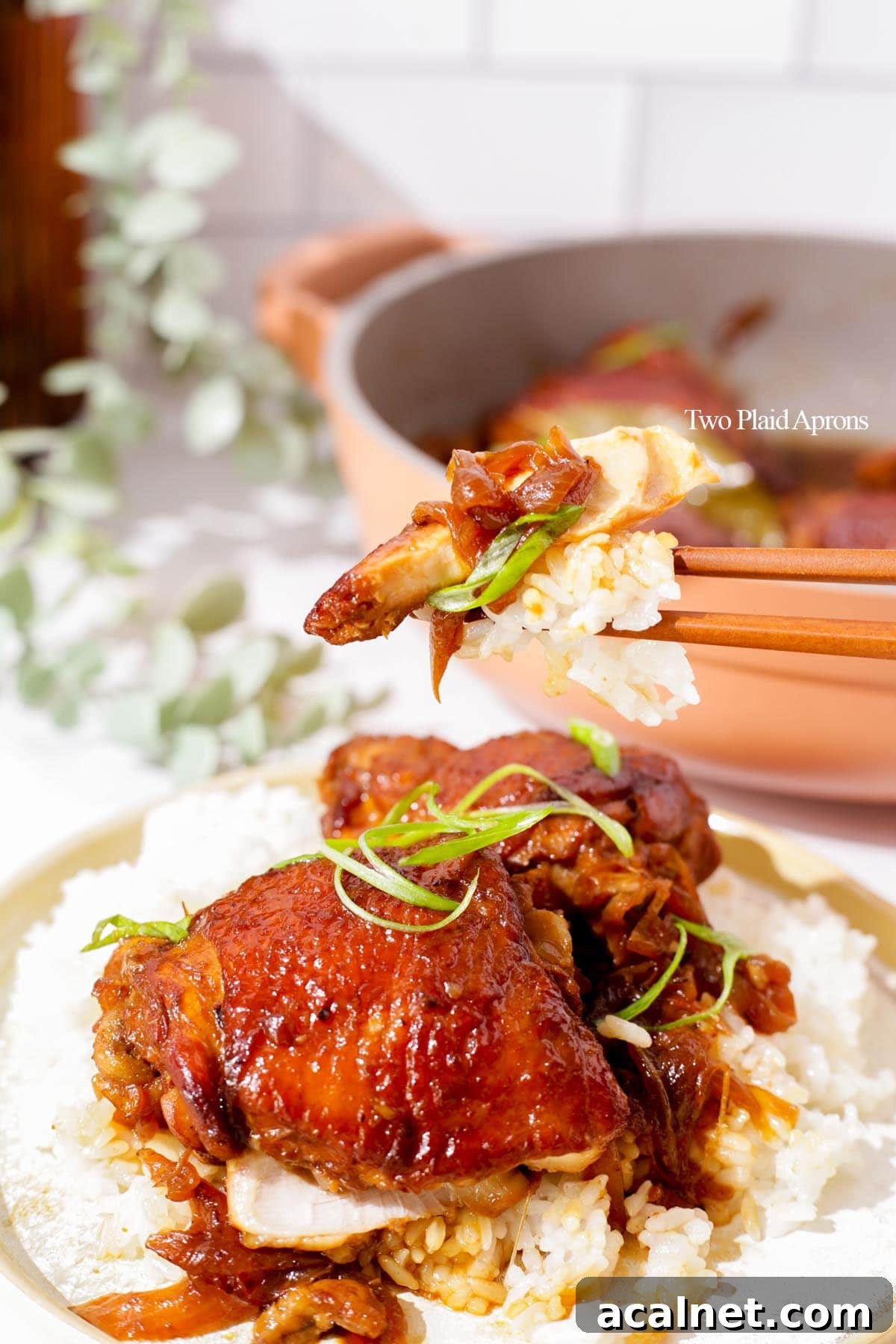
The simplest and most classic pairing is steamed white rice. Other great accompaniments include:
- Fresh cucumbers — a crisp, cooling contrast to the rich sauce.
- Pancit — Filipino stir-fried noodles make a hearty side.
- Lumpia — fried spring rolls add crunch.
- Garlic fried rice — fragrant and slightly greasy rice balances the tang of the adobo.
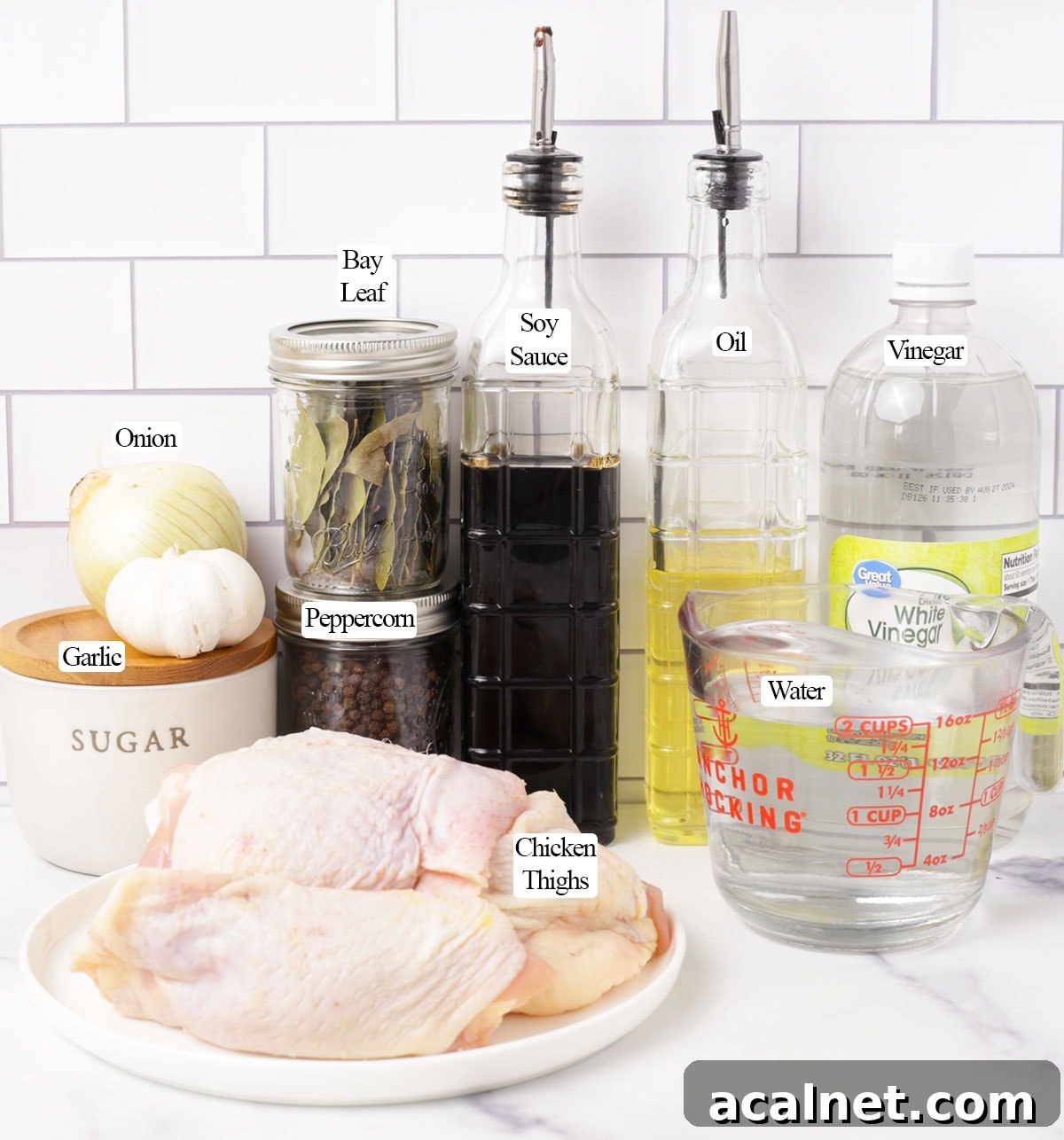
Ingredients
See the recipe card below for exact quantities.
- Chicken thighs — skin-on, bone-in for best flavor and juiciness.
- Vinegar — cane or distilled white vinegar both work; dark cane vinegar adds extra depth.
- Soy sauce — light or regular soy sauce to taste.
- Water or chicken stock — stock adds more body, water will work.
- Bay leaves — essential aromatic for adobo.
- Black peppercorns — whole peppercorns give the characteristic peppery note.
- Yellow onion — sliced, for sweetness and body.
- Garlic — smashed or roughly chopped; it softens and melts into the sauce during braising.
- Sugar — a small amount of white, brown, or palm sugar to balance the vinegar.
- Chicken bouillon powder (optional) — boosts savory flavor if using water.
- Jalapeño or bird’s eye chili (optional) — for heat.
- Green onion or cilantro (optional) — for garnish.
- Neutral oil — for searing.
How to make our chicken adobo
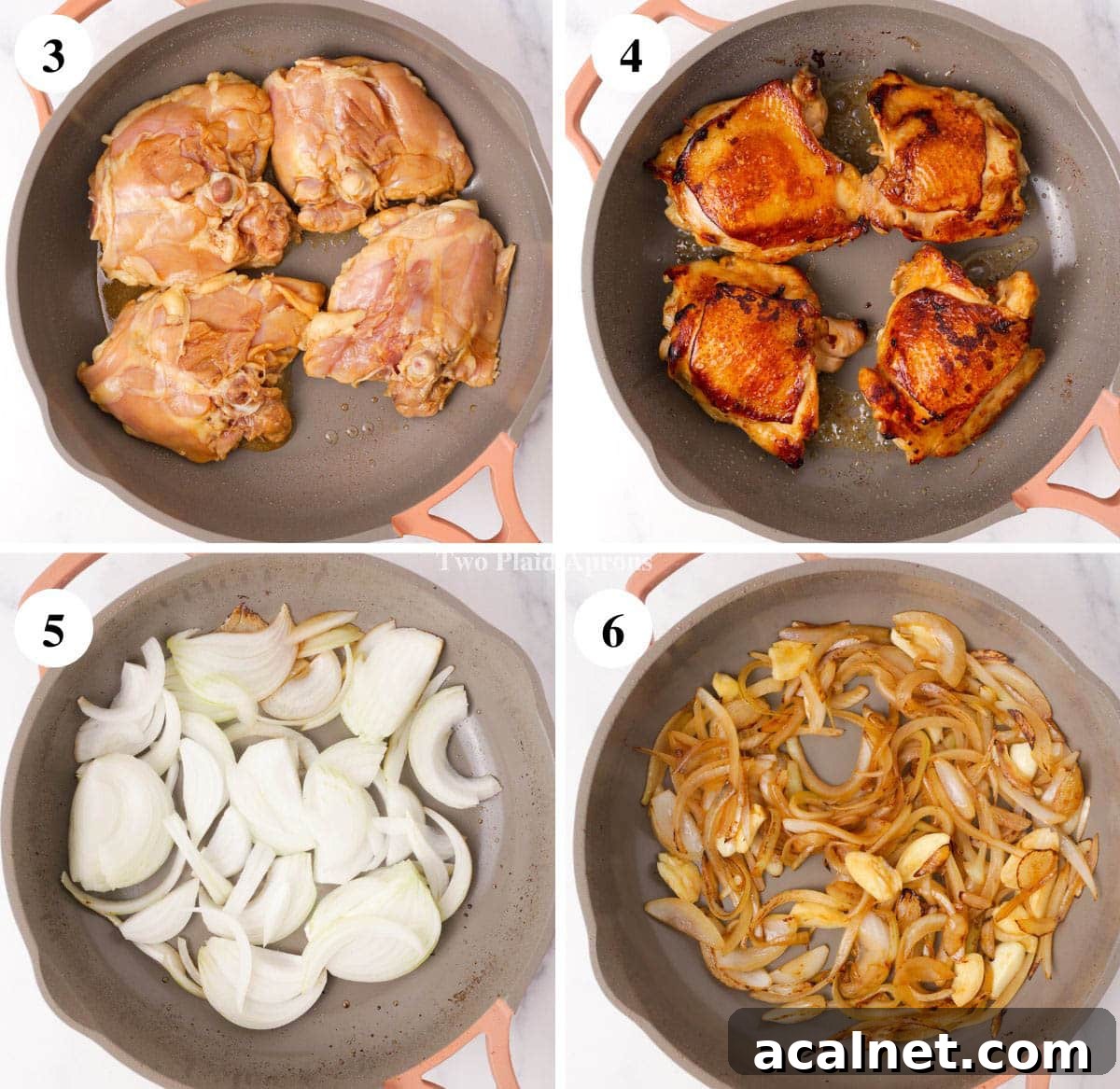
- Heat a small amount of oil in a deep pan or Dutch oven over medium-high heat. Sear chicken thighs skin-side down first until golden, then flip and briefly brown the other side. Remove chicken and set aside.
- Add sliced onion and smashed garlic to the pot. Sauté until fragrant and use a spatula to scrape up browned bits from the bottom of the pan.
- Return the seared chicken to the pot, skin side down. Add vinegar, soy sauce, water or stock, bay leaves, whole peppercorns, sliced jalapeño (if using), sugar, and chicken bouillon powder (if using). Bring to a boil, then lower heat to a gentle simmer. Cover and simmer for about 30 minutes.
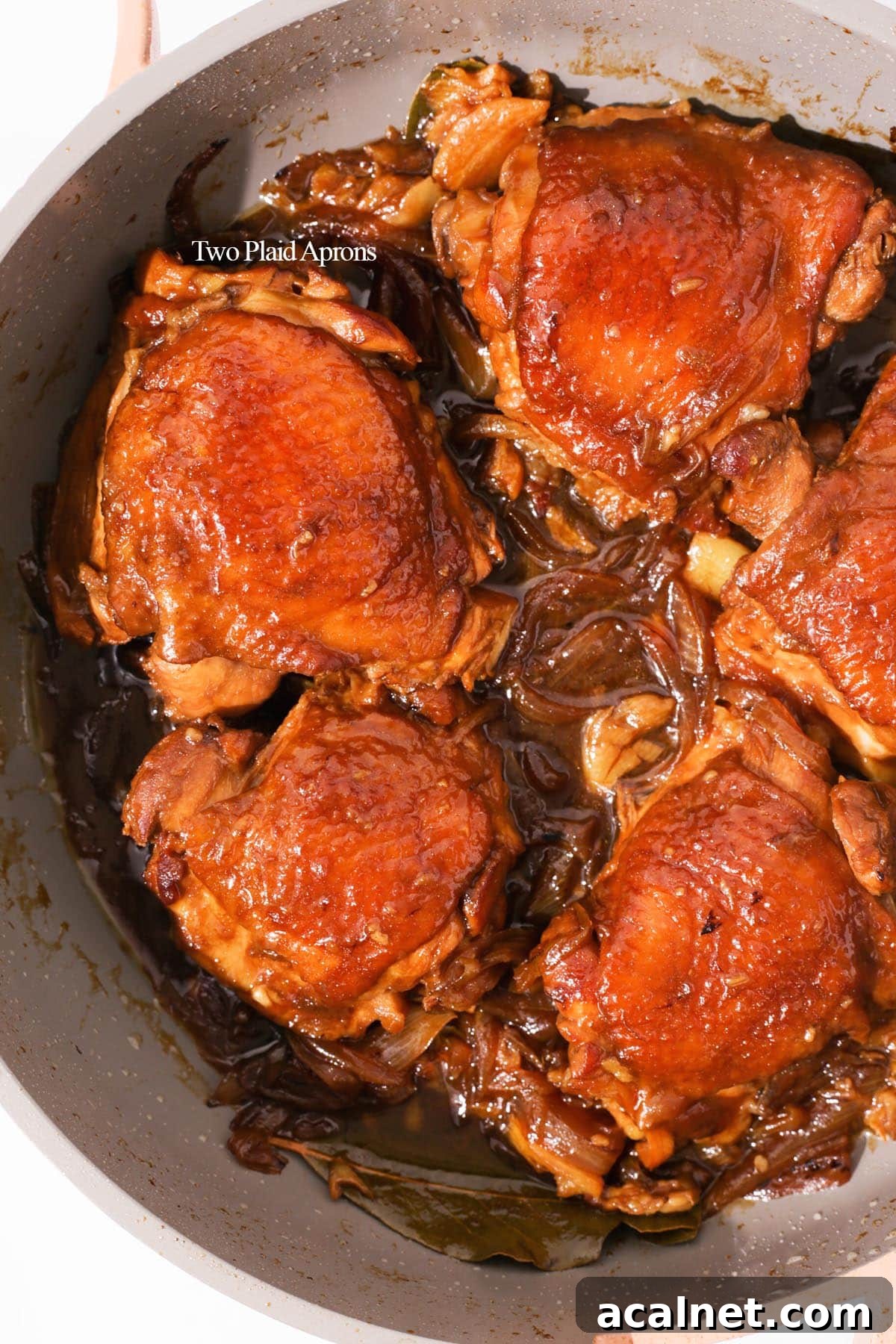
- Remove the lid, flip the chicken, and continue simmering uncovered for another 25–30 minutes, or until the liquid has reduced by roughly two-thirds and the chicken is very tender. Spoon the sauce over the chicken occasionally to keep the skin moist.
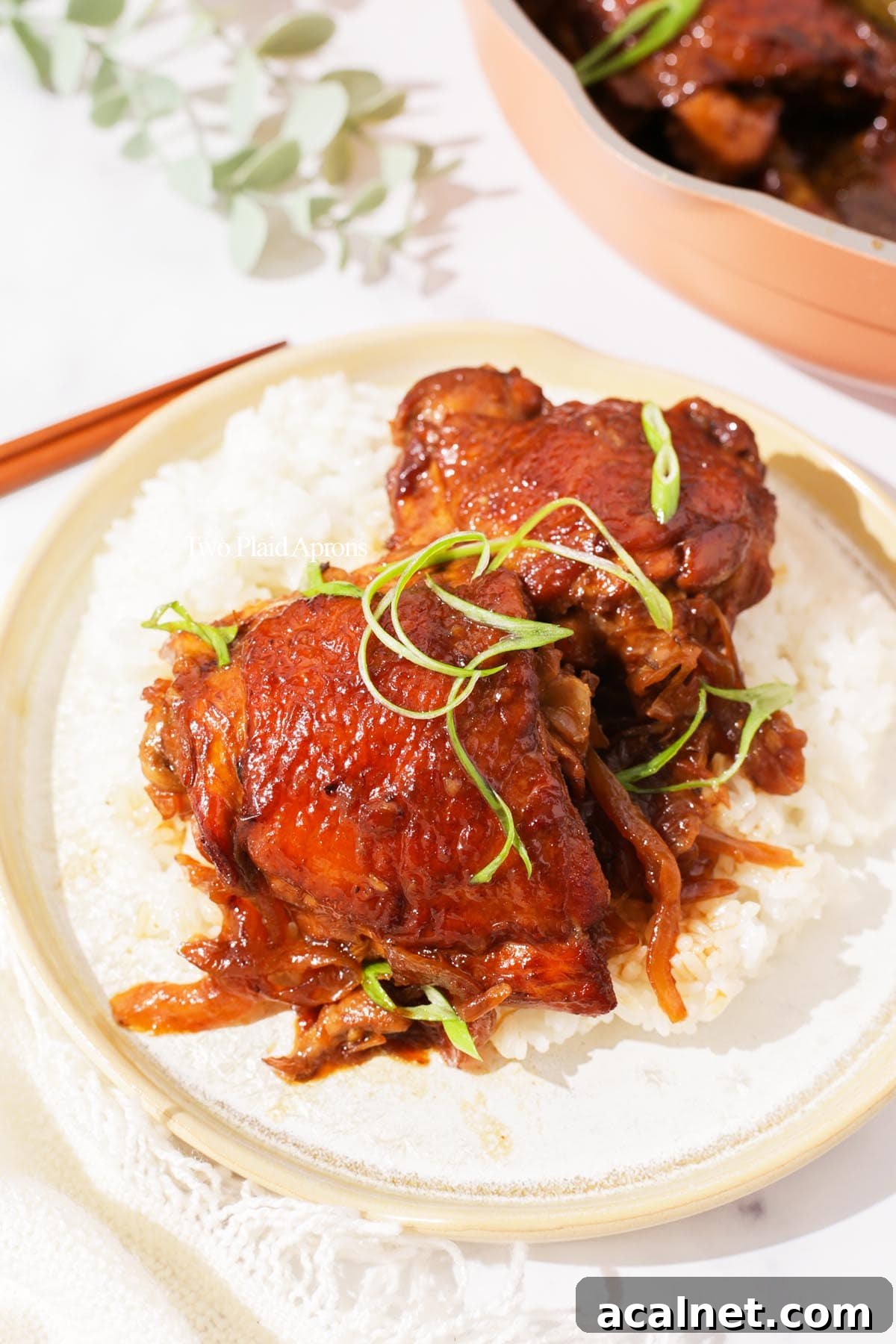
- Finish with sliced green onions or cilantro. Serve hot over steamed rice.
Pro tip: Place whole peppercorns in a small spice bag or cheesecloth if you want the pepper flavor without finding unexpected peppercorns in each bite. Remove the bag before serving.
If you’re marinating the chicken
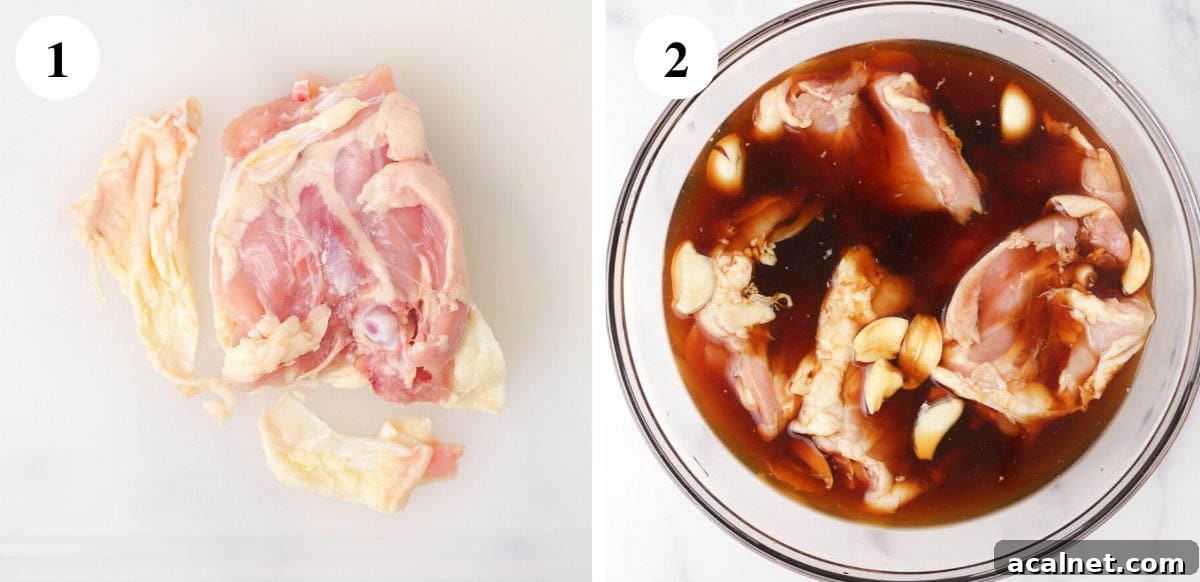
Marinating is optional but useful. Combine vinegar, soy sauce, and smashed garlic with the chicken in a bowl or bag, add enough water or stock to cover, and refrigerate for at least 2 hours or overnight. When ready to cook, shake off excess marinade for a better sear and use the marinade as part of the braising liquid.
Recipe tips
- Trim excess fat from thighs to reduce greasiness.
- Marinating shortens cook time and improves flavor; overnight is best if you have the time.
- Add more garlic if you enjoy a stronger garlicky profile—adobo benefits from generous garlic.
- Adobo can be prepared “dry” (sauce reduced) or “saucy.” This recipe keeps a moderate amount of sauce so you can spoon it over rice.
Storage
Chicken adobo often tastes better the next day. Once cooled, store in an airtight container in the refrigerator for up to one week, or freeze for two to three months. For batch cooking, marinate extra chicken and freeze portions with the marinade for later cooking.
Reheating
Reheat covered in the microwave until warm, or rewarm gently on the stovetop over medium heat, adding a splash of water or stock if the sauce has thickened too much.
What to do with leftovers
Leftovers are versatile. Use them in:
- Quesadillas — shredded adobo with melted cheese makes a flavorful filling.
- Fried rice — chopped adobo adds a salty, savory boost.
- Burritos — adobo pairs well with beans, rice, and fresh toppings.
- Tacos — add crunch and fresh veggies for balance.
FAQ
What can I use instead of soy sauce?
Substitutes include tamari or coconut aminos. If using coconut aminos, taste and add a pinch of salt if needed to reach the desired savory level.
What kind of vinegar should I use?
Cane vinegar (dark or white) is traditional and adds good depth. Distilled white vinegar or palm vinegar can also be used; adjust the amount to your taste.
What is the ratio of vinegar to soy sauce?
Ratios vary by household. A common starting point is a roughly 1:1 ratio of vinegar to soy sauce; adjust based on whether you prefer more tang or more saltiness.
If you make this recipe, we’d love to see your creation—share photos and notes with friends or on your own social channels.
Recipe
Yield
About 3 servings
Ingredients
- 2 pounds chicken thighs, skin-on and bone-in (about 5–6 thighs)
- 1 medium yellow onion, sliced
- 6 cloves garlic, peeled and smashed
- 3/4 cup vinegar (dark cane or distilled)
- 3/4 cup soy sauce
- 2 1/2 cups water or chicken stock
- 6 dried bay leaves
- 2 teaspoons whole black peppercorns
- 1 jalapeño, sliced (optional)
- 2 teaspoons granulated sugar (or brown sugar)
- 1 teaspoon chicken bouillon powder (optional)
- 1 stalk green onion, thinly sliced for garnish (optional)
- Oil for searing
Instructions
- Heat oil in a deep pan or Dutch oven over medium-high heat. Sear chicken thighs skin-side down until golden, then brown the other side. Remove and set aside.
- Sauté sliced onion and smashed garlic in the same pot until fragrant, scraping up browned bits.
- Return chicken to the pot. Add vinegar, soy sauce, water or stock, bay leaves, peppercorns, jalapeño (if using), sugar, and bouillon powder. Bring to a boil, reduce to a low simmer, cover, and cook for 30 minutes.
- Uncover, flip the chicken, and simmer uncovered for another 25–30 minutes until the liquid has mostly reduced and the chicken is tender. Spoon sauce over the chicken during this time to keep it moist.
- Garnish with green onion or cilantro and serve hot with rice.
Notes: Marinating is optional but recommended for deeper flavor. If you marinate, reserve some of the liquid for braising and shake off excess marinade before searing for a better crust.