
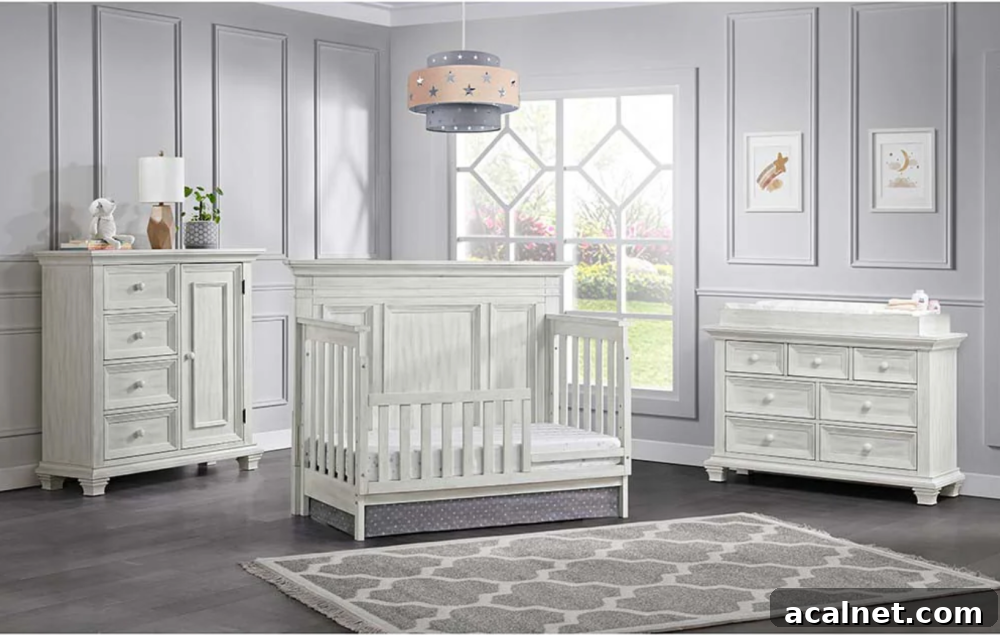
Designing a nursery is one of the most exciting parts of preparing for a new baby, but the many choices can feel overwhelming. After designing nurseries for my four children and consulting an interior designer, I learned practical ways to make the space functional, beautiful, and durable. Choosing the right pieces makes a big difference. Below are ten tips I rely on, drawn from experience and expert advice.
Tip #1: Pick a Color Palette You’ll Love
Begin with a neutral wall color—soft white, warm beige, or light gray. A neutral backdrop stays timeless and gives you flexibility to refresh the room with colorful pillows, curtains, or artwork as your child’s tastes change. Swapping small accessories instead of repainting keeps the nursery stylish and low-effort over time.
Tip #2: Invest in Furniture That Grows with Your Child
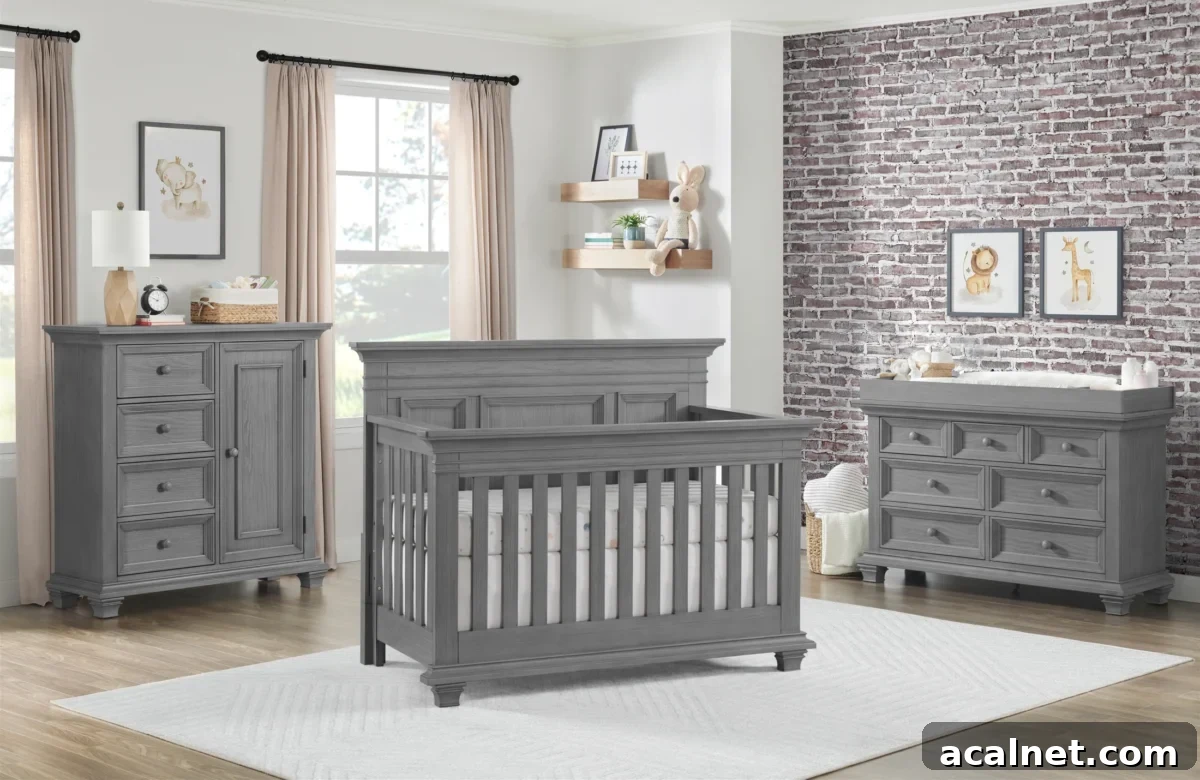
Select cribs and pieces that transition through stages—a convertible crib that becomes a toddler bed, daybed, and eventually a full-size bed is a smart long-term investment. Furniture that matches your home’s style creates a cohesive look, so the nursery feels like part of the house rather than a separate room. Solid construction and classic lines ensure pieces will still suit the space as your child grows.
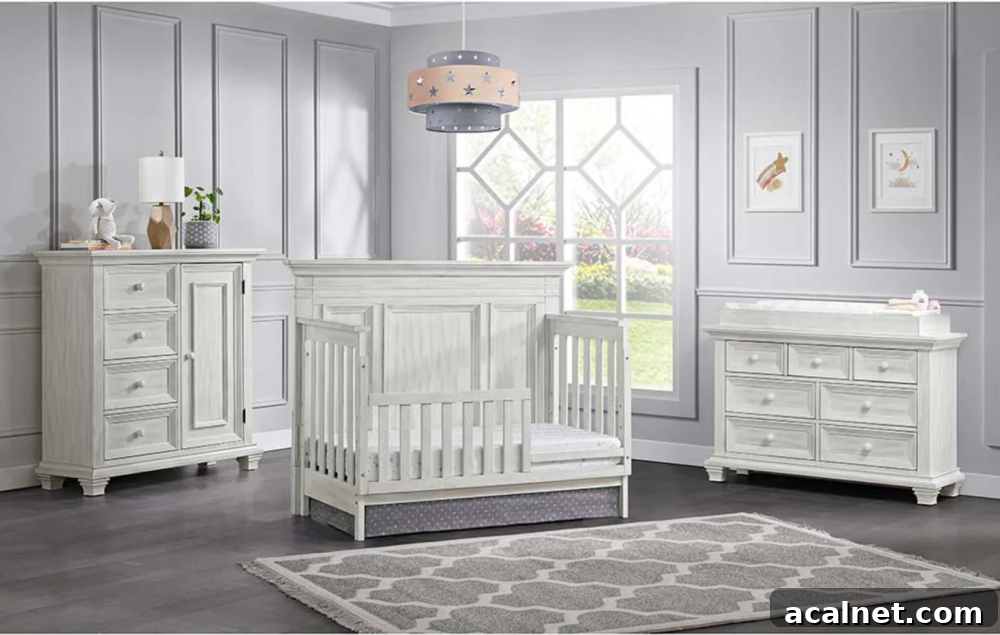
A well-made 4-in-1 crib that converts through stages offers durability and value. Look for solid wood construction and reliable finishes to ensure longevity and safety.
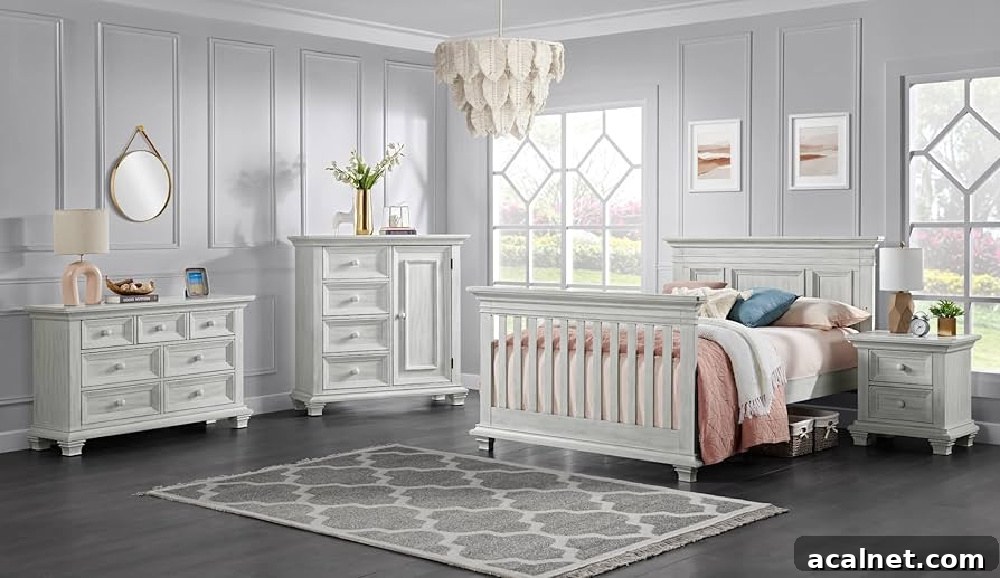
Quality materials and finishes mean the furniture will withstand years of use, saving time and money in the long run.
Tip #3: Layer in Soft Textures
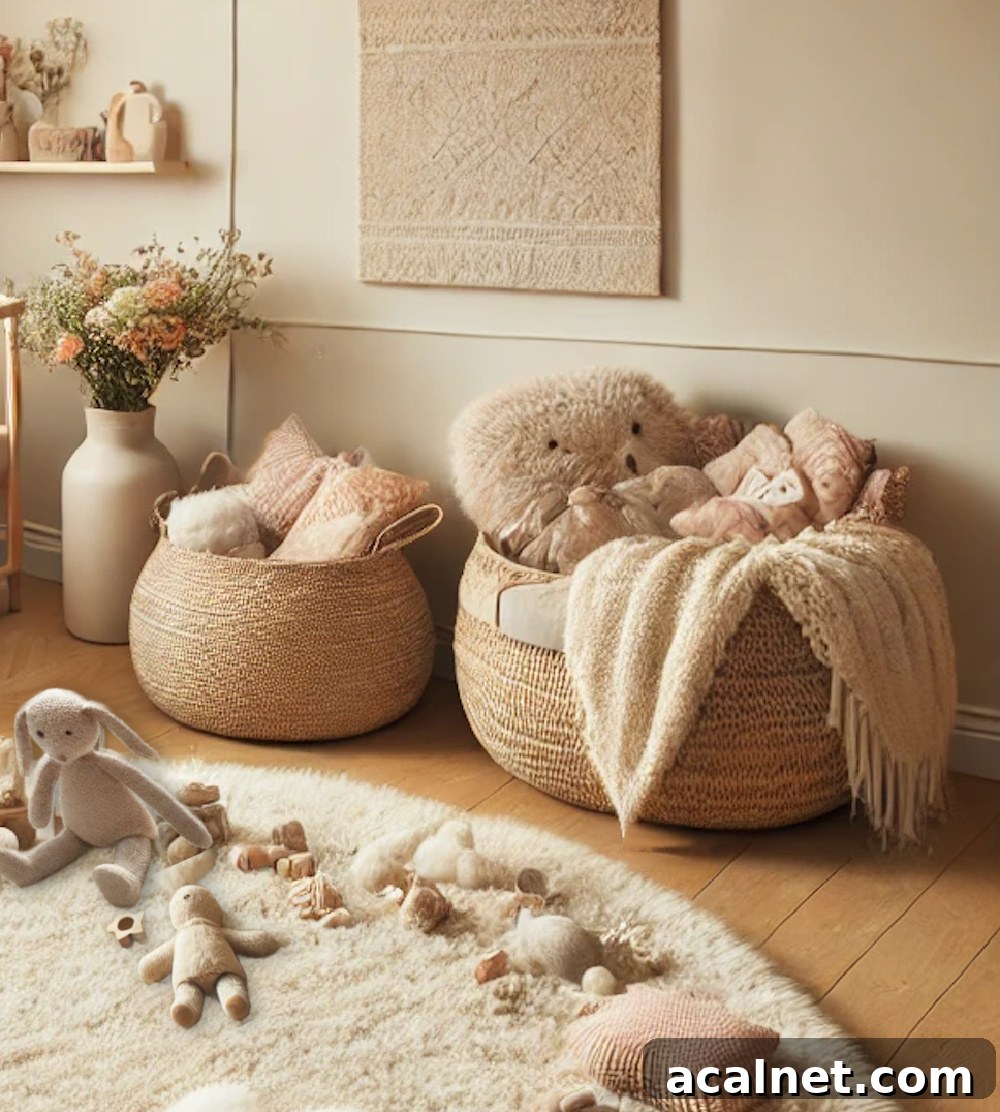
Layering soft textures makes the nursery feel cozy and comfortable. A plush area rug provides a safe surface for tummy time and later becomes a play area. Add a comfortable chair or pouf, soft bedding, and a few blankets to create a warm, inviting space ideal for cuddling and bonding.
Tip #4: Incorporate Practical Storage Solutions
Babies come with a lot of gear, so smart storage is essential. A dresser that doubles as a changing station is extremely practical, and deep drawers or chifferobes help organize clothes, blankets, and diapers. Use baskets and bins to keep toys accessible but tidy. Thoughtful storage keeps the room calm and functional.
Tip #5: Create a Cozy Reading Nook
A small reading corner is one of the most meaningful additions you can make. Even with limited space, a comfy chair, a small bookshelf, and a few pillows create a dedicated spot for reading and quiet moments. This area will become a cherished place for sharing stories and routines as your child grows.
Tip #6: Choose Safe and Eco-Friendly Furniture
Safety and non-toxic finishes should be top priorities. Choose furniture that meets current safety standards and uses lead-free, non-toxic finishes so you can feel confident the environment is healthy for your child. Verified safety testing and sustainable materials add peace of mind.
Tip #7: Opt for Dual-Purpose Furniture
Dual-purpose pieces maximize utility in a small room. Convertible cribs, ottomans with hidden storage, and dressers that double as changing tables make efficient use of space while keeping the room adaptable. Think about how each item can serve more than one role over time.
Tip #8: Use Adjustable Lighting
Lighting has a big impact on comfort and routine. Install a dimmer switch so you can soften the light during bedtime and nighttime feedings. Add a small lamp and a warm nightlight to create a soothing atmosphere that helps babies and parents relax.
Tip #9: Incorporate Versatile Decor
Choose decor that can evolve with your child. Removable wall decals, temporary wallpaper, and changeable textiles let you update the room without major renovations. This flexibility allows the nursery to grow with your child’s interests and personality.
Tip #10: Plan for Play
Leave open floor space for play and development. A clear area on the floor can serve for tummy time, play mats, and later a small table and chairs for crafts. Designing with flexibility in mind ensures the room adapts through different stages of childhood.
Designing a nursery is a chance to create a space that feels special, inviting, and practical. By prioritizing timeless color choices, multi-stage furniture, safe materials, and flexible storage and decor, you can build a room that supports both daily routines and long-term use. Balance style and practicality to enjoy a nursery that grows with your child and becomes a comfortable, meaningful part of your home.