“Until man duplicates a blade of grass, nature can laugh at his so-called scientific knowledge.”
– Thomas Edison
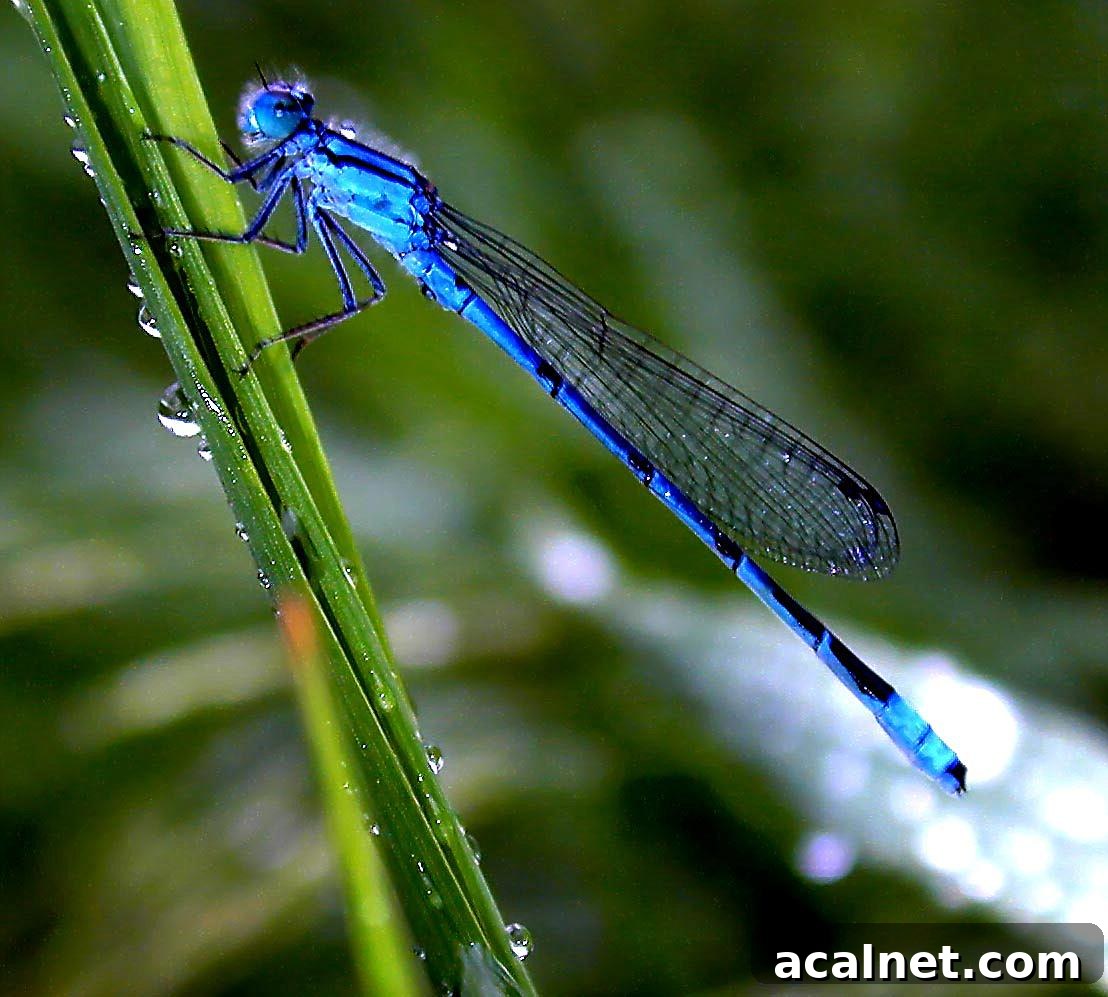
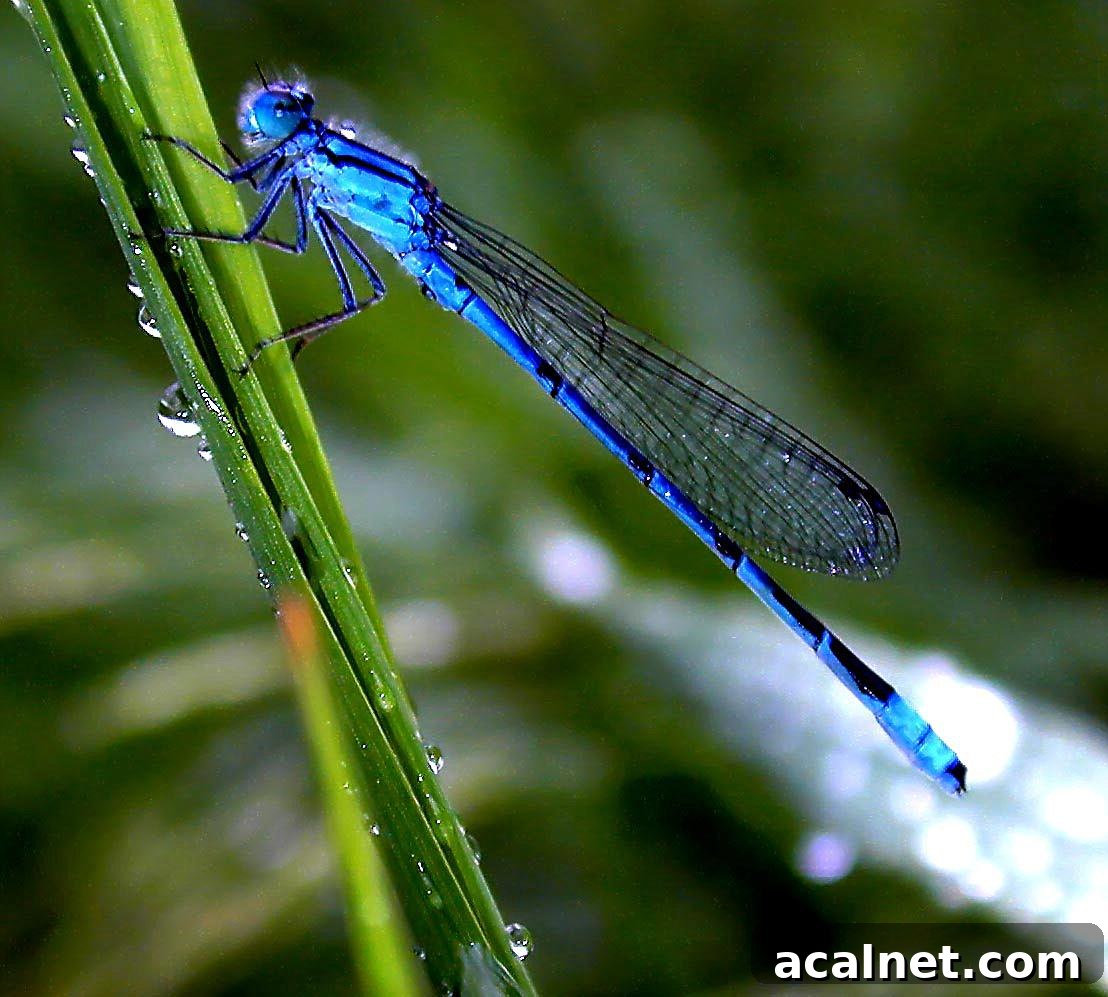
Damselfly on a blade of grass.
Dose of Beauty Archives
Thomas Edison’s observation reminds us that even the simplest elements of the natural world — a single blade of grass, a tiny insect resting on it — embody complexity and elegance beyond our complete understanding. A damselfly perched on a blade of grass offers a quiet moment to reflect on form, function, and the quiet wonders that surround us every day. This scene is both visually arresting and ecologically meaningful: it highlights the interconnected roles of plants and insects in healthy ecosystems and invites us to look closer.
Damselflies are slender, delicate insects closely related to dragonflies. They are commonly found near freshwater habitats such as ponds, streams, marshes, and wetlands where they lay eggs and where their aquatic larvae develop. Unlike many insects that draw attention for their size or color, damselflies capture interest through motion, posture, and the way light plays on their bodies and wings. When resting, many species fold their wings together along the body, making them appear even more fragile as they cling to vegetation like blades of grass.
The blade of grass itself is more than just a perch. Grasses are foundational players in many ecosystems, stabilizing soil, providing food and shelter, and contributing to nutrient cycles. A single blade, when looked at closely, reveals a network of veins, cells, and structures finely tuned for photosynthesis and resilience. Its interaction with tiny animals — insects, spiders, and other invertebrates — forms part of a much larger web of life. Together, plant and insect illustrate the balance of predator and prey, pollination and protection, lifecycle and seasonality.
Observing a damselfly on a blade of grass can be the starting point for many inquiries: What time of day is best for spotting them? How does weather affect their behavior? What role does the surrounding vegetation play in supporting their life cycle? These questions lead naturally to an appreciation of habitat conservation. Protecting freshwater habitats, preserving native plant communities, and reducing pollution are practical steps that benefit damselflies and countless other species. Simple actions such as planting native grasses, avoiding pesticides, and creating small ponds or water features can support local biodiversity.
For nature photographers and enthusiasts, capturing this kind of intimate wildlife moment requires patience and a few practical techniques. Early morning and late afternoon often provide soft, directional light that enhances textures while minimizing harsh shadows. A calm day with little wind makes it easier to focus on small subjects. Use a macro lens or a telephoto lens with close-focusing ability, and consider a tripod or monopod for stability. When approaching a damselfly, move slowly and avoid sudden movements; many species are sensitive to vibration and will take off if startled. Observing behavior from a slight distance and anticipating perching patterns increases the chance of a successful, natural-looking photograph.
Beyond photography, simply spending time noticing small interactions between plants and insects deepens our connection to place. It invites mindfulness and curiosity: the way sunlight filters through a blade of grass, the subtle metallic sheen on a damselfly’s body, the tiny legs that clasp the stem. These details form a narrative of life’s persistence and adaptability.
In a broader sense, the image of a damselfly on a blade of grass can serve as a quiet reminder to respect and protect the natural systems that sustain us. It prompts us to celebrate small wonders, to learn from them, and to act in ways that preserve the habitats where they thrive. Observing these moments with attention and care enriches our understanding of nature and our role within it.