
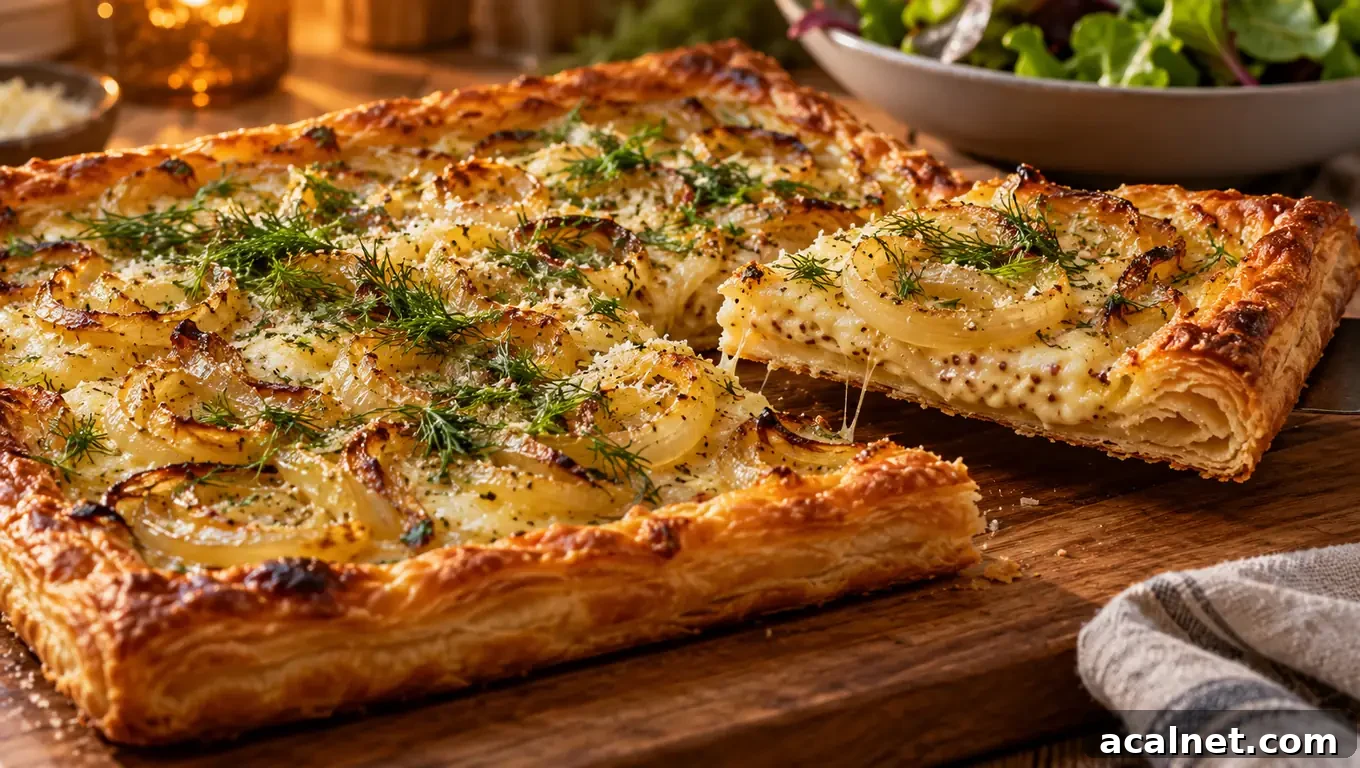
This onion tart comes together in about ten minutes using a ready-made puff pastry. Its secret is a creamy base spread directly on the pastry: a blend of cream, mustard and grated cheese that brightens the onions and keeps the filling tender. Straight from the oven, a little grated parmesan and some fresh dill are all you need to turn it into a comforting dinner, ready in roughly half an hour.
Why the mustard cream matters under the onions
In many tarts the cream is poured over the filling and can run, potentially soaking the pastry. Here, the idea is reversed. The cream, the mustard and part of the cheese are mixed into a thick paste and spread as a thin layer on the puff pastry before adding the onions. During baking this base melts and binds, holding the topping in place so each slice cuts cleanly without the filling collapsing.
Mustard acts as a flavor enhancer: its sharpness contrasts with the sweet softness of cooked onions and the richness of the cheese, without overpowering them. The result looks like a simple onion tart but delivers a more vivid, well-rounded taste that often surprises guests.
Ingredients for the mustard-cream onion tart
Serves 4.
- 1 ready-to-roll puff pastry
- 100 ml (about 10 cl) heavy cream
- 1 teaspoon mustard
- 2 large yellow onions
- 150 g grated cheese
- 20 g grated parmesan
- 20 g butter, in small pieces
- 1 egg yolk
- 2 tablespoons fresh dill, chopped
- Salt and pepper to taste
Steps, from the creamy base to a golden tart
- Preheat the oven to 180 °C. In a bowl, combine 100 g of the grated cheese with the cream and mustard, then season with salt and pepper. Peel the onions and slice them into fairly thick half-moons.
- Place the puff pastry on a baking sheet lined with parchment. Score a 2 cm border with a knife without cutting through the dough, then prick the inside lightly with a fork to prevent excessive rising.
- Spread the mustard cream evenly inside the scored border, arrange the onions on top, and scatter the small pieces of butter over the surface for added richness.
- Brush the border with the egg yolk and bake for about 25 minutes, until the puff pastry is well risen and golden brown.
- As soon as it comes out of the oven, sprinkle with parmesan and chopped dill. Wait about 5 minutes before slicing so the filling firms up slightly and the tart cuts neatly.
Which onions and which cheese make the difference
The type of onions determines the texture. Yellow onions become sweet and melt during cooking and take on a light caramel color in the oven. Cut into thick half-moons they keep some structure and won’t dry out, whereas very thin slices risk burning before the pastry is fully baked. Choosing a butter-based puff pastry enhances flavor and delivers a crisper, more aromatic crust.
Select a hard cheese that melts well. Emmental lends a gentle sweetness, while a stronger-flavored comté or beaufort will give the tart more character. Divide the cheese into two portions: one mixed into the cream to form the base and the other reserved for finishing with parmesan. This approach also helps use up leftover cheese from the fridge.
Storing, reheating and variations for the onion tart
Store the tart in a well-sealed container in the refrigerator for up to the next day. To restore its crispness, reheat individual slices in the oven at 160 °C for 8–10 minutes rather than using a microwave, which softens the puff pastry. The cheese will regain its creaminess and the onions their melting texture.
The mustard-cream base is versatile. Add cooked lardons, a little cured ham, or cubes of goat cheese or feta before baking, or top with a few slices of smoked salmon after baking. For herbs, swap the dill for thyme, chives or parsley to vary the flavor week to week without changing the method. These small adjustments keep the tart interesting while preserving the reliable technique that makes it so satisfying.