
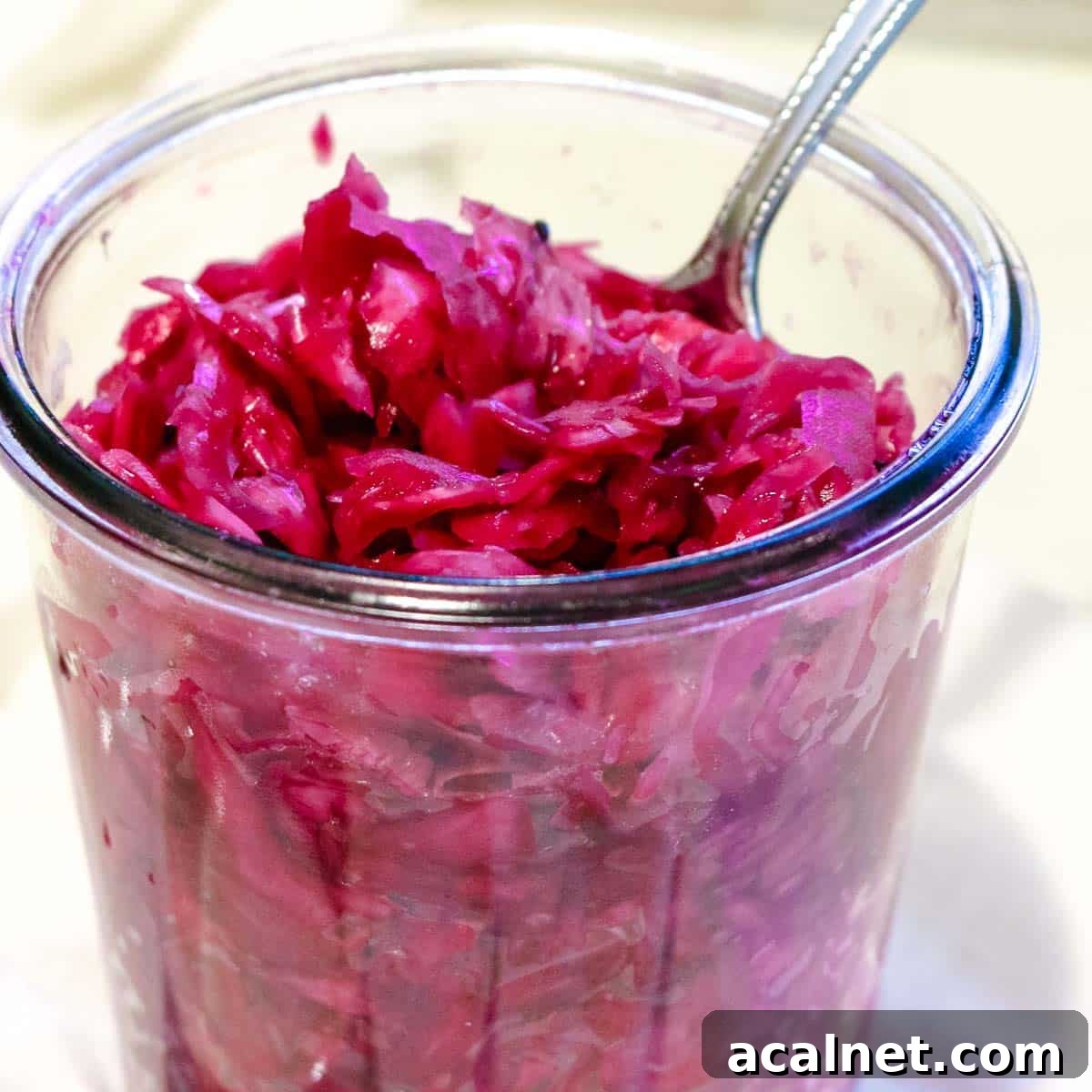
This Red Cabbage Sauerkraut Recipe (fermented red cabbage) uses just a few simple ingredients and easy steps to produce a tangy, crunchy kraut that pairs with many meals. Naturally rich in probiotics and digestive enzymes, it’s an easy way to add fermented foods to your diet.
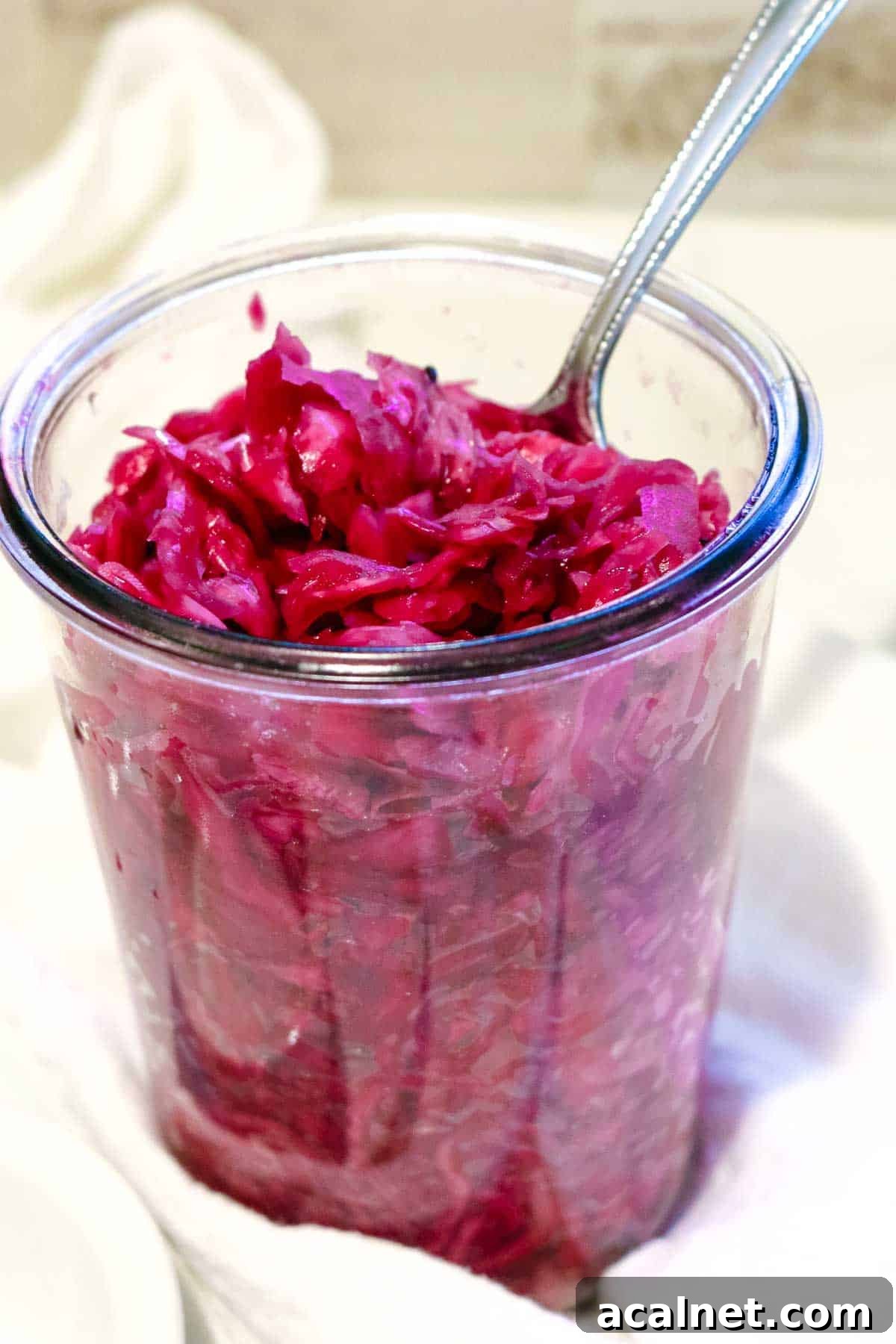
If you want more fermented foods on your table, this homemade red cabbage sauerkraut is a great choice. It’s flavorful, naturally probiotic, and simple to make at home.
This recipe is a variation of a traditional raw sauerkraut. If you’re new to fermenting, consider reading introductory resources about kraut benefits and how to calculate salt for fermentation.
Red sauerkraut is one of many fermented options. Try it alongside other favorites such as kimchi, lacto-fermented jalapeños, or cultured pico de gallo.
Gather your jars and ingredients, and let’s get started.
Why You’ll Love This Red Cabbage Sauerkraut Recipe
This version relies on the cabbage’s natural brine rather than added water. Unrefined salt draws juices from the cabbage, concentrating flavor while creating an ideal environment for lactic acid bacteria to thrive. Adding water is unnecessary and will dilute flavor.
- Taste: Bright, slightly sour, and tangy—adds brightness to many dishes.
- Texture: Crisp and crunchy when prepared gently, or softer if you massage the cabbage more thoroughly.
- Versatility: Use it as a condiment, a topping, or a side on its own.
- Health benefits: Naturally fermented sauerkraut supplies probiotics that support digestion and gut health.
- No special equipment: Use clean glass jars and common kitchen tools—no crock or special lid required.
What are the Benefits of Red Cabbage Sauerkraut?
Fermented red cabbage is nutrient-rich—providing vitamin C, vitamin K, B6, fiber, potassium, and calcium. More importantly, the natural fermentation produces beneficial bacteria (probiotics) that may support digestion, nutrient absorption, and immune health.
💭Make it nutrient-dense: Add a serving of fermented foods to meals for optimal gut support.
Ingredients for Red Cabbage Sauerkraut
This recipe uses two main ingredients with a couple of optional seasonings for added flavor.
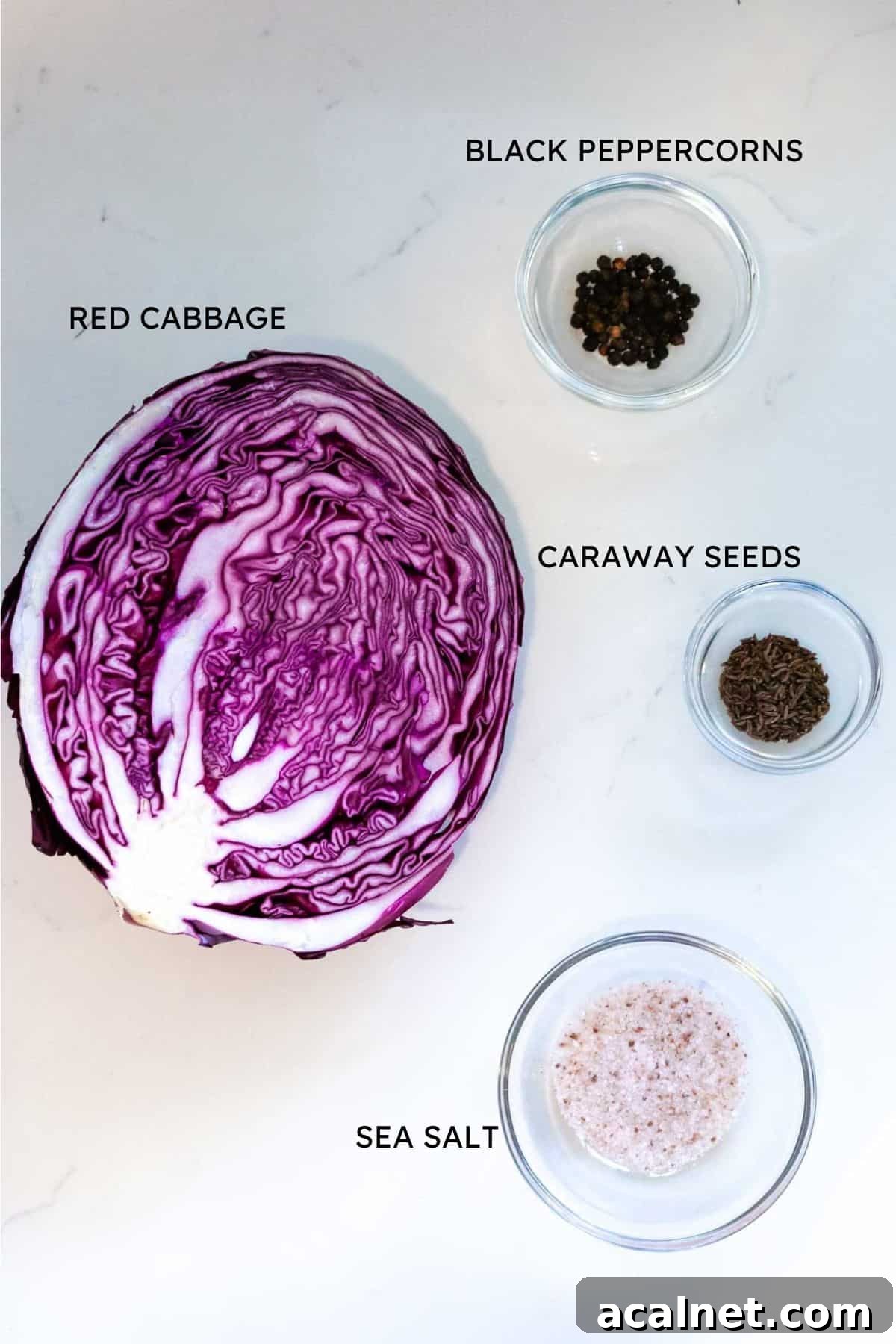
- Red cabbage: Provides color, flavor, and texture.
- Unrefined sea salt: Draws out juices, preserves, and helps control fermentation by favoring beneficial bacteria.
- Peppercorns (optional): Add a mild, warming spice note.
- Caraway seeds (optional): Offer a slightly sweet, nutty flavor and can aid digestion.
See the printable recipe card for exact quantities and serving information.
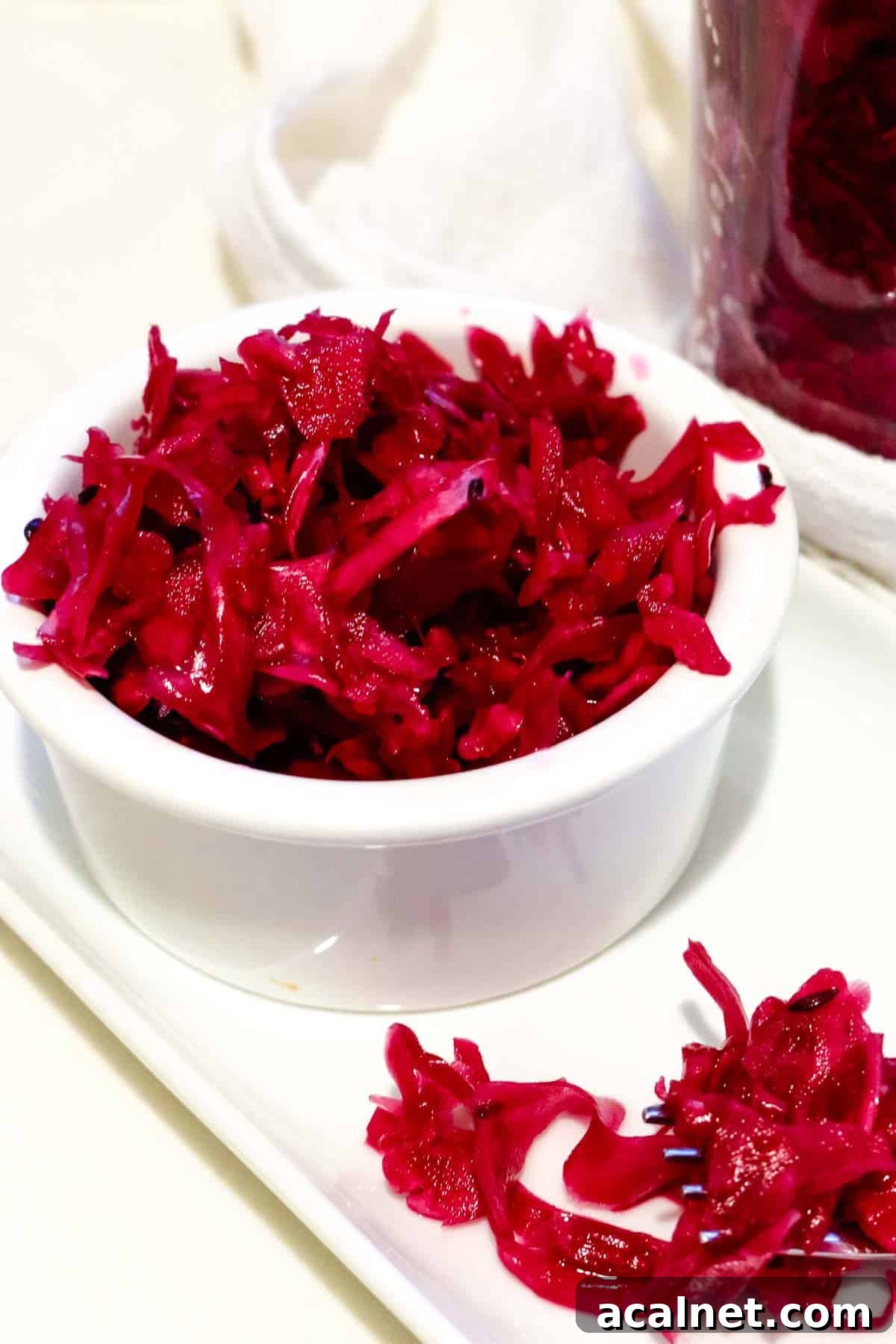
Helpful Tips for Selecting Cabbage
Choose a fresh, dense head of red cabbage for the best sauerkraut. Look for:
- Firmness: The head should feel heavy and solid for its size.
- Density: Compact heads yield less watery kraut than loose heads.
- Size: Medium to large heads are easiest to work with and yield the right texture.
- Stem condition: Avoid heads with a very dry or cracked stem—this can indicate age or poor storage.
Using a kitchen scale for cabbage and salt measurements will help ensure consistent fermentation results.
💭Pro tip: Weigh cabbage and salt with a digital scale for reliable fermentation.
How to Make Red Cabbage Sauerkraut
Printable recipe details appear in the recipe card below. Follow these steps to ferment successfully the first time.
You’ll need red cabbage, unrefined salt, and optional caraway seeds and whole peppercorns.
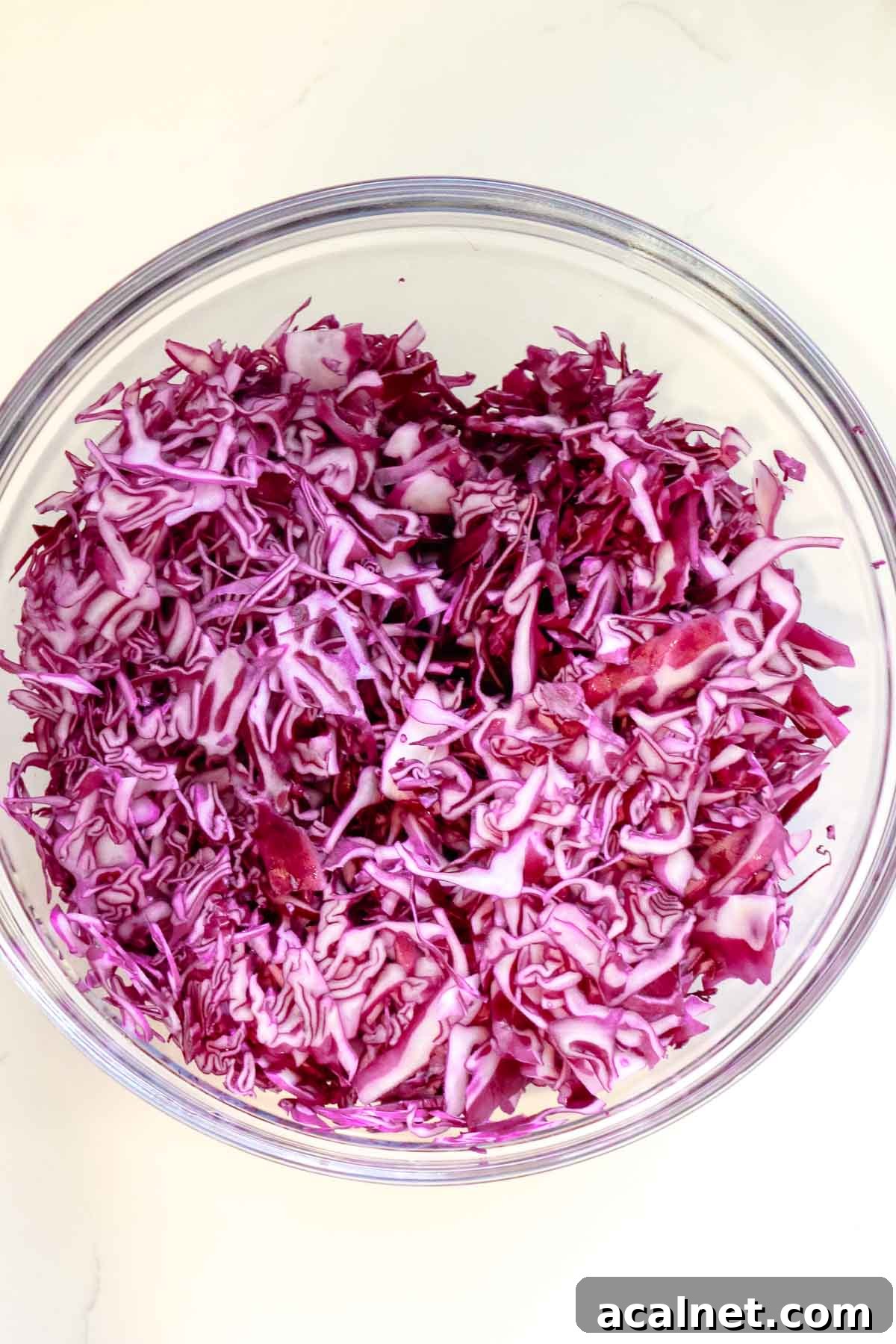
Step 1. Shred
Remove outer leaves, core the cabbage, and shred it into thin ribbons using a knife, mandoline, or food processor.
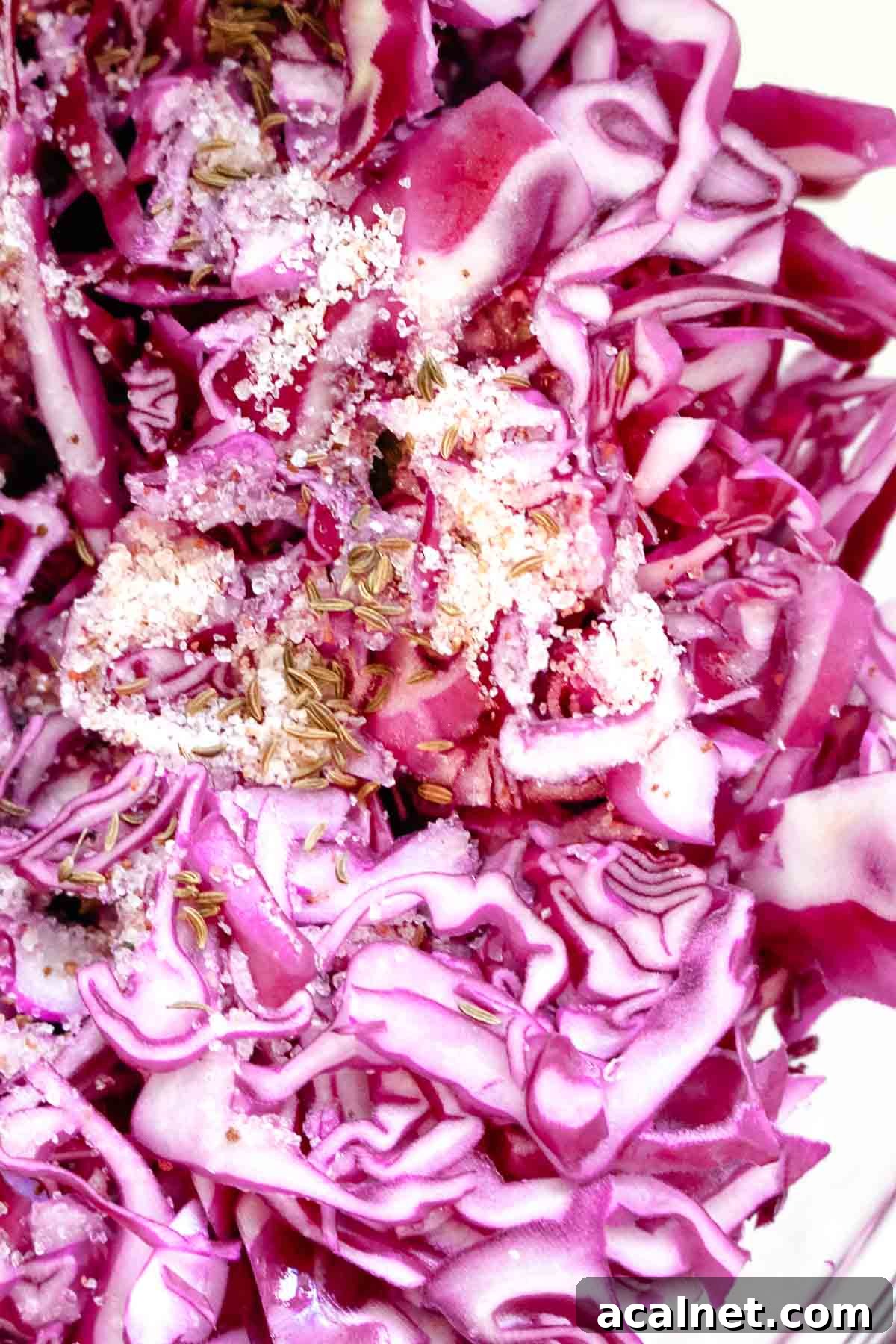
Step 2. Season
Measure and add salt (and caraway seeds if using) to the shredded cabbage.
💭Pro tip: A food processor or mandoline yields uniform ribbons, but a sharp knife also works.
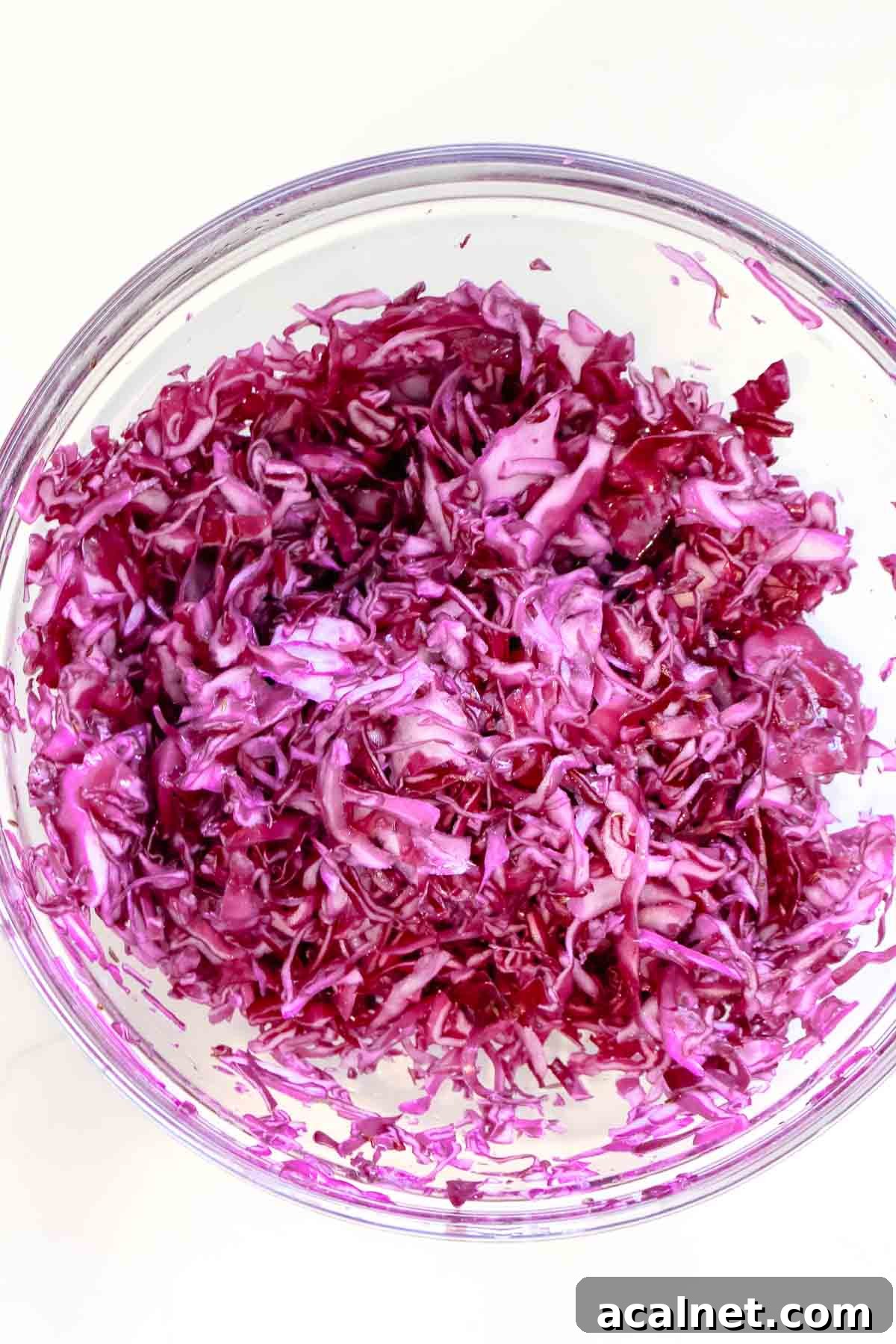
Step 3. Massage
Massage the cabbage and salt with clean hands or a tamper until it releases liquid. For softer kraut, massage more; for crunchier kraut, stop once the salt is dissolved and the juices begin to form.
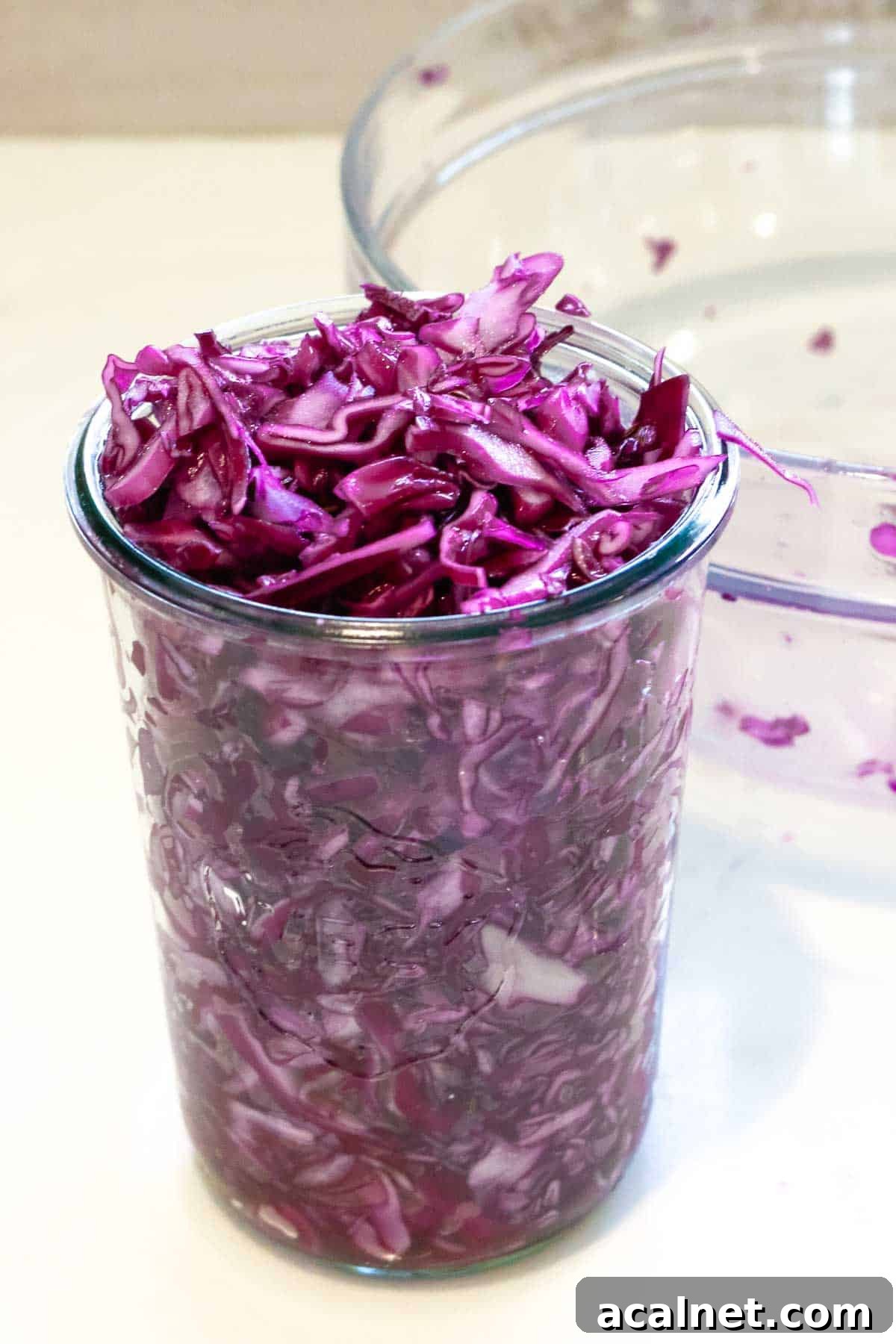
Step 4. Transfer
If using peppercorns, place them in the jar first. Pack the cabbage and its juices tightly into a clean quart-size jar, leaving some headspace.
💭Pro tip: Pack firmly to eliminate air pockets and help the cabbage stay submerged.
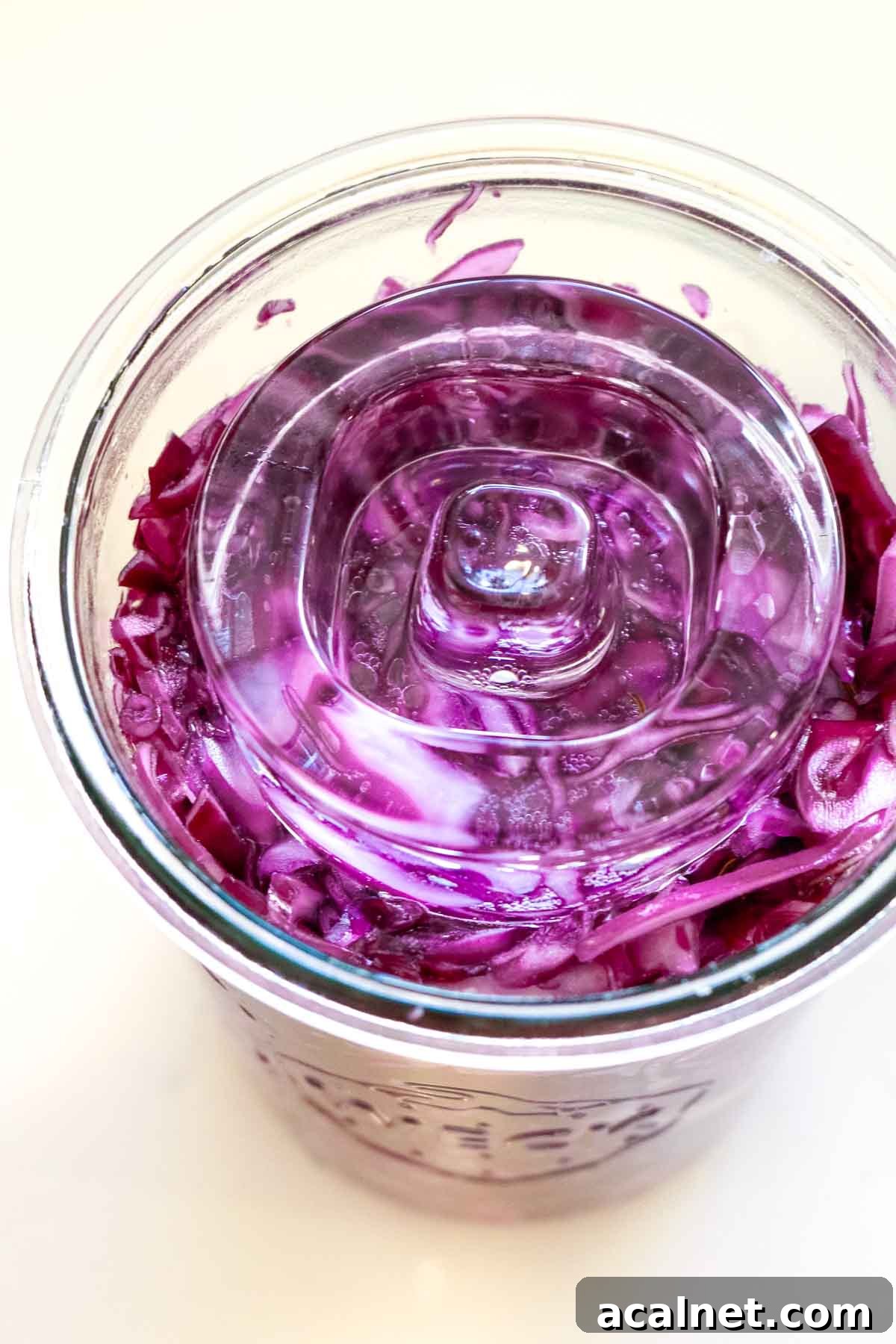
Step 5. Add weight
Place a fermentation weight on top of the cabbage to keep it submerged under the brine. Apply gentle pressure if needed.
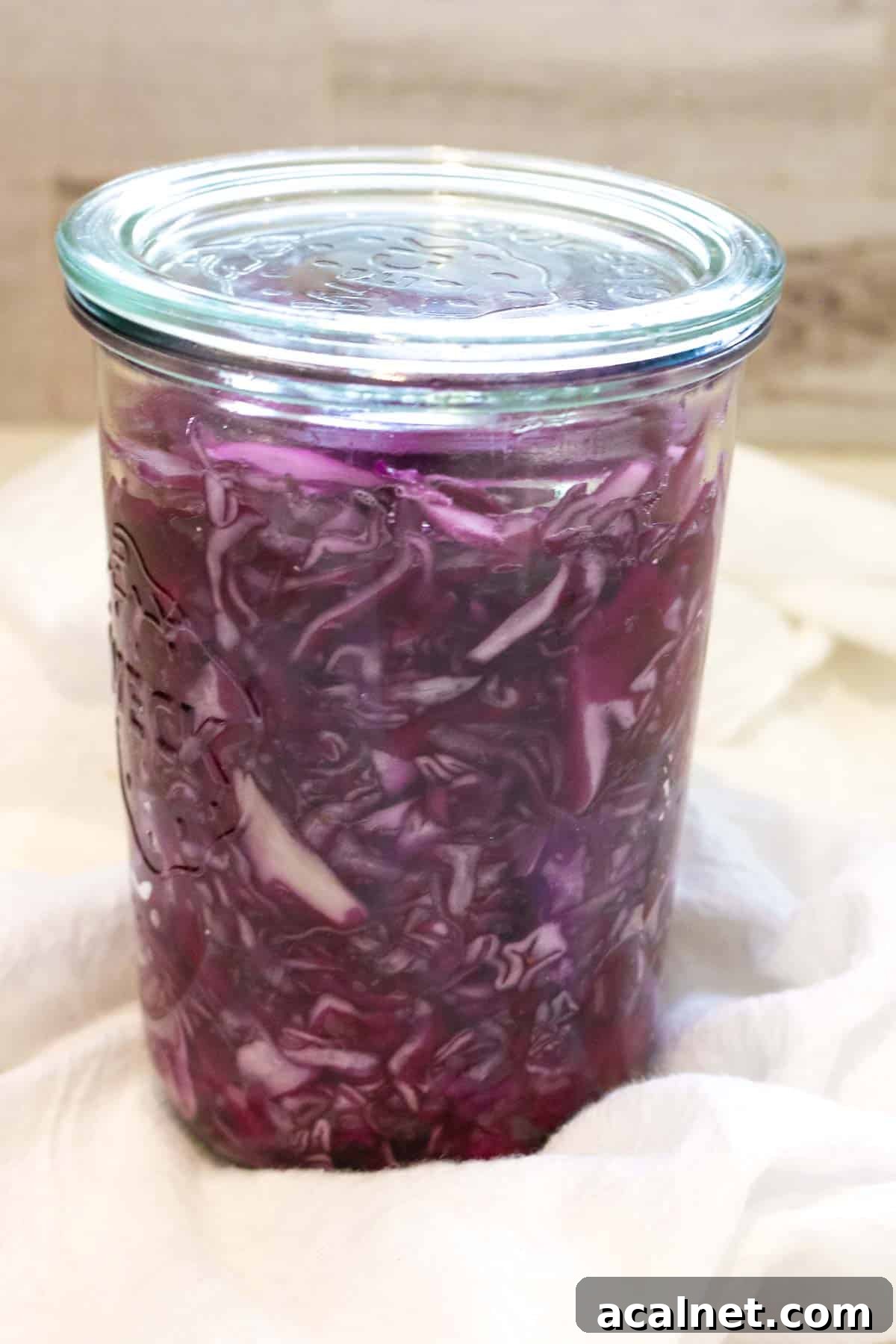
Step 6. Set aside
Cover the jar loosely and keep it at room temperature, out of direct sunlight, to ferment. Fermentation time varies—see timeline below.
Fermentation Timeline
Fermentation depends on temperature, salt ratio, and personal taste. Expect roughly 1–4 weeks of fermentation. The ideal room range is about 65–75°F (18–24°C).
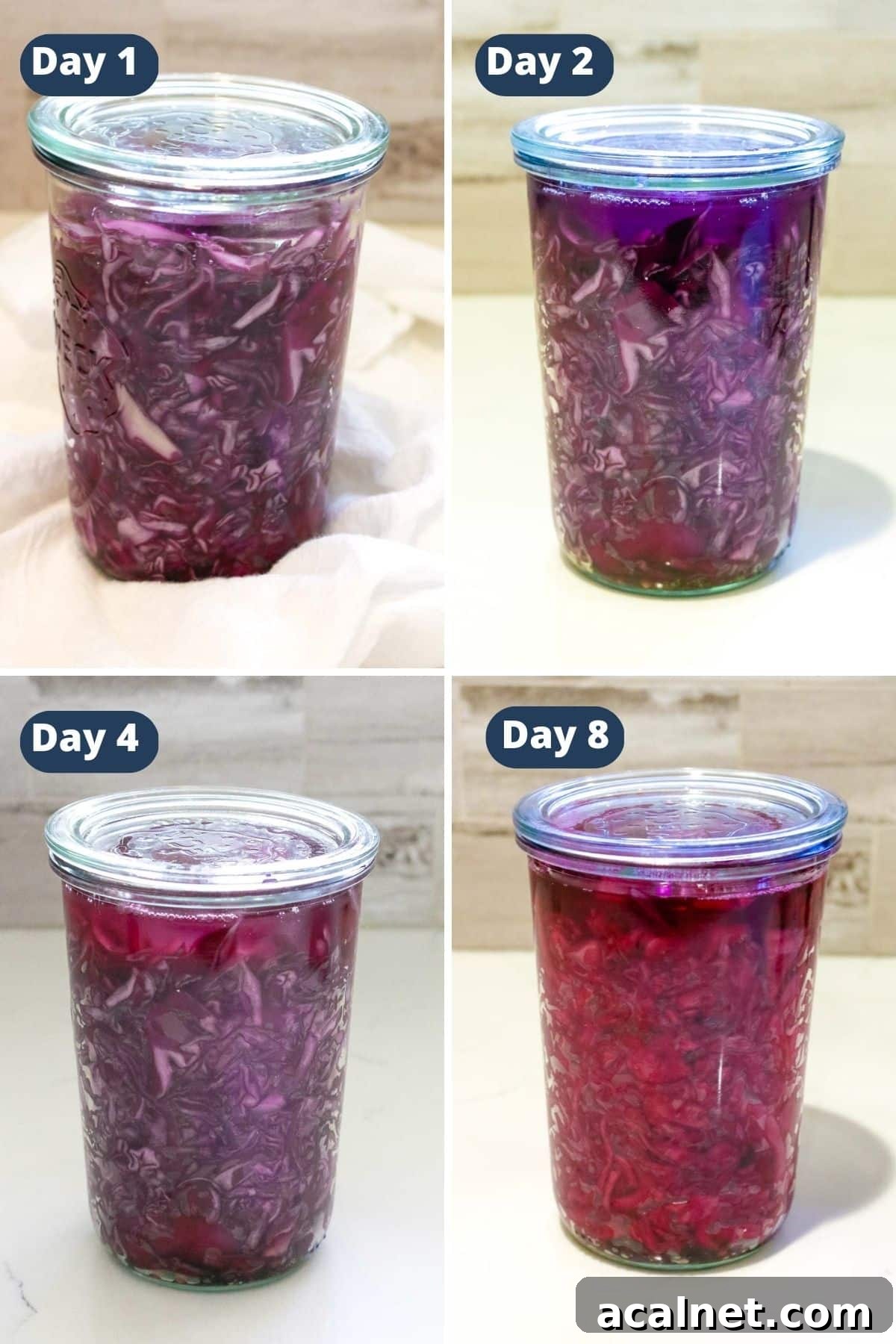
Early on, cabbage will release juices and the salt will break down cell walls. Lactic acid bacteria then consume sugars and create lactic acid, producing the tangy flavor and preserving the kraut.
Taste periodically to judge progress. When the kraut reaches your preferred tanginess, move it to the refrigerator to slow fermentation. Properly refrigerated, sauerkraut can keep for several months; flavor will continue to evolve over time.
Tools to Make Red Cabbage Sauerkraut
Useful tools include a chef’s knife or food processor (for shredding), a kitchen scale for consistent measurements, a large mixing bowl, fermentation weights, and clean glass jars (mason or Weck). Avoid plastics for long fermentations where acids are present.
- Shredding: Food processor, mandoline, or sharp knife.
- Measuring: Kitchen digital scale.
- Fermenting: Quart-size glass jar and fermentation weight or a small jar for pressing.
Serving Suggestions
Fermented red cabbage brightens many dishes. Try it:
- As a side: Serve with roasted or grilled meats, pork, or chicken.
- In tacos or burritos: Add for crunch and acidity to counter rich fillings.
- On salads: Stir a spoonful into greens for color and tang.
- In sandwiches: Layer into burgers, Reubens, or hot dogs for texture and flavor.
- At breakfast: Add a scoop to eggs, omelets, or breakfast skillets for a zesty finish.
Fermented Red Cabbage Sauerkraut pairing suggestions
Storage Instructions
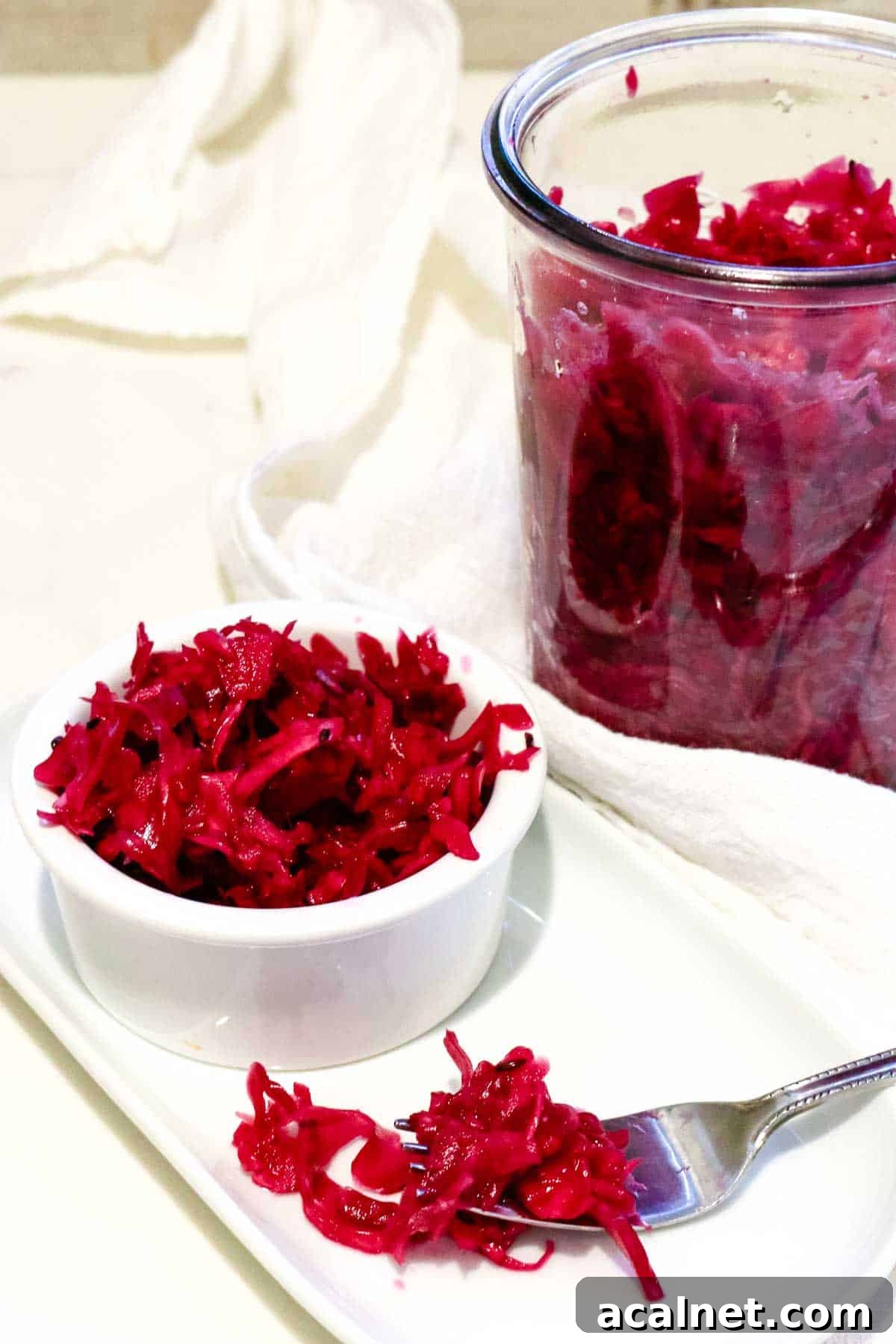
When fermentation reaches your preferred flavor, transfer the kraut to an airtight container and refrigerate. Cold storage slows fermentation and preserves flavor. Sauerkraut will remain safe to eat for several months if kept refrigerated and free of mold. Expect the taste to become more sour over time.
FAQs
Yes. Purple (red) cabbage works well and gives a vibrant pinkish hue. The flavor may differ slightly from green cabbage but remains delicious and nutritious.
Taste it regularly. It should develop a tangy flavor after a few days and grow more sour with time. Refrigerate when it reaches the acidity you prefer.
Use fresh ingredients, clean equipment, and the correct amount of salt. Keep the cabbage fully submerged under brine to prevent exposure to air, and sterilize jars if desired.
Looking for more fermented recipes? Try lacto-fermented jalapeños, fermented salsa, or spicy sauerkraut with ginger and garlic.
Printable Recipe
Fermented Red Cabbage Sauerkraut
This recipe yields approximately 1 quart (16 servings). Serving size: 1/4 cup.
Ingredients
- 650 grams shredded red cabbage (about 9½ cups)
- 16 grams sea salt (about 2½ teaspoons)
- 1 teaspoon caraway seeds (optional)
- 1 tablespoon whole peppercorns (optional)
Equipment
- Food processor or sharp knife
- Digital kitchen scale
- Large mixing bowl
- Quart-size glass jar and fermentation weight
Instructions
- Shred: Remove outer leaves, core, and shred the cabbage into thin ribbons.
- Weigh & season: Weigh 650 g of shredded cabbage in a bowl. Add 16 g sea salt and caraway seeds if using.
- Massage: Massage with clean hands or a tamper until the cabbage releases its juices. Massage longer for softer kraut; less for crunchier texture.
- Pack: Place peppercorns in the jar if using. Pack cabbage and its juices tightly into the jar, leaving headspace.
- Weigh down & ferment: Add a fermentation weight to keep cabbage submerged, loosely cover, and set in a cool, dark place to ferment at 65–75°F (18–24°C) for 1–4 weeks or until desired tanginess develops.
- Refrigerate: When ready, seal and refrigerate to slow fermentation. Keeps for several months in the fridge if no mold is present.
Notes & tips
- Sterilize jars and weights by rinsing and optionally briefly pouring boiling water into jars before use.
- Using a scale ensures consistent results—cabbage density varies seasonally.
- Keep the cabbage submerged at all times to prevent mold; trim and discard any outer leaves if they become discolored.
Nutrition (per 1/4 cup)
Calories: 16 | Carbohydrates: 4 g | Protein: 1 g | Fat: 0.1 g | Fiber: 1 g | Sodium: varies by salt absorption
Did you make this? Please leave a rating and comment with your experience and photos. Thank you!