

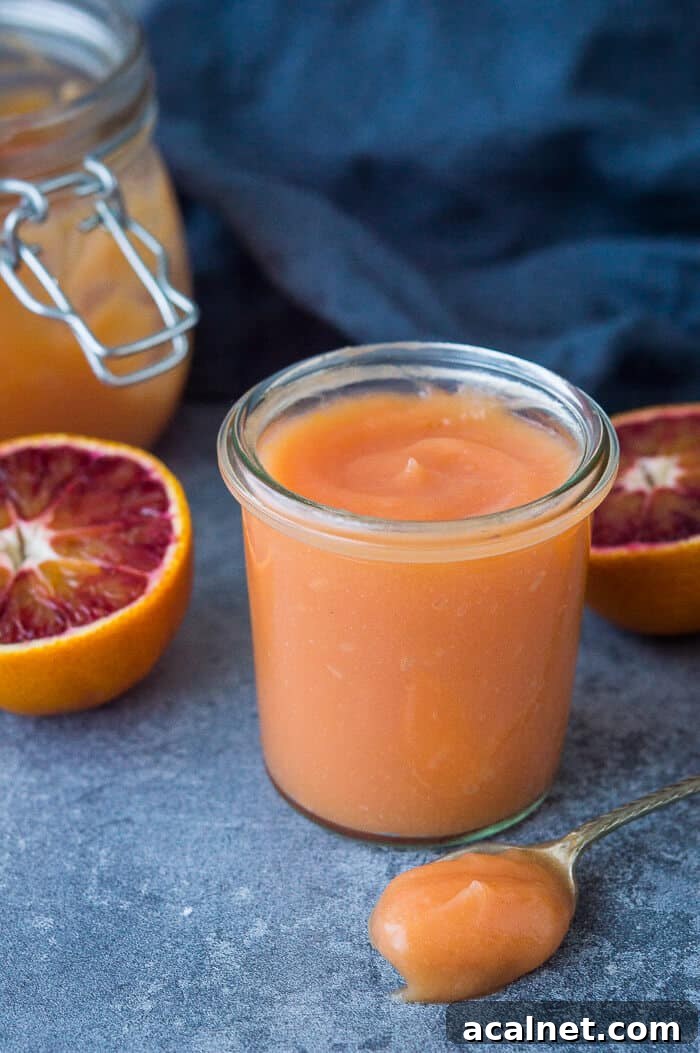
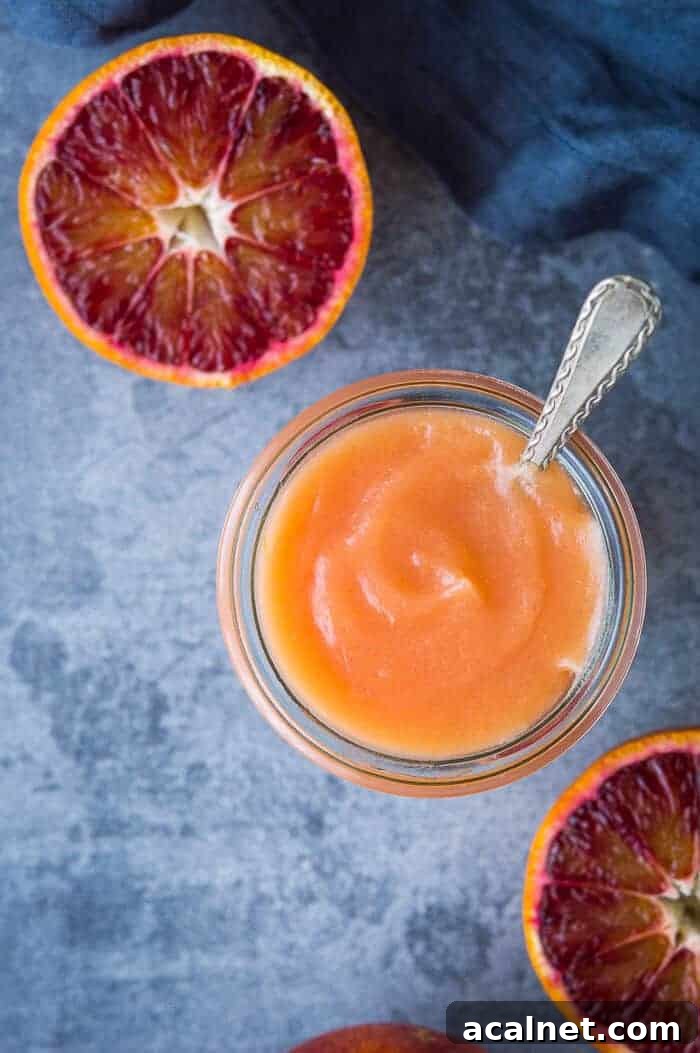
Vegan blood orange curd – a quick, easy and super-smooth fruit curd that’s delicious and versatile. Perfect for breakfast or as a component in desserts.

My vegan lemon curd is one of the most popular recipes on the site, and for good reason: it’s simple and delicious. Fruit curd doesn’t have to be limited to lemons, though. This recipe adapts the concept to blood oranges and produces a vibrant, silky curd that’s wonderfully bright and full of citrus flavour.
This vegan blood orange curd is smooth, creamy and highly addictive. Compared with traditional egg-based curds, this vegan version is quicker and more forgiving — no risk of accidentally making a pan of sweet scrambled eggs. The ingredient list is straightforward: blood oranges, lemon, cornflour (cornstarch), sugar, soy milk and vegan butter. There’s no need for specialist gelling agents like agar agar.
Use any vegan butter you prefer. A spreadable variety (for example Vitalite) yields a softer set, while a firm block-style vegan butter (such as a vegan block) gives a slightly firmer finish. Some people may try coconut oil as a substitute, but this hasn’t been tested here.
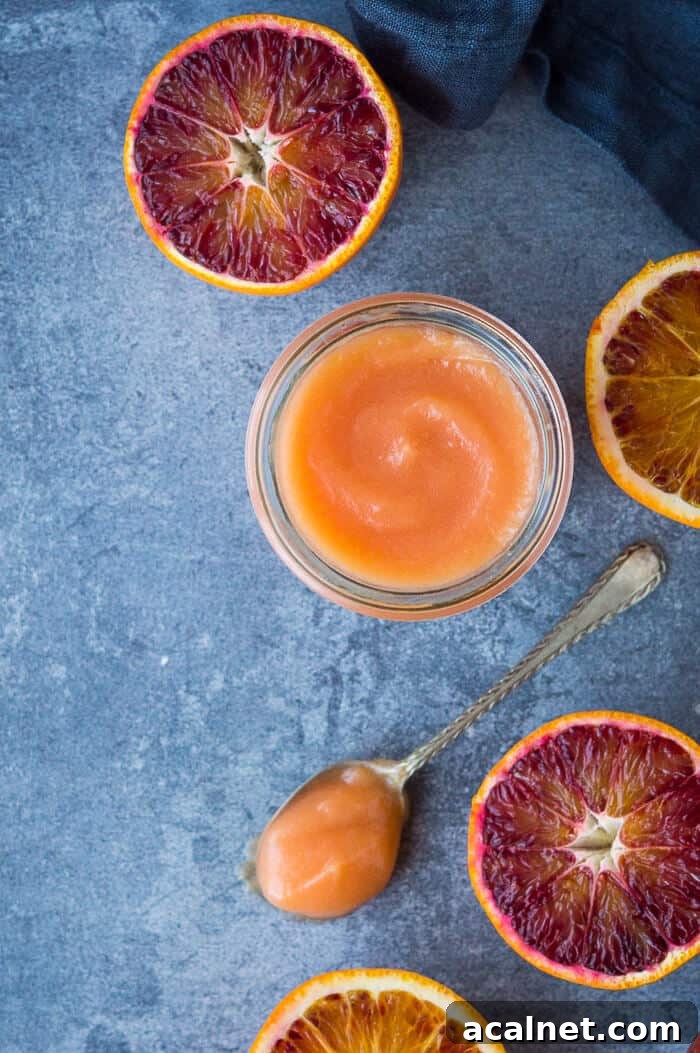
This curd keeps in the fridge for up to two weeks, though it rarely lasts that long in my house. It’s versatile and can be used in many ways — try it:
- Spread on toast, muffins or scones
- With crepes or pancakes
- Swirled into vegan yogurt or ice cream
- Spoon into pre-baked mini tart shells and top with fresh fruit
- As a topping for pavlova made with aquafaba and coconut whipped cream
- To fill cakes or cupcakes
- Or simply eat it straight from the jar with a spoon
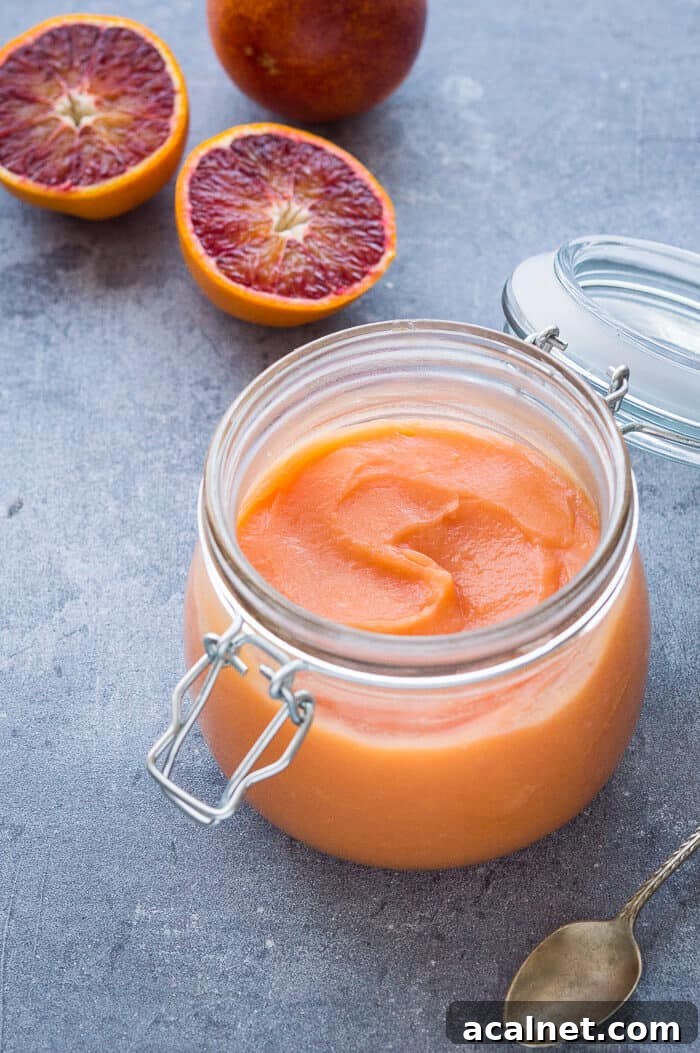
How To Make Vegan Blood Orange Curd:
(For ingredients and full instructions see the recipe card below)
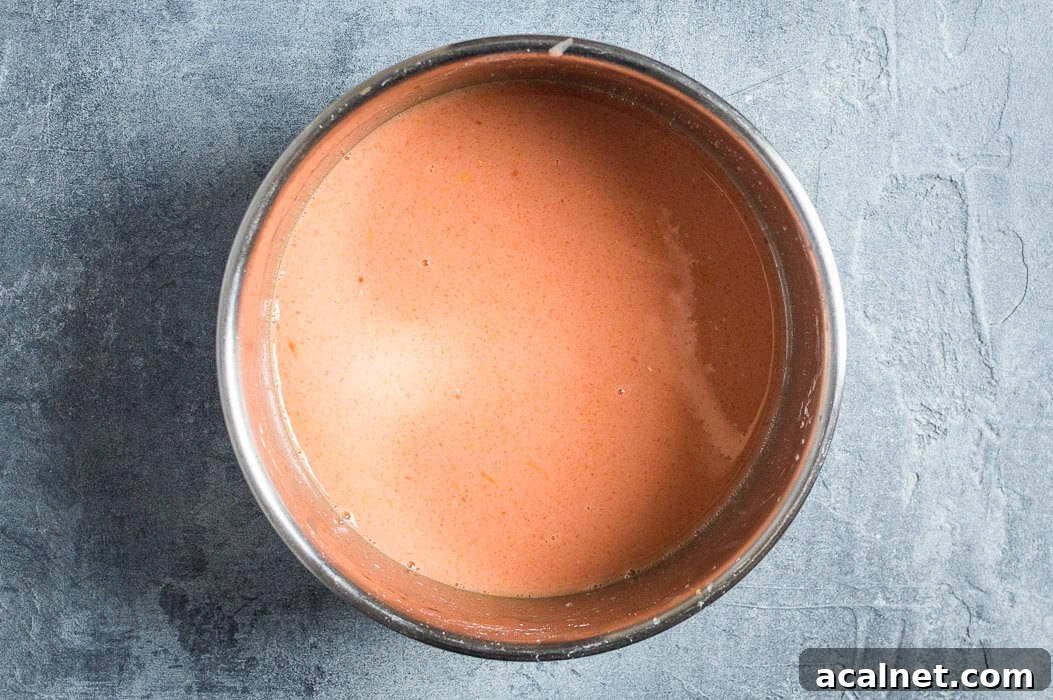
Place 30g cornflour (cornstarch) in a non-reactive saucepan — stainless steel is ideal. Avoid aluminium or copper pans, as the acid in citrus can react with them and affect the colour and flavour. Gradually whisk in the juice of five blood oranges; strain the juice first if you want an ultra-smooth curd.
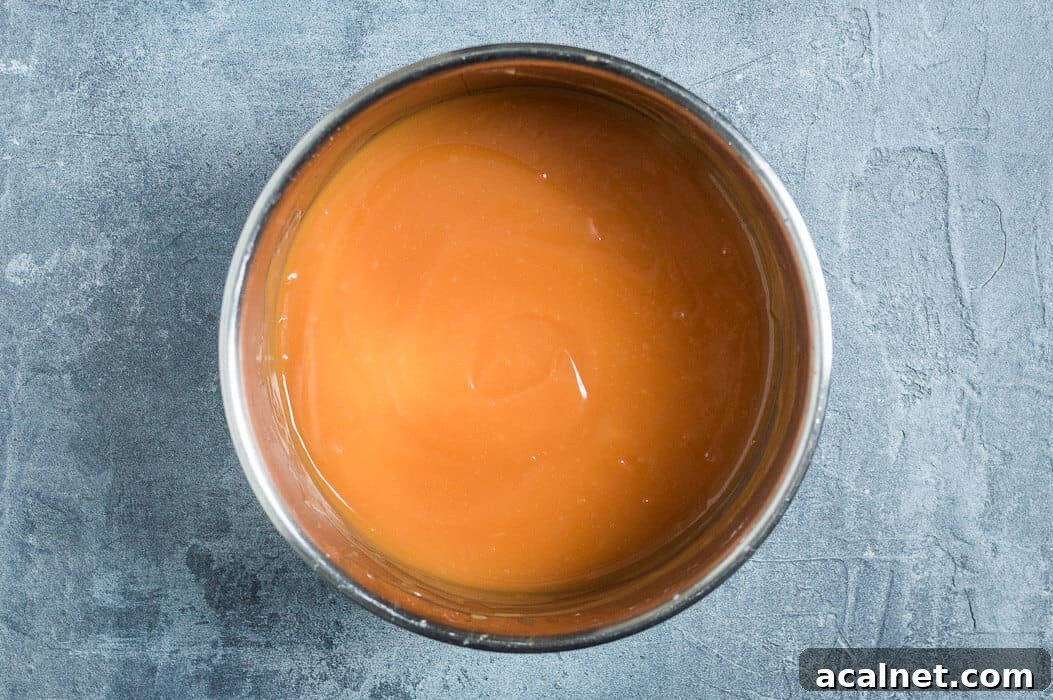
Stir in the juice of one lemon, the sugar and 60ml unsweetened soy milk (or another plant milk; soy yields the creamiest texture). Set the pan over medium-low heat and stir until the sugar dissolves. Continue cooking and stirring until the mixture becomes very thick. Take care not to let it boil for more than a minute.
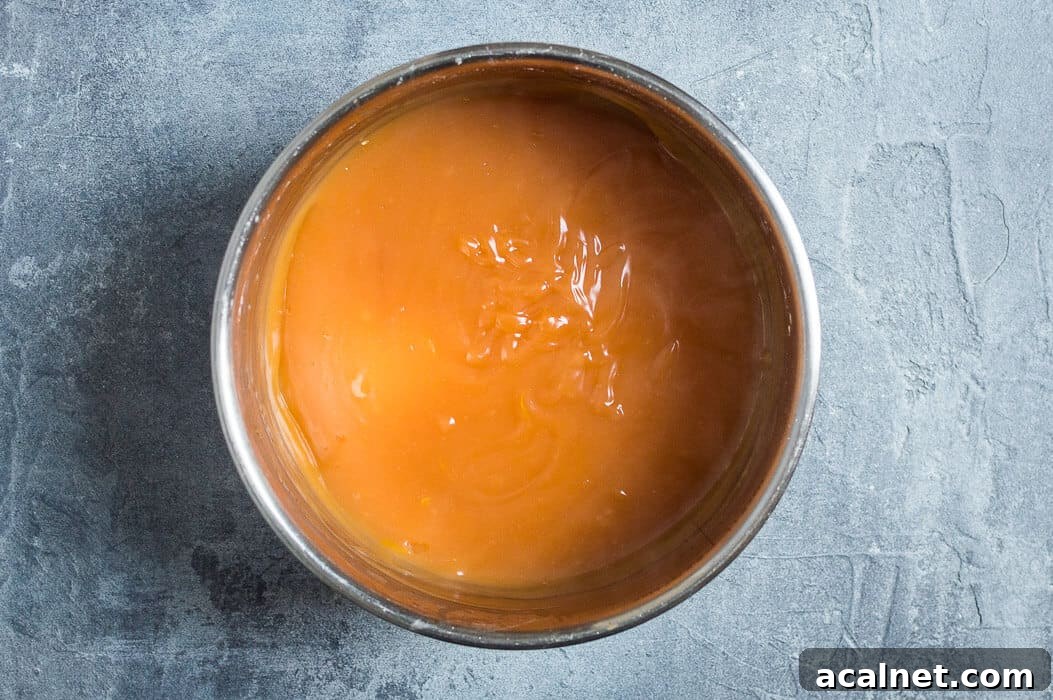
Remove the pan from the heat and stir in 50g vegan butter until fully melted and the curd is smooth. Let it cool slightly, then pour into a large jar (preferably sterilised — instructions below). Chill the jar in the fridge overnight to allow the curd to cool and set. Stir well before serving. If it separates a little after a few days, a quick stir restores the texture.
How To Sterilise Jars:
Sterilising jars helps keep the curd fresh longer. Just before you start, preheat the oven to 140°C (275°F/gas mark 1). Wash jars and lids thoroughly in hot soapy water, rinse well, then place jars on their sides and lids upside-down on a baking tray and put them in the oven to dry while you prepare the curd.
When the curd is hot, carefully pour it into the hot jars (avoid transferring between hot and cold containers to prevent cracking), seal with the lids and allow the jars to cool before placing them in the fridge.

Vegan Blood Orange Curd
Ingredients
- the juice of 5 large blood oranges (about 250ml/1 cup) strained
- juice of 1 large lemon
- 30 g (3 Tbsp) cornflour (cornstarch)
- 125 g granulated or caster sugar
- 60 ml (¼ cup) unsweetened soy milk (or other non-dairy milk)
- 50 g vegan butter
Instructions
-
Place the cornflour (cornstarch) in a non-reactive saucepan. Gradually whisk in the blood orange and lemon juices.
-
Whisk in the sugar and milk. Place the pan over medium-low heat and stir until the sugar dissolves. Continue to cook, stirring, until the mixture is very thick. Avoid boiling for more than a minute.
-
Remove from heat and stir in the vegan butter until melted and smooth.
-
Let the curd cool slightly, then pour into a large sterilised jar. Refrigerate overnight to set.
-
Stir before serving. Keeps up to two weeks in the fridge; if it separates, stir to recombine.
Notes
Arrowroot could potentially replace cornflour, though this hasn’t been tried in this recipe.