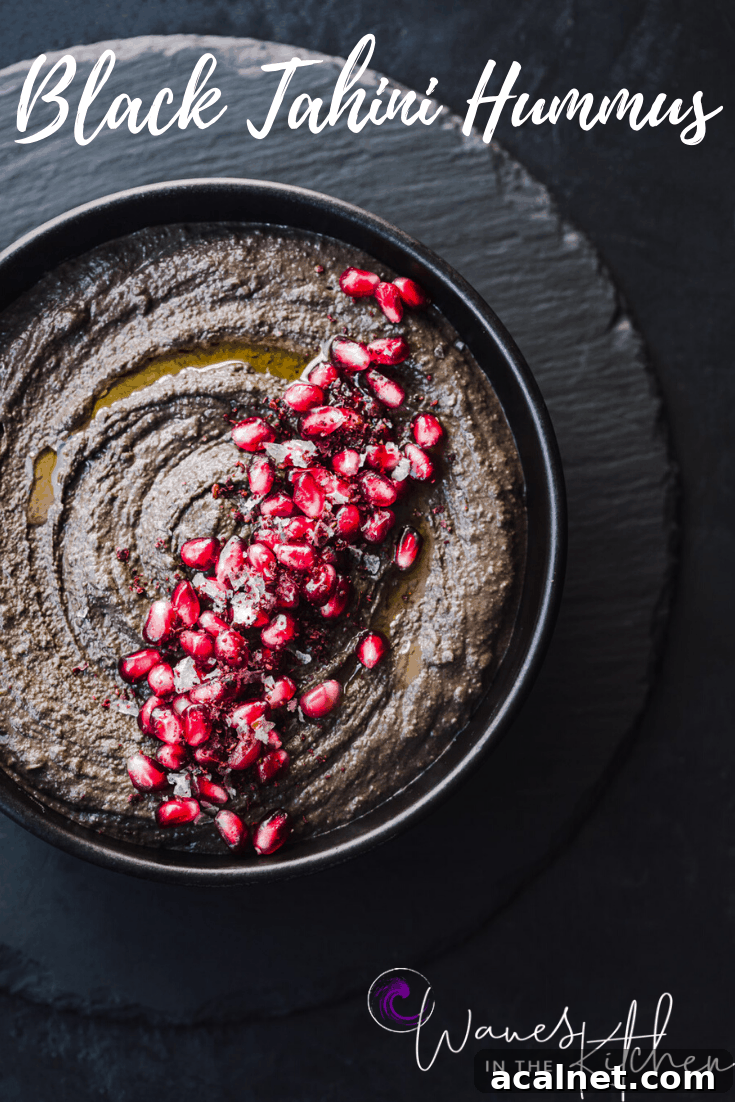
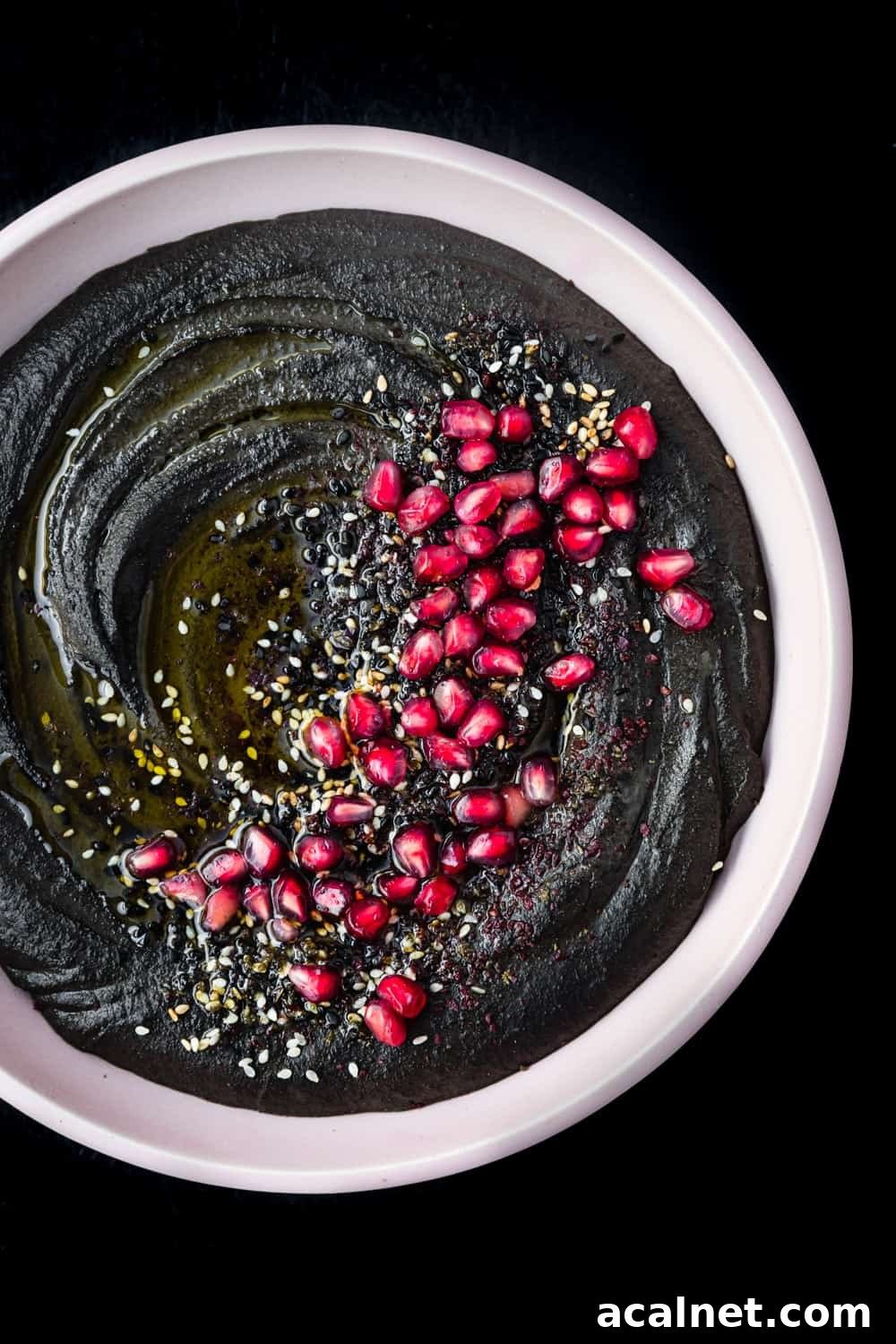
Meet hummus’s richer, nuttier, and more intensely flavored cousin: black tahini hummus.
It uses the same familiar base—chickpeas, tahini, olive oil, lemon, garlic, and cumin—but swaps traditional white tahini for black tahini. Black sesame seeds are simply sesame seeds with their hulls intact, which gives the tahini a deep color and a toastier, more pungent flavor profile. The result is a hummus that’s bold, savory, and visually striking.
With eight straightforward ingredients and one blender, you can create a low-effort yet impressive dip. Perfect for a party, a weeknight snack, or a colorful addition to any appetizer spread.
Why this Black Hummus Recipe Works?
- Quick and easy. All ingredients are blended together for a simple, efficient method.
- Ultra-smooth texture. Using nearly equal parts tahini and chickpeas produces a creamy, luxurious hummus.
- A bold twist on a classic. Black tahini brings a darker, nuttier, and slightly more pungent taste than standard tahini.
What is Black Tahini?
Tahini is a paste made from sesame seeds. While most tahini is produced from hulled white sesame seeds, black tahini is made from unhulled black sesame seeds. The unhulled seeds give black tahini a deeper color and a more intense, toasty, and slightly bitter flavor compared with its white counterpart.
Black sesame delivers a robust nuttiness that can add complexity to dips, sauces, and dressings. If you prefer a brighter, herb-forward tahini, consider experimenting with green or classic tahini variations in other recipes.
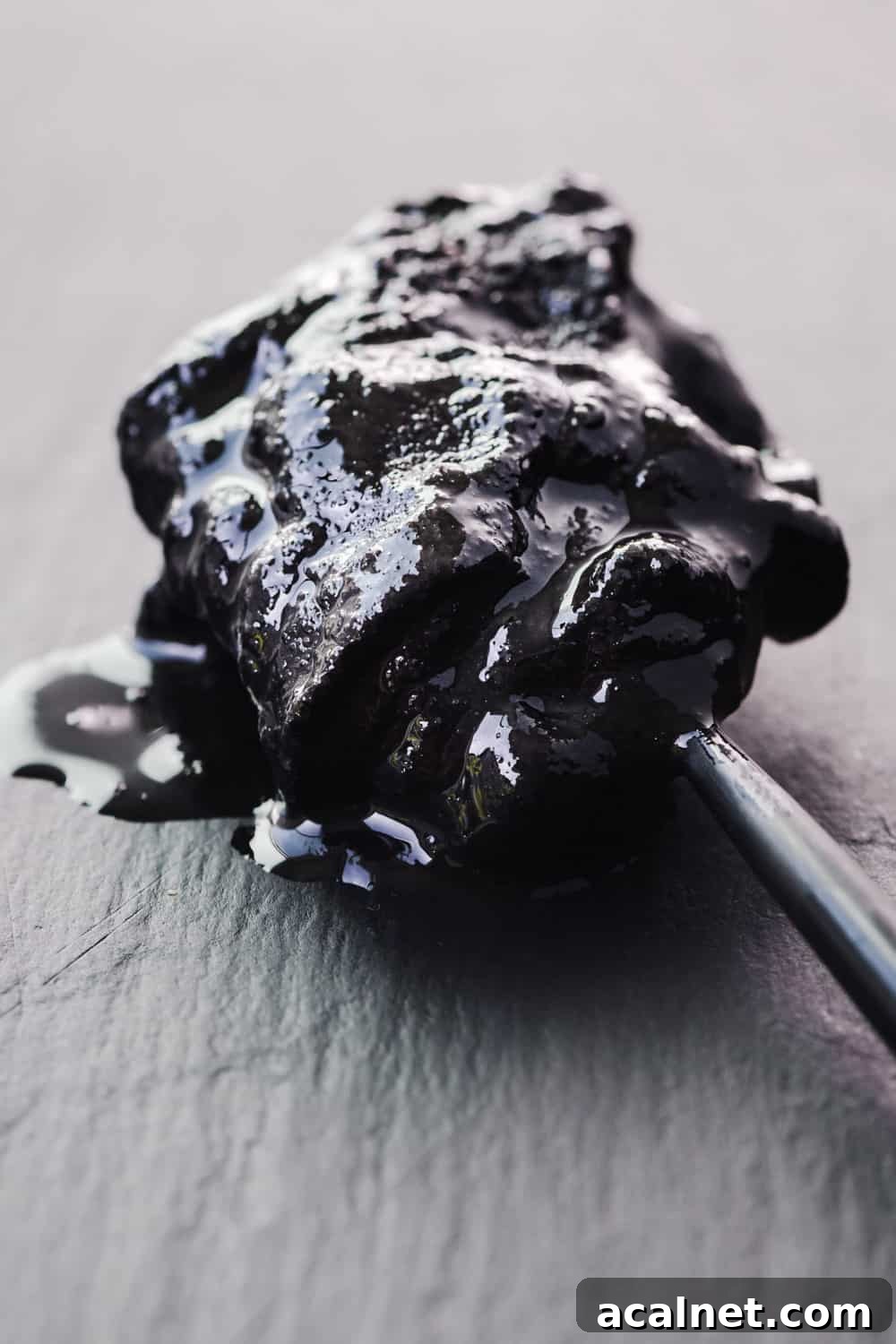
How to Make Black Hummus
- Combine all ingredients except the olive oil in a high-powered blender or food processor.
- Run the motor and slowly drizzle in the olive oil until the mixture is smooth and emulsified.
- Taste and adjust seasoning—add more salt, lemon, garlic, or cumin as desired. Serve with your favorite toppings.
Topping Ideas
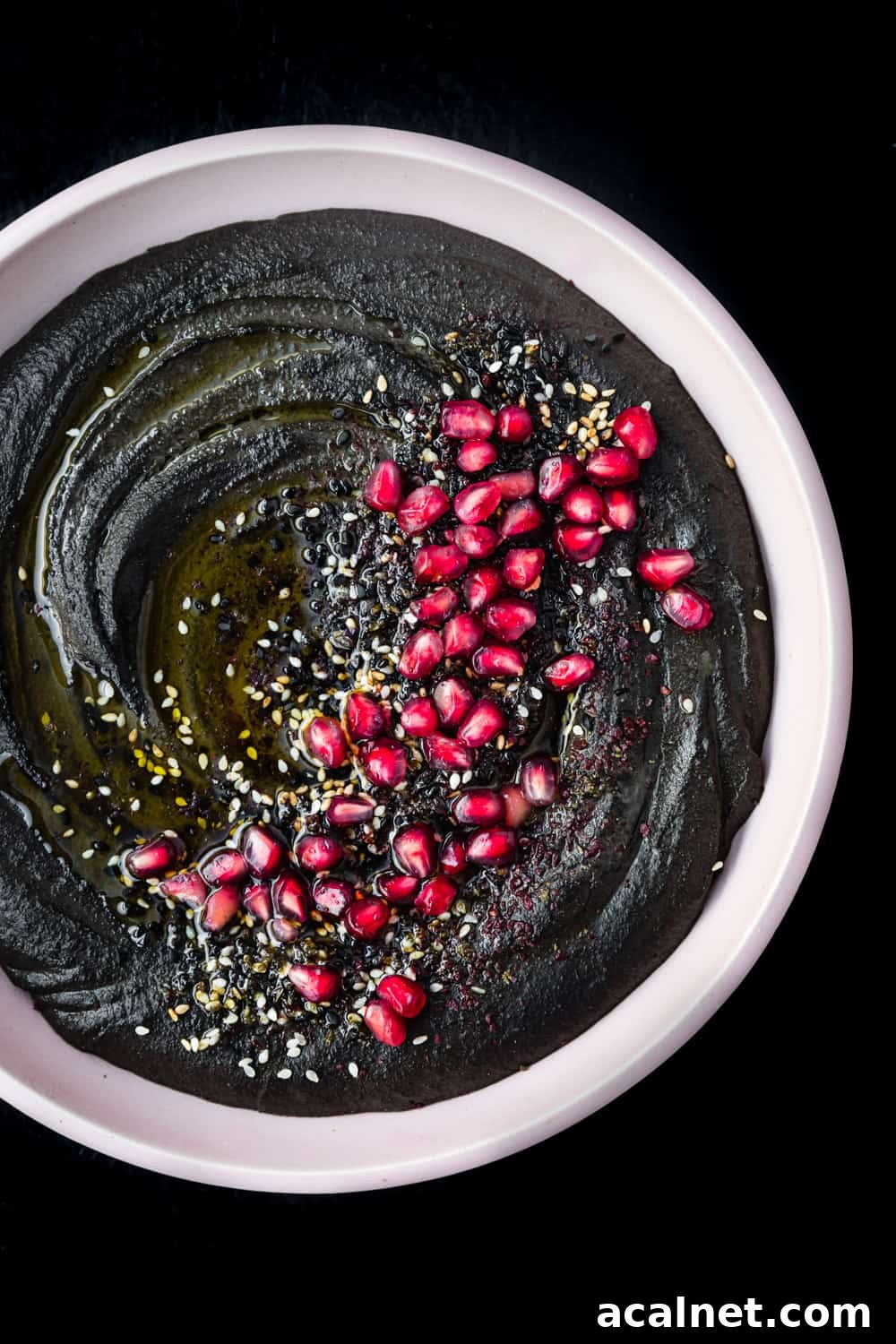
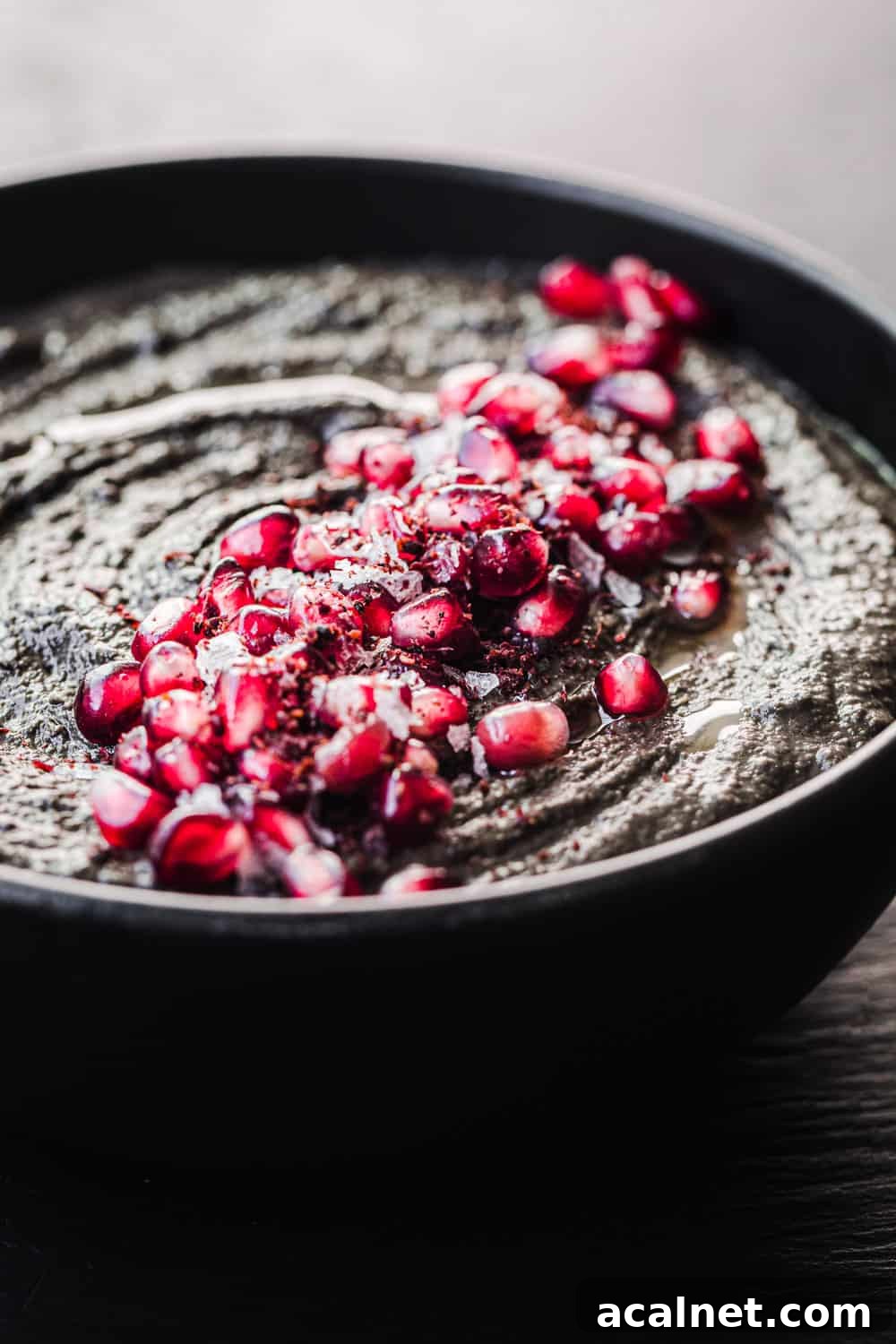
Great toppings for black tahini hummus include pomegranate arils, chopped parsley or other fresh herbs, toasted nuts and seeds, za’atar, sumac, flaky sea salt, spices, and a drizzle of extra virgin olive oil. These additions add color, texture, and flavor contrast.
Notes on equipment and texture: a powerful blender (like a Vitamix) gives the creamiest result. If your machine is less powerful, you may need to finish whisking in olive oil or a tablespoon of cold water at a time by hand until you reach your desired consistency.
This recipe uses the same base ingredients as classic hummus with the addition of a touch of honey to balance any bitterness from black tahini. Black tahini is available commercially or can be made at home from black sesame seeds.
Cook’s Tips
- Use a blender if you have one. It yields a very smooth hummus; a food processor also works.
- Flavor vs. time. Dried, cooked chickpeas give better flavor than canned, but require more time and planning.
- Adjust consistency after chilling. Refrigerated hummus thickens; stir in 1 tablespoon of cold water at a time to loosen it.
- Storage. Leftover hummus keeps for about a week in the refrigerator.
- Be creative with toppings. They make the dish visually appealing and add welcome texture.
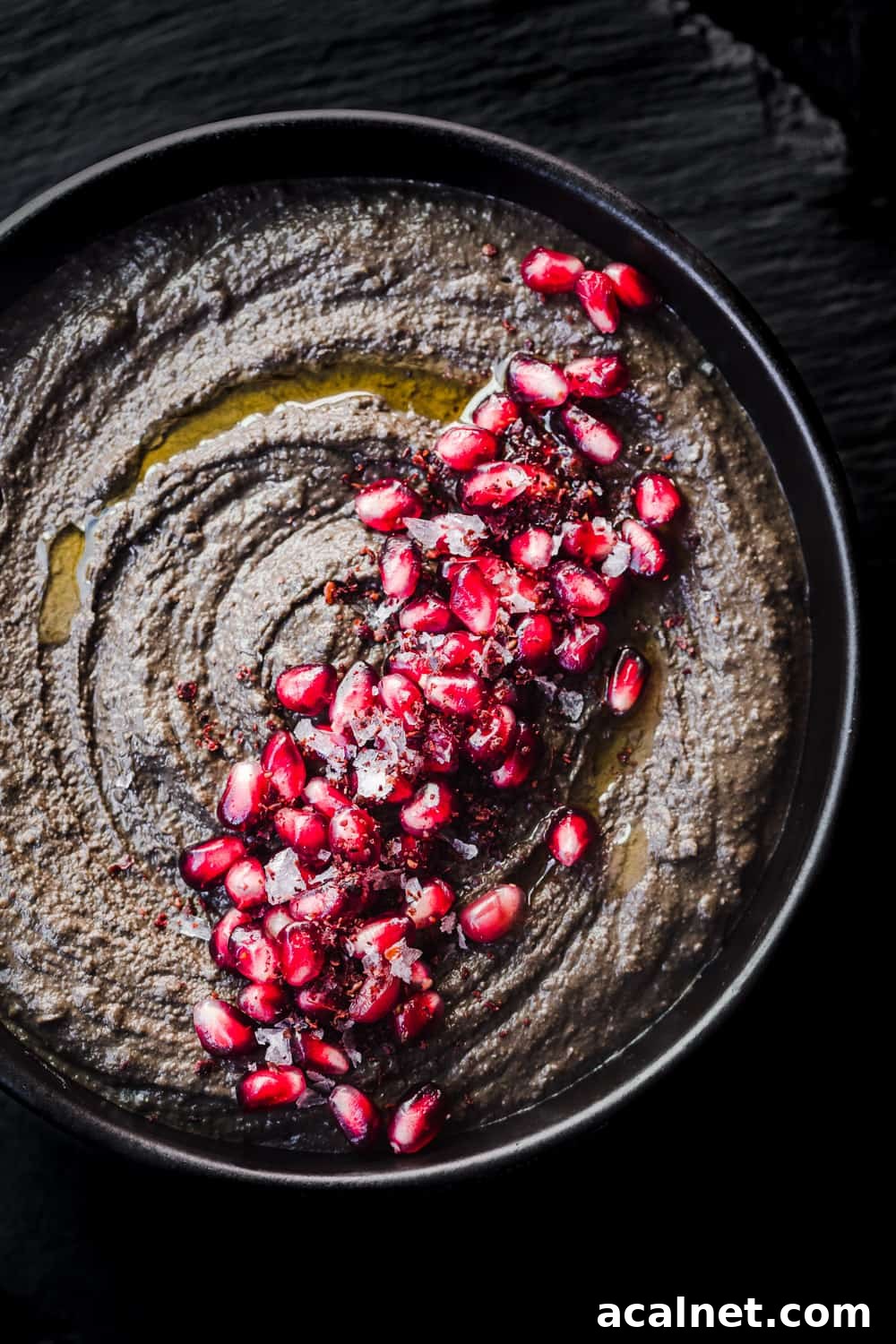

Black Hummus
Ingredients
- 1 can chickpeas, drained
- 2/3 cup black tahini
- Zest and juice of 2 lemons (or 3; aim for about 1/3 cup juice)
- 2 garlic cloves, chopped
- 1/3 cup olive oil
- 1 1/2 teaspoons honey
- 1 teaspoon cumin, or more to taste
- 1 teaspoon kosher salt
- A handful of chopped parsley or other herbs; toppings such as za’atar, sumac, pomegranate arils, nuts or seeds, and a swirl of extra virgin olive oil
Instructions
- Combine chickpeas, black tahini, lemon juice, lemon zest, garlic, honey, cumin, and salt in a high-powered blender or food processor.
- With the motor running, slowly drizzle in the olive oil and blend until the mixture is smooth and creamy.
- Taste and adjust seasoning as needed—add more olive oil, lemon, garlic, cumin, or salt to suit your preference.
- Transfer to a bowl, add desired toppings, and finish with a swirl of extra virgin olive oil. Serve with pita, chips, or fresh vegetables for dipping.
Notes
- If you have a blender, use it for the creamiest result; a food processor works fine too.
- Dried, home-cooked chickpeas offer superior flavor to canned, though they take longer to prepare.
- Hummus thickens when chilled; stir in 1 tablespoon of cold water at a time to loosen it until you reach the desired consistency.
- Leftovers keep in the fridge for about a week. Get playful with toppings to keep each serving interesting.
Vibrant Hummus Variations
Think of this as a hummus playground—endless colorful riffs and Mediterranean-inspired dips to explore. Popular variations include beet hummus for a vivid magenta dip, carrot hummus for a bright, slightly sweet option, and roasted butternut squash hummus for a seasonal twist. You can also layer hummus with mix-ins and toppings to create loaded or protein-forward versions.
If you try this black tahini hummus, I’d love to hear how it turned out—leave a comment or tag the recipe author on social media to share your creation. Keep exploring seasonal recipes and colorful produce ideas to inspire time in the kitchen.
Let’s make waves in the kitchen.