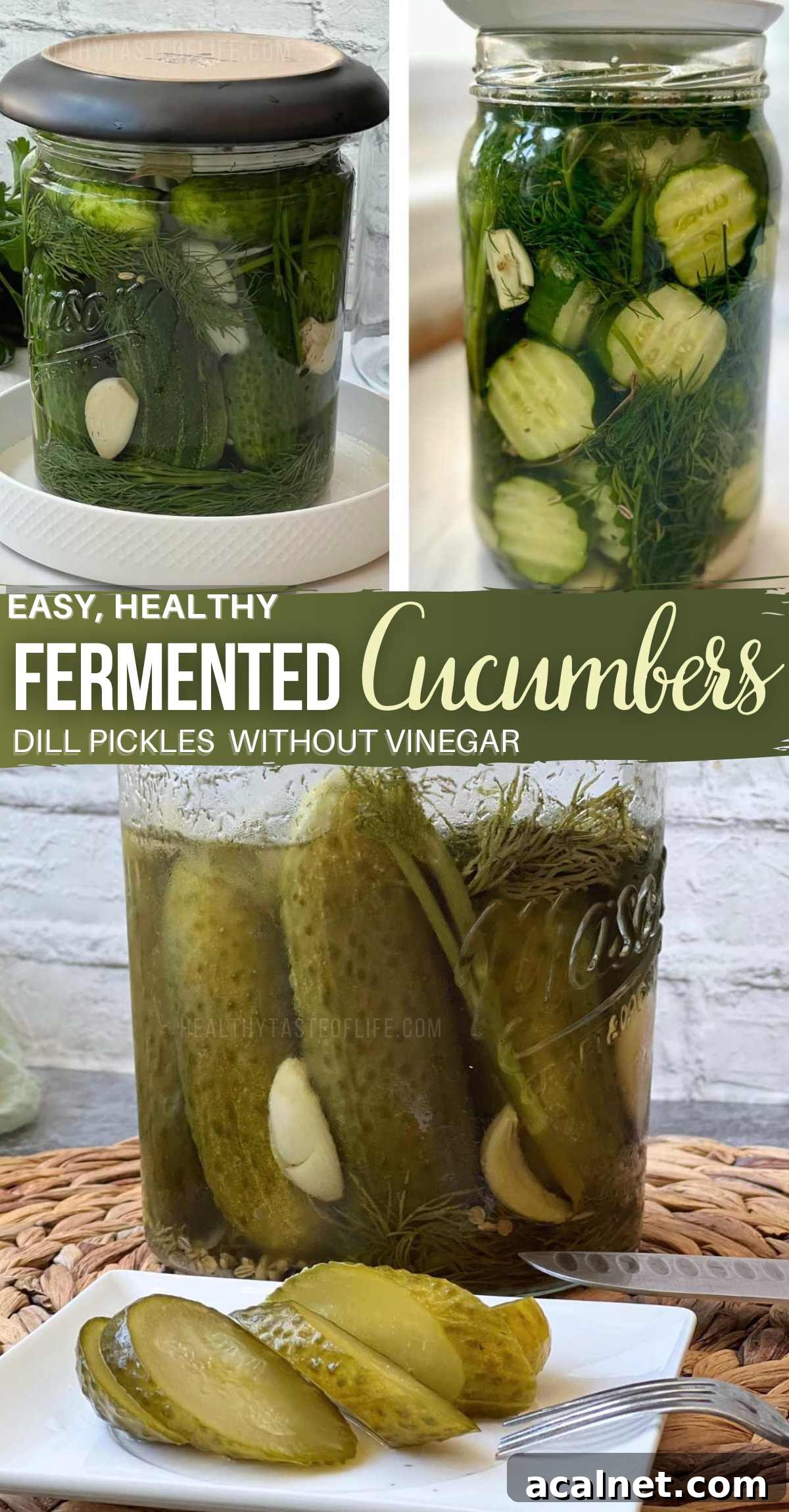
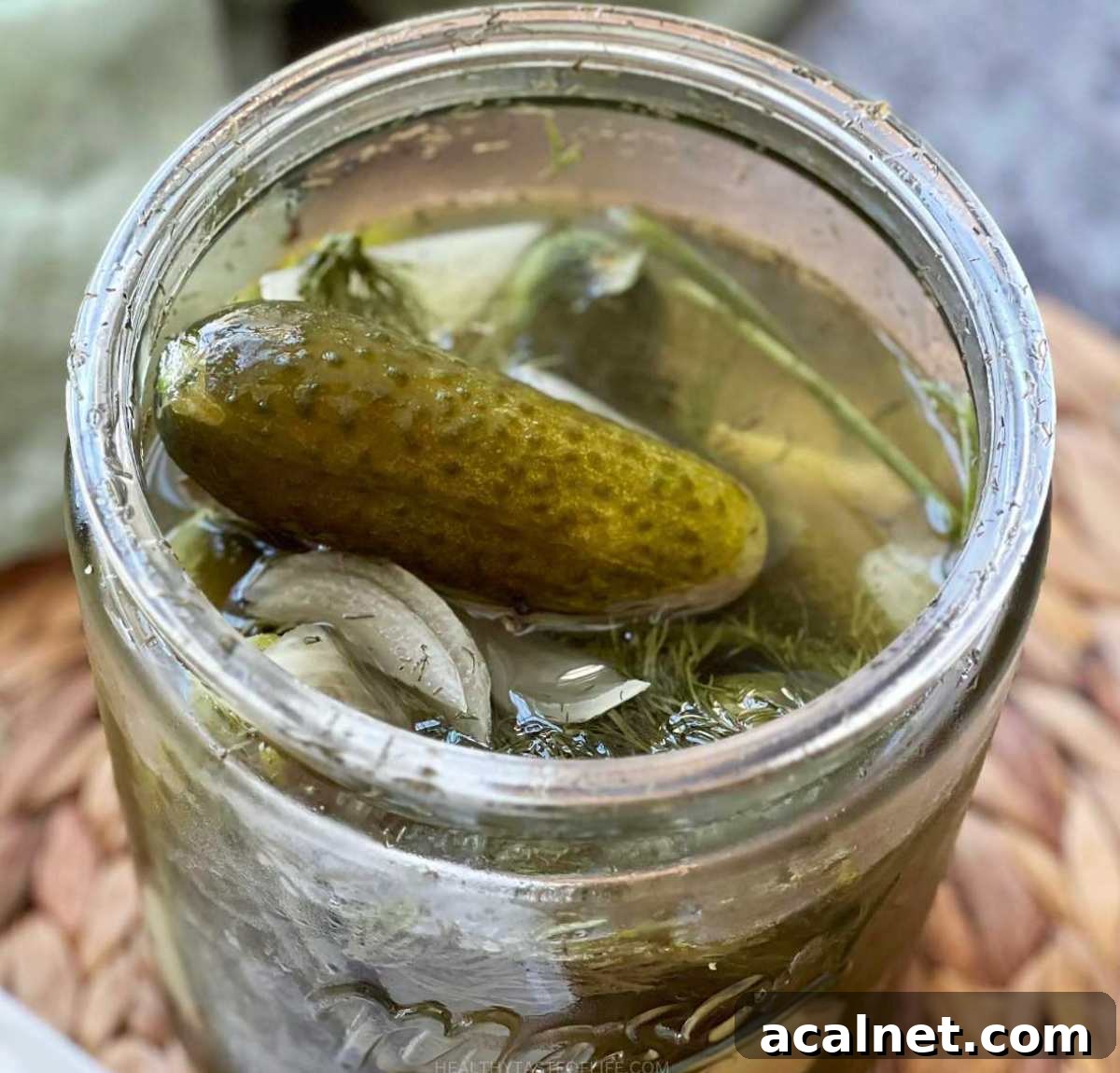
This fermented cucumber recipe uses a traditional, vinegar-free method to produce crunchy, tangy dill pickles rich in natural probiotics. Ferment whole or sliced cucumbers with minimal ingredients and let natural lacto-fermentation develop complex flavor and gut-friendly benefits.
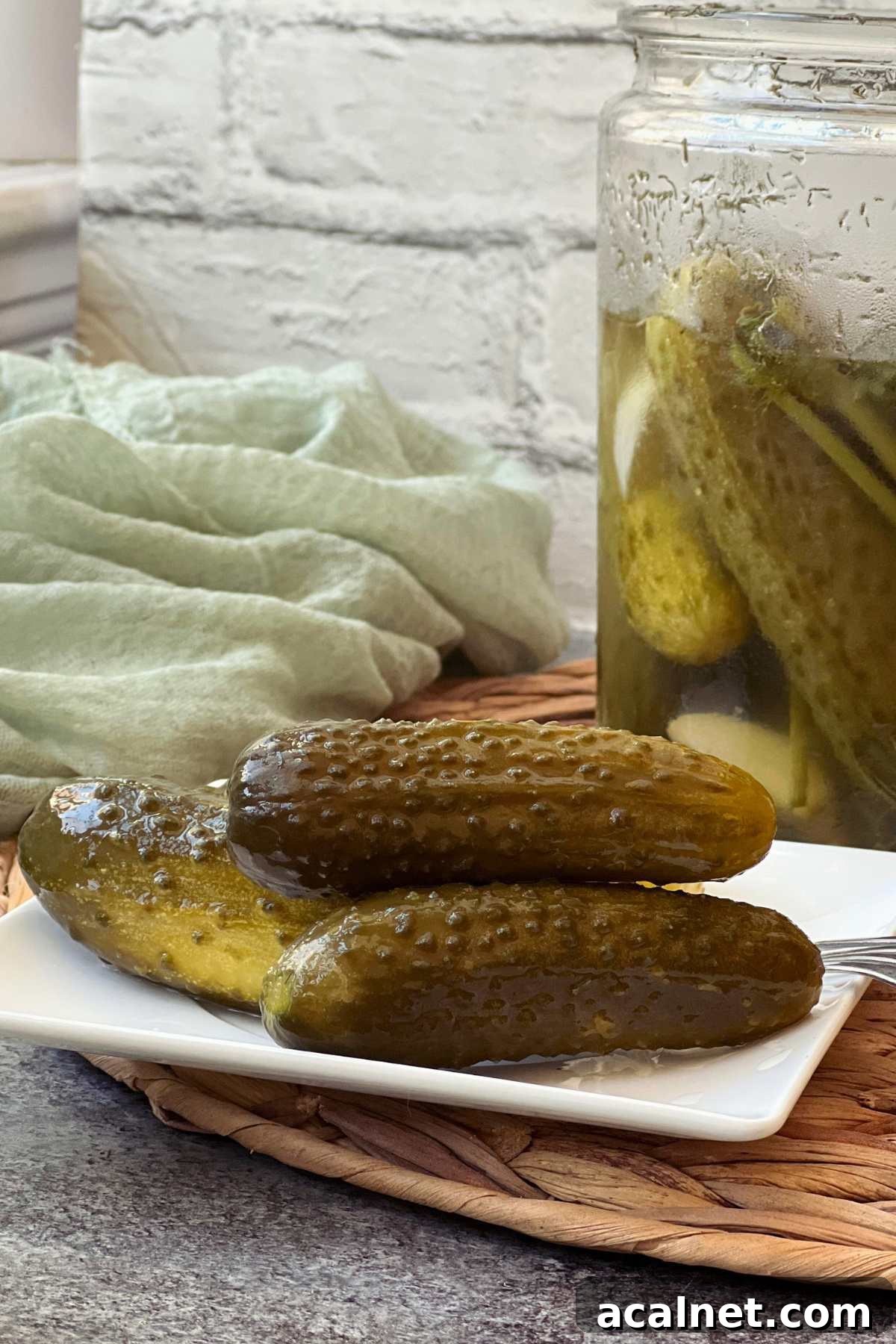
Follow this straightforward recipe to create authentic lacto-fermented pickles at home. The process is simple, requires few ingredients, and yields a tangy, crunchy result that supports digestion and overall well-being.
If you enjoy fermenting, try other recipes in this collection such as lacto-fermented red cabbage, fermented shaved carrot salad, fermented beets and cabbage, fermented watermelon, fermented tomatoes, and fermented cauliflower for different flavors and textures.
Below you’ll find the differences between pickled and fermented cucumbers, ingredient roles, step-by-step instructions, and helpful tips for reliable results.
Pickled vs Fermented Cucumbers
Pickled cucumbers are preserved in a solution of vinegar, water, salt, and often sugar and spices. They have a sharp, consistent acidity from the vinegar. Fermented cucumbers are submerged in a saltwater brine and rely on natural lactic acid bacteria to transform sugars into lactic acid. The result is a more nuanced sourness, developing complexity, and beneficial probiotic organisms when properly prepared.
Ingredients Needed and Their Purpose
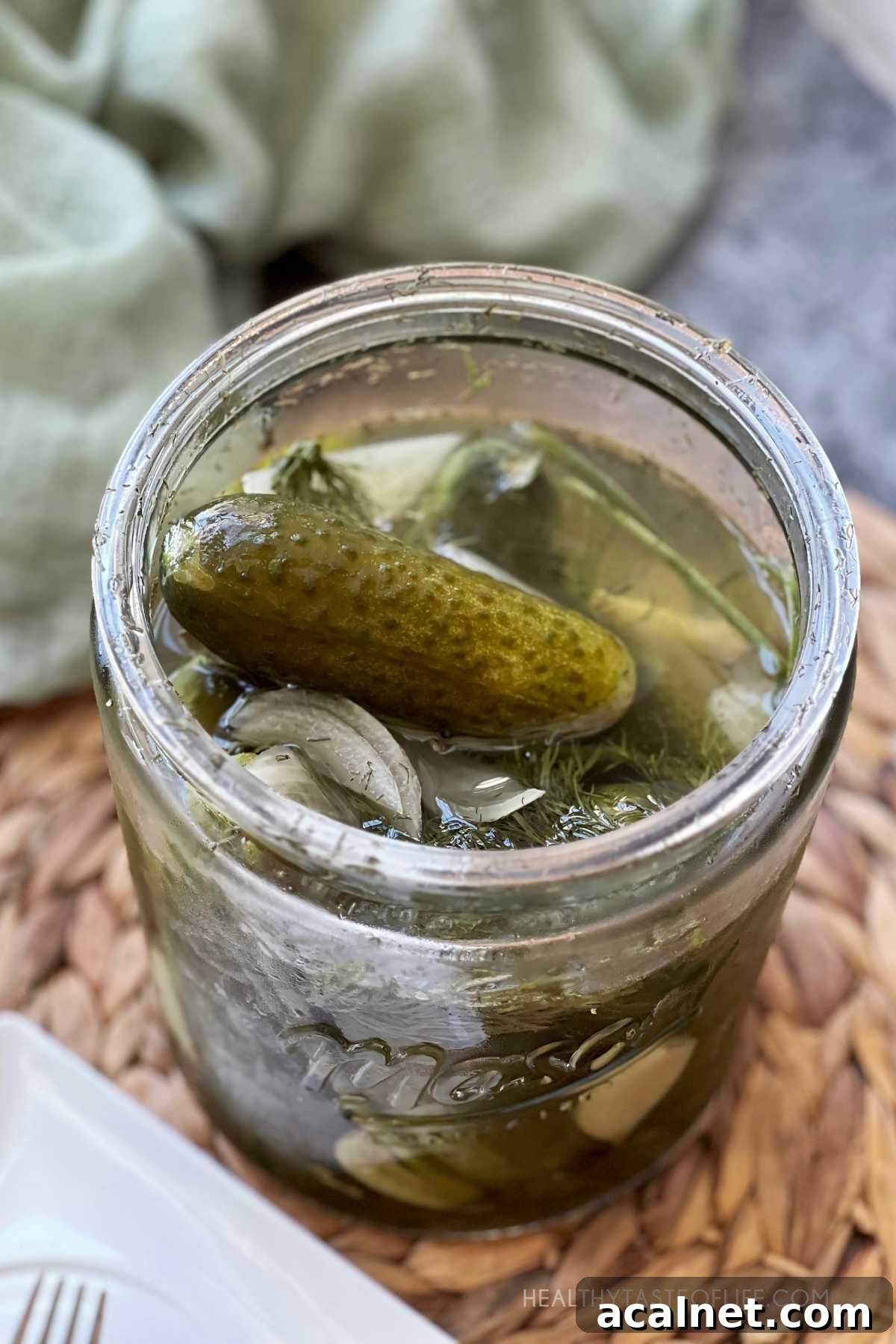
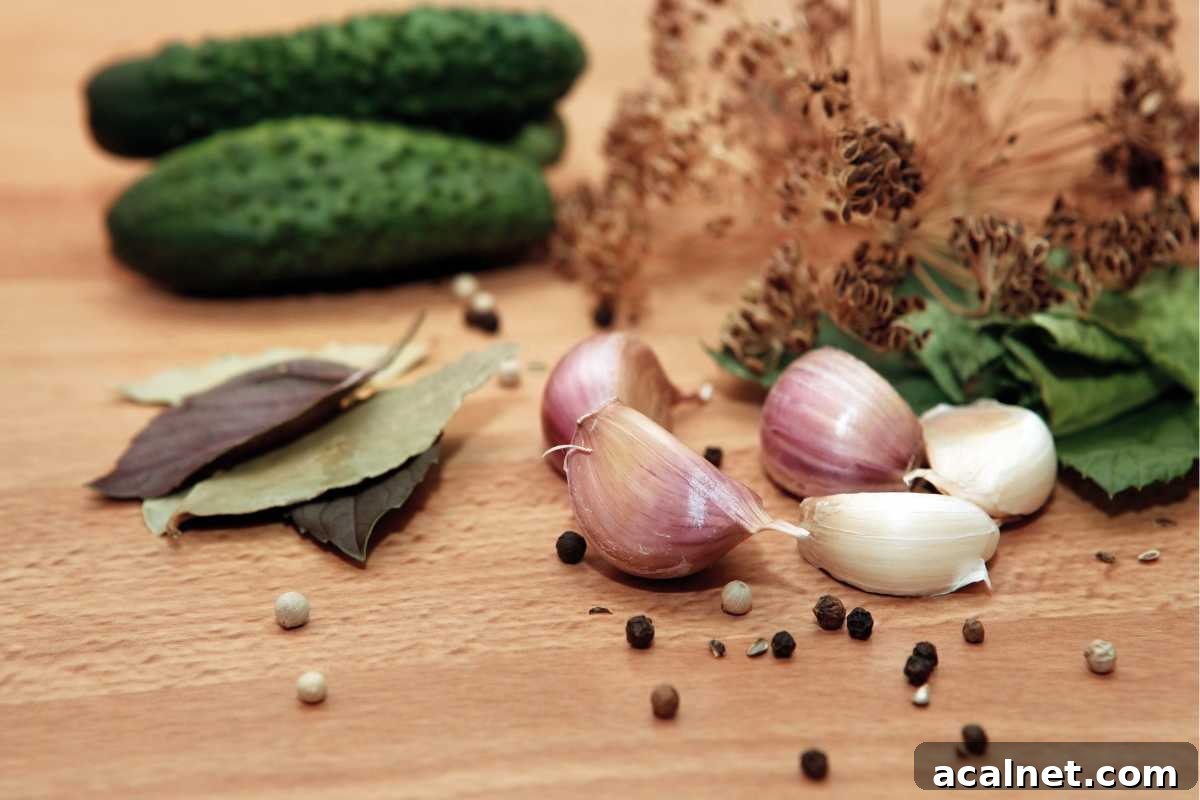
- Cucumbers: Choose firm, similarly sized pickling cucumbers. Smaller cucumbers or 5–6 inch pickling varieties work best. Slice them to speed fermentation and ensure even brining, or leave them whole to retain extra crunch.
- Dill: Fresh or dried dill provides the classic dill pickle aroma and flavor.
- Garlic: Adds depth and a subtle pungency.
- Spices: Use dill seeds, mustard seeds, peppercorns, coriander seeds, or other spices to shape the flavor profile.
- Tannic ingredient (optional): Grape, oak, horseradish, bay, or cherry leaves add tannins that help cucumbers stay crisp through fermentation.
- Salt: Essential for drawing moisture out of cucumbers, creating a protective brine, and selectively encouraging lactic acid bacteria. Use a pure, additive-free salt such as unrefined sea salt or Celtic salt.
- Water: Filtered water makes the brine; avoid chlorinated water when possible, as chlorine can inhibit fermentation.
Step by Step Recipe Instructions
- Preparation: Select fresh, firm cucumbers and rinse them well to remove dirt. Clean and sterilize your jar and any tools you’ll use.
- Salt Brine: Dissolve salt in filtered water. Typical brine strengths range from 2–3% for balanced flavor and fermentation, up to 5% for a slower ferment and stronger preservation. A 2–3% brine (2–3 g salt per 100 ml water) is common for vegetables.
- Jar Preparation: Place dill, garlic, and chosen spices in the bottom of a clean glass jar. Leave 1–2 inches of headspace for expansion and gas release. Use a jar large enough for the cucumbers or split into multiple jars.
- Pack the Cucumbers: Pack cucumbers tightly but without crushing them. You can add optional tannin leaves or sliced onion for extra flavor.
- Add the Brine: Pour the salt brine over the cucumbers until fully submerged. Ensure all pieces are covered to prevent exposure to air.
- Seal and Store: Cover the jar loosely to allow gas to escape, or use a fermentation lid. Keep the jar in a cool, dark place. Sliced cucumbers typically take 3–4 days; whole cucumbers usually take 5–7 days. Check daily and “burp” if necessary to release gas.
- Check and Refrigerate: When the pickles reach your preferred tang, move the jar to the refrigerator to slow fermentation and preserve texture.
Tips and Tricks
- Keep everything clean: wash hands, jars, and utensils to avoid unwanted microbes.
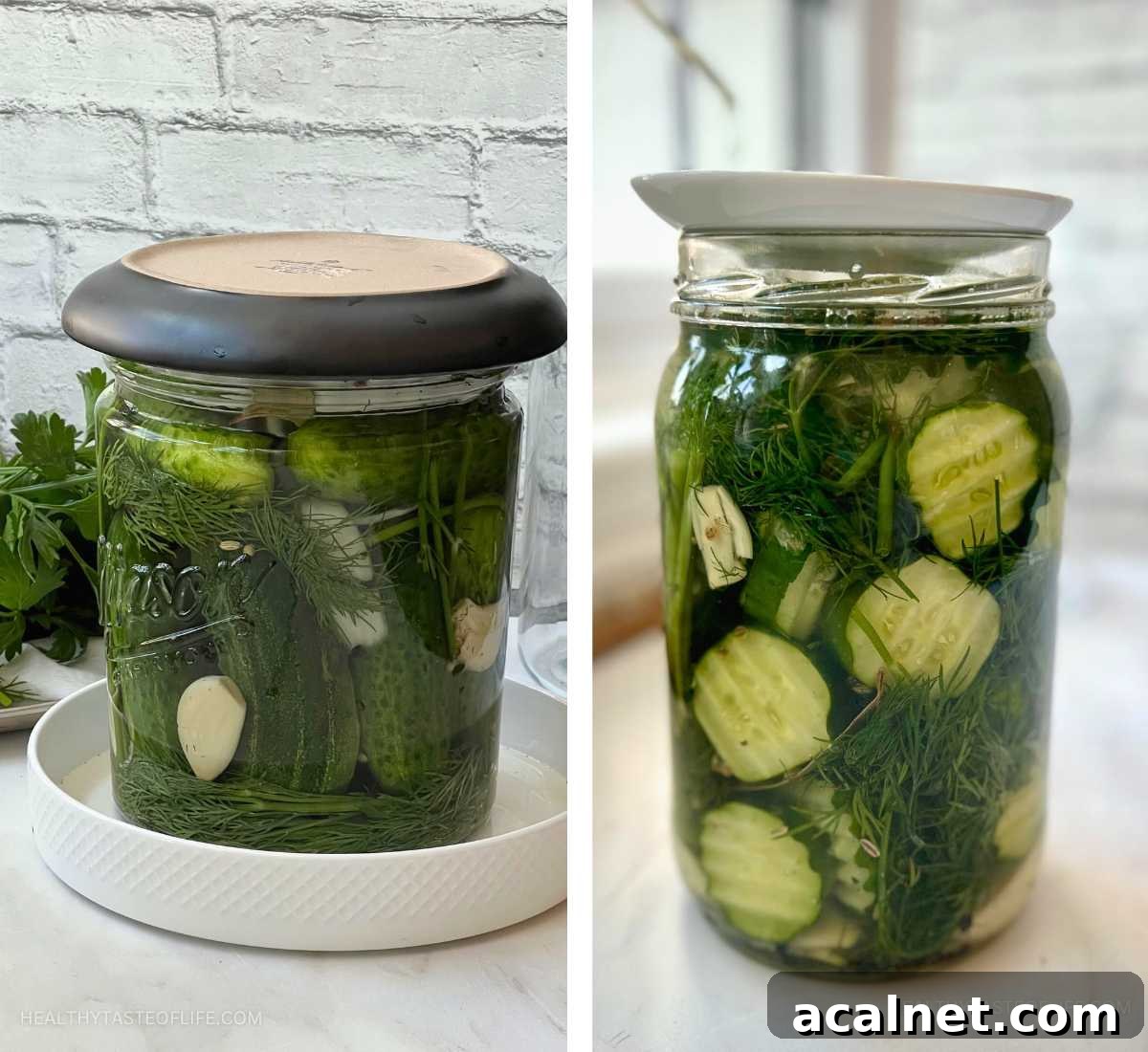
- Keep cucumbers submerged in brine to prevent mold. Use a grape leaf, a smaller sealed jar filled with water placed inside the fermenting jar, or a sealed plastic bag filled with water as a weight.
- If you see fuzzy mold, off-colors, or an unpleasant rotten smell, discard the batch and start again.
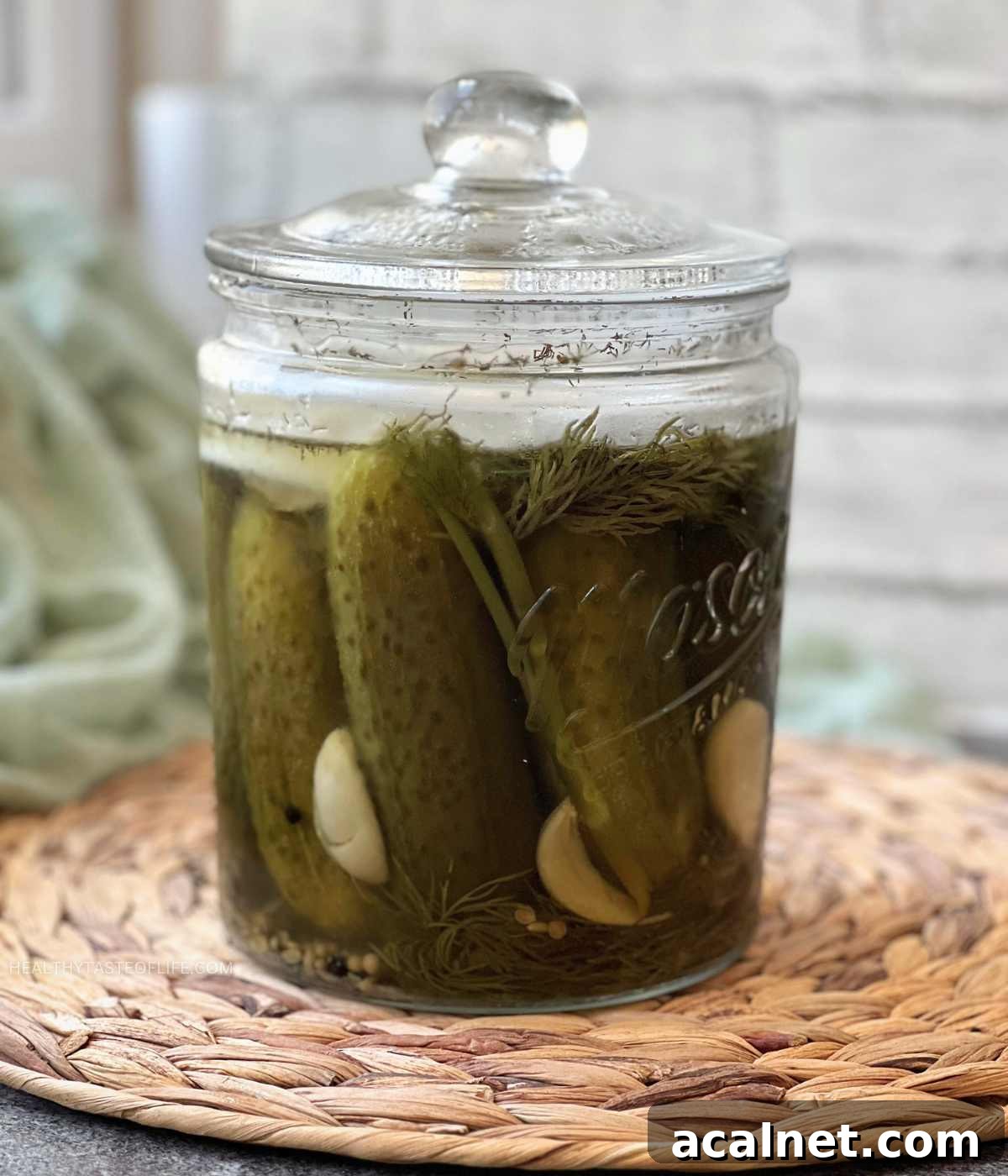
- Store finished pickles in the refrigerator; they typically keep well for several months, with best texture during the first 2–3 months.
Where You Can Use Fermented Cucumbers
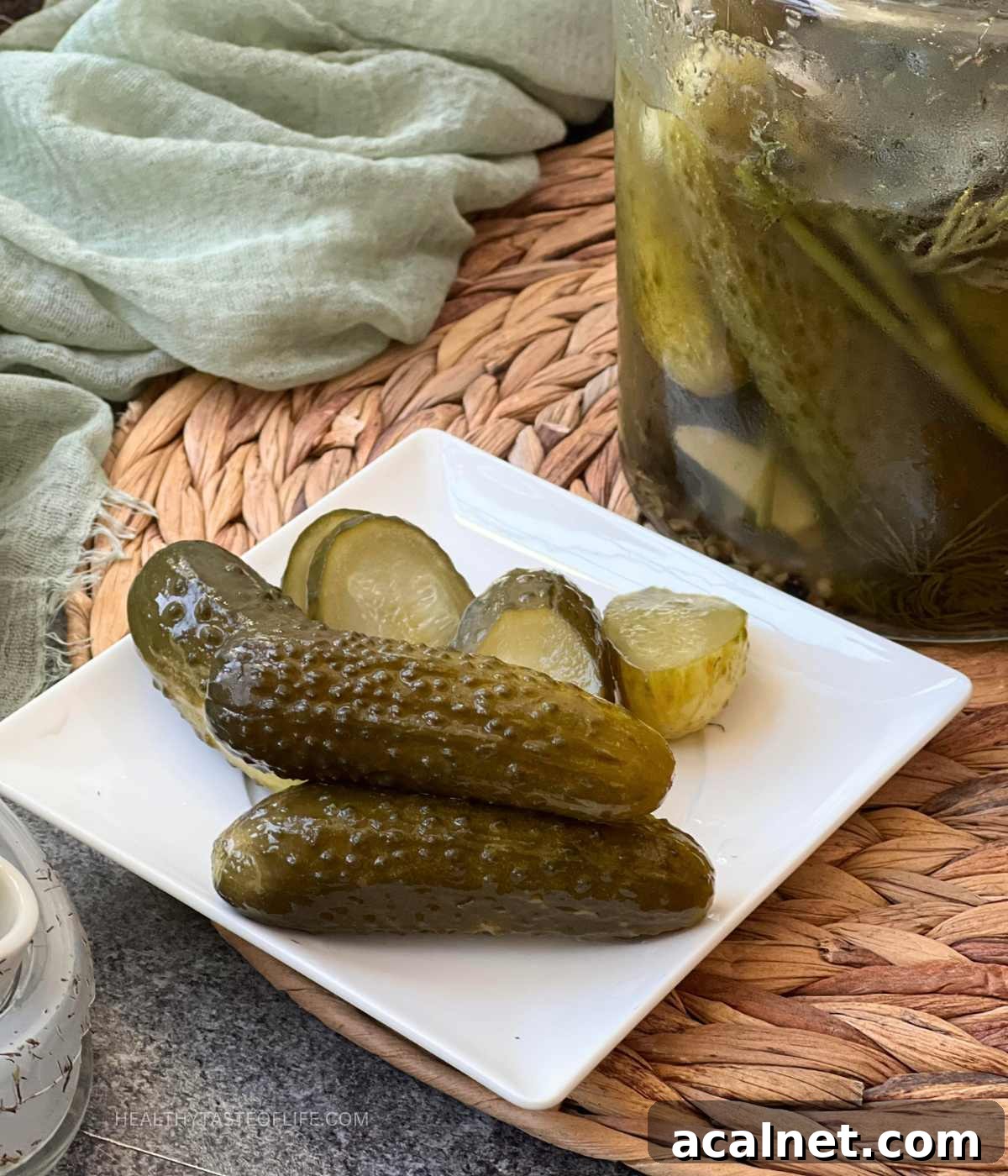
Lacto-fermented pickles are versatile. Add them to sandwiches, chop into salads like Olivier or potato-and-egg salad, serve as a tangy side with grilled meats, chicken fritters, or meatballs, blend into dressings, or pair them with cheeses on a charcuterie board. The brine itself can be used sparingly as a probiotic tonic or in cocktails where a briny note is desired.
Ingredient Variations
Experiment with spices and herbs to create unique flavors:
- Spices: Fennel seeds, red pepper flakes, allspice berries, or celery seeds add different flavor dimensions.
- Herbs: Tarragon, basil, or other fresh herbs can change the aromatic profile.
FAQs For Naturally Fermented Cucumbers Without Vinegar
Pickled cucumbers are preserved with vinegar, while fermented cucumbers use natural bacterial fermentation in a salt brine to develop acidity and probiotics without added vinegar.
When refrigerated and kept submerged in brine, lacto-fermented pickles can last for several months. Texture will gradually soften over time; many people prefer them within 2–3 months.
Soft pickles often result from over-fermentation, sliced pieces being thinner, or using cucumbers that were overripe. Use firm cucumbers and check fermentation progress regularly.
Avoid table salt with anti-caking agents or iodine when possible. Pickling salt or unrefined sea salt without additives produces the most reliable fermentation results.
Yes. Cloudiness is a normal sign of active fermentation and lactic acid bacteria. If the brine develops a foul odor or visible mold, discard the batch.
No special equipment is required—clean glass jars and a method to keep vegetables submerged are sufficient. Fermentation weights or specialized lids can make the process easier but are optional.
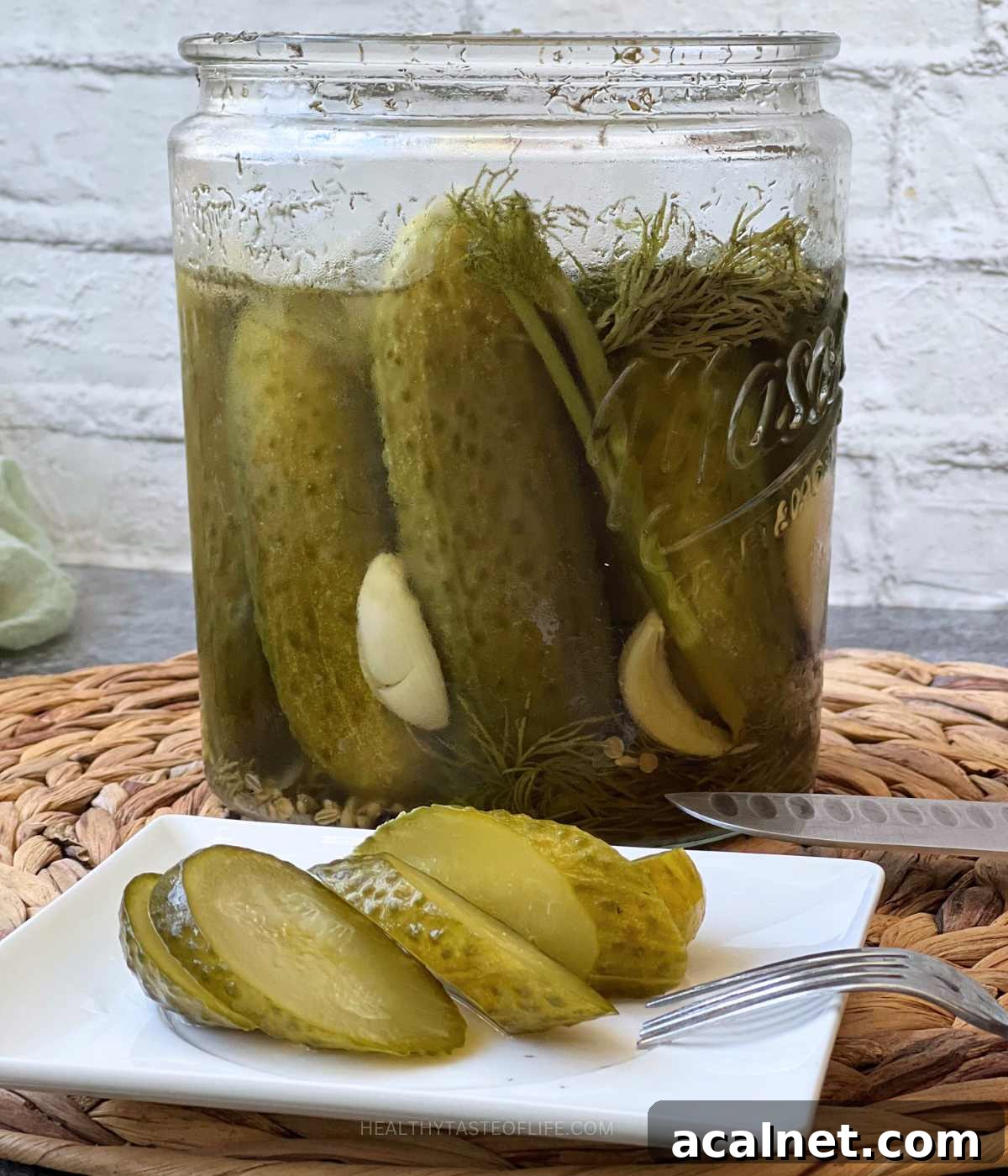
Fermenting is both a science and an art. Trust your senses: if something looks or smells off, discard the batch and try again. With practice you’ll develop a reliable routine and consistently delicious results.
Lacto-fermenting cucumbers without vinegar delivers a satisfying tang, crunch, and probiotic boost. Homemade fermented pickles are a flavorful way to support gut health while enjoying a classic, time-tested food preservation method.
More Fermented Recipes
Gluten Free Dairy Free Cookbook
284 pages total: 128 gluten-free and dairy-free recipes with high-quality photos, including paleo, whole30, and vegan options.